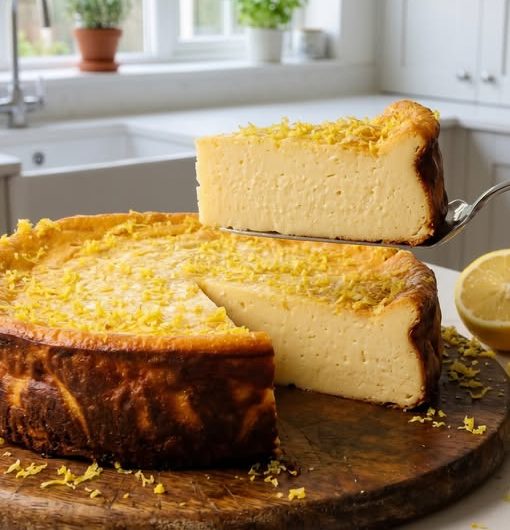

Flourless Protein Lemon Cake
This Flourless Protein Lemon Cake is a high-protein, moist, tender, and flavorful dessert that combines the bright freshness of lemon with a rich cake texture while completely avoiding traditional flour. It is ideal for people looking to increase protein intake, reduce refined carbohydrates, or simply enjoy a unique and satisfying lemon cake. The cake gets its structure from protein-rich ingredients such as Greek yogurt, eggs, and protein powder rather than wheat flour.
Introduction
Traditional lemon cakes rely heavily on all-purpose flour, sugar, and butter. In contrast, this flourless version uses protein powder as a major structural component while maintaining a soft crumb and vibrant lemon flavor. The result is a cake that can be enjoyed as a breakfast treat, post-workout snack, afternoon dessert, or even a healthier celebration cake.
The combination of fresh lemon juice and lemon zest creates a bright citrus flavor throughout the cake. Greek yogurt contributes moisture and additional protein, while eggs provide stability and richness. A small amount of natural sweetener balances the tartness of the lemon.
This recipe is intentionally detailed and comprehensive to help achieve excellent results even for beginners.
Yield
- 10 to 12 servings
- One 8-inch round cake or one 8-inch square cake
Preparation Time
- Preparation: 25 minutes
- Baking: 40–50 minutes
- Cooling: 1 hour
- Total Time: Approximately 2 hours
Ingredients
Dry Ingredients
- 2 cups vanilla whey protein powder (approximately 220–240 grams)
- 1 teaspoon baking powder
- ½ teaspoon baking soda
- ¼ teaspoon fine salt
Wet Ingredients
- 4 large eggs, room temperature
- 1 cup plain Greek yogurt
- ½ cup unsweetened applesauce
- ⅓ cup fresh lemon juice
- 2 tablespoons finely grated lemon zest
- ⅓ cup honey, maple syrup, or preferred liquid sweetener
- 1 teaspoon vanilla extract
- 2 tablespoons melted coconut oil or light butter
Optional Flavor Enhancers
- ½ teaspoon lemon extract
- 1 tablespoon poppy seeds
- 2 tablespoons finely shredded coconut
- 1 tablespoon chia seeds
For the High-Protein Lemon Glaze
- ½ cup Greek yogurt
- 2 tablespoons vanilla protein powder
- 1 tablespoon lemon juice
- 1 tablespoon honey or sweetener of choice
- 1 teaspoon lemon zest
Equipment Needed
- 8-inch cake pan
- Mixing bowls
- Electric mixer or whisk
- Silicone spatula
- Measuring cups and spoons
- Cooling rack
- Parchment paper
Step 1: Prepare the Cake Pan
Preheat the oven to 170°C (340°F).
Lightly grease an 8-inch cake pan. Place a circle of parchment paper on the bottom and lightly grease the paper as well. This helps prevent sticking and ensures easy removal after baking.
Step 2: Prepare the Dry Mixture
In a medium bowl combine:
- Protein powder
- Baking powder
- Baking soda
- Salt
Whisk thoroughly until evenly mixed. Protein powder can sometimes form lumps, so take time to break them apart.
Set aside.
Step 3: Prepare the Wet Mixture
In a large mixing bowl add:
- Eggs
- Greek yogurt
- Applesauce
- Lemon juice
- Lemon zest
- Sweetener
- Vanilla extract
- Melted coconut oil
Whisk vigorously for several minutes until the mixture becomes smooth and creamy.
The lemon zest should be evenly distributed throughout the batter.
Step 4: Combine Wet and Dry Ingredients
Gradually add the dry ingredients into the wet ingredients.
Add approximately one-third of the dry mixture at a time while stirring gently.
Avoid dumping everything in at once because protein powder can clump.
Mix until fully incorporated.
The batter should be thick but pourable.
If the batter appears excessively thick, add 1 to 2 tablespoons of milk.
If the batter appears too thin, add an extra tablespoon of protein powder.
Step 5: Rest the Batter
Allow the batter to rest for 5 to 10 minutes.
Protein powder absorbs moisture during this period, improving the final texture.
This small step often makes a noticeable difference in flourless cakes.
Step 6: Transfer to Pan
Pour the batter into the prepared cake pan.
Use a spatula to spread the batter evenly.
Tap the pan gently against the countertop a few times to remove trapped air bubbles.
Step 7: Bake
Place the pan in the center rack of the preheated oven.
Bake for 40 to 50 minutes.
The cake is done when:
- The top appears lightly golden.
- The center feels set.
- A toothpick inserted near the center comes out mostly clean.
Protein cakes may continue cooking slightly after removal from the oven.
Avoid overbaking because excessive baking can create dryness.
Step 8: Cool Properly
Remove the cake from the oven.
Allow it to cool in the pan for 15 minutes.
Carefully remove it from the pan and place it on a cooling rack.
Allow the cake to cool completely before glazing.
Cooling is important because warm protein cakes are more delicate and can break if handled too early.
Step 9: Prepare the Protein Lemon Glaze
In a bowl combine:
- Greek yogurt
- Protein powder
- Lemon juice
- Honey
- Lemon zest
Whisk until smooth.
The glaze should be thick yet spreadable.
If needed, add a few drops of milk to loosen the texture.
For a thicker glaze, add more protein powder.
Step 10: Glaze the Cake
Once the cake has completely cooled, spread the glaze over the top.
Allow some glaze to gently flow toward the edges for an attractive finish.
Sprinkle extra lemon zest over the top.
For additional decoration, thin lemon slices can be arranged around the surface.
Flavor Profile
This cake offers:
- Bright citrus aroma
- Fresh lemon flavor
- Light sweetness
- Moist and tender crumb
- Creamy protein-rich topping
- Balanced tartness
The lemon zest provides intense citrus oils while the juice contributes fresh acidity.
Nutritional Benefits
Depending on the exact ingredients used, each serving may provide:
- Approximately 14–20 grams of protein
- Lower carbohydrates than traditional cake
- Reduced refined flour
- Beneficial probiotics from Greek yogurt
- Vitamin C from fresh lemon
- Satisfying texture with fewer processed ingredients
Storage Instructions
Refrigerator
Store in an airtight container for up to 5 days.
The flavor often becomes even better after resting overnight.
Freezer
Wrap individual slices tightly.
Freeze for up to 3 months.
Thaw overnight in the refrigerator before serving.
Expert Tips for Success
Use Fresh Lemons
Fresh lemon juice and zest create significantly better flavor than bottled juice.
Room Temperature Ingredients
Room-temperature eggs and yogurt blend more smoothly and produce a more uniform batter.
Choose Quality Protein Powder
Different protein powders behave differently during baking.
Vanilla whey protein generally provides the softest texture.
Avoid Overmixing
Mix only until ingredients are combined.
Overmixing can make the cake dense.
Watch the Baking Time Carefully
Protein cakes can dry out quickly if left in the oven too long.
Begin checking for doneness several minutes before the expected finish time.
Let It Cool Completely
A fully cooled cake slices more cleanly and develops a better texture.
Variations
Blueberry Lemon Protein Cake
Fold 1 cup fresh blueberries into the batter before baking.
Lemon Coconut Protein Cake
Add ½ cup unsweetened shredded coconut.
Lemon Almond Protein Cake
Add ½ cup almond flour for a richer texture while still remaining wheat-flour-free.
Lemon Poppy Seed Protein Cake
Add 2 tablespoons poppy seeds for classic lemon-poppy-seed flavor.
Double Lemon Cake
Increase lemon zest to 3 tablespoons and add ½ teaspoon lemon extract.
Lemon Cheesecake Style Cake
Blend 150 grams reduced-fat cream cheese into the wet ingredients for extra richness.
Serving Suggestions
Serve chilled or at room temperature with:
- Greek yogurt
- Fresh berries
- Strawberries
- Raspberries
- Blackberries
- Blueberry compote
- Sugar-free whipped topping
- Fresh lemon slices
- Toasted coconut flakes
The cake pairs particularly well with tea, coffee, or a cold protein shake.
Conclusion
This Flourless Protein Lemon Cake delivers a combination of refreshing citrus flavor, impressive protein content, and a soft cake-like texture without using traditional flour. The recipe balances nutrition and taste through simple ingredients such as Greek yogurt, eggs, protein powder, and fresh lemons. Whether served as a healthy dessert, post-workout treat, breakfast option, or special occasion cake, it offers a satisfying way to enjoy lemon cake while increasing protein intake and reducing reliance on refined flour. The moist crumb, bright aroma, creamy lemon glaze, and versatility make it a recipe worth preparing repeatedly throughout the year.
