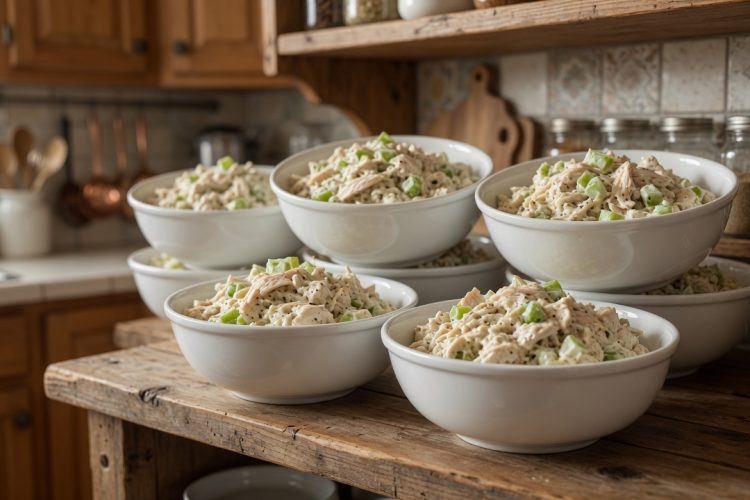

A creamy high-protein chicken salad bowl offers one of the best solutions for anyone seeking nutritious meals that taste great and keep you full. These bowls combine tender chicken with fresh vegetables, creamy dressing, and crunchy toppings to create a complete meal. The protein content helps build muscle and keeps hunger away for hours.
Unlike traditional chicken salads loaded with mayonnaise, this version uses Greek yogurt as the base, adding extra protein while keeping calories reasonable. The vegetables provide vitamins, minerals, and fiber, while the chicken delivers lean protein.
This combination makes the dish suitable for lunch, dinner, meal prep, or post-workout recovery meals. The beauty of this recipe lies in its flexibility and adaptability to different dietary needs and preferences.
Understanding What Makes This Recipe Different from Traditional Chicken Salad
Traditional chicken salads often rely heavily on mayonnaise, which adds unnecessary calories and fat without much nutritional benefit. They also tend to lack texture variety and become boring after a few bites. This high-protein version solves these problems by using Greek yogurt as the primary creamy base. Greek yogurt contains significantly more protein than mayonnaise and adds a pleasant tangy flavor that brightens the entire dish.
The recipe also includes multiple fresh vegetables that provide crunch and freshness throughout every bite. Seeds, nuts, and optional crispy toppings add another layer of texture that keeps each forkful interesting. The result is a salad that feels satisfying and dynamic from the first bite to the last, while delivering substantial protein to support your fitness and health goals without feeling heavy or overly rich.
Selecting the Right Chicken for Maximum Protein and Flavor
Choosing the right chicken makes a big difference in your final dish. Chicken breast is the most common choice because it contains very high protein with minimal fat. A four-ounce serving of chicken breast provides about thirty grams of protein, making it ideal for muscle building and weight management. The lean nature of breast meat makes it perfect for those watching their calorie intake. However, chicken breast can become dry if overcooked, so careful temperature monitoring is important when preparing it.
Chicken thighs offer an alternative with more flavor and natural juiciness due to their slightly higher fat content. Thighs are harder to overcook, making them more forgiving for beginner cooks who might struggle with timing. For maximum convenience, rotisserie chicken works wonderfully well. Simply remove the skin to reduce fat content, shred the meat with your hands or two forks, and mix it with seasonings before adding to your bowl. This option saves significant cooking time during busy weekdays.
How Greek Yogurt Transforms the Dressing into a Protein Powerhouse
Greek yogurt changes everything about traditional chicken salad dressing and elevates the nutritional profile dramatically. Regular yogurt is strained to remove liquid whey, creating a thick, creamy texture similar to sour cream or heavy cream. This thickness allows Greek yogurt to replace most or all of the mayonnaise in chicken salad recipes without sacrificing creaminess. A half-cup of Greek yogurt contains approximately twelve grams of protein, while the same amount of mayonnaise contains less than one gram.
Greek yogurt also provides beneficial probiotics that support digestive health and immune function. The tangy flavor of Greek yogurt brightens the overall taste and prevents the dressing from feeling too heavy or cloying. When combined with a small amount of mayonnaise for richness, mustard for depth, lemon juice for brightness, and fresh herbs for aroma, Greek yogurt creates a dressing that is simultaneously creamy, flavorful, refreshing, and protein-rich.
The Importance of Texture Variety in Creating Restaurant-Quality Salad Bowls
One reason restaurant salads often taste better than homemade versions is deliberate texture contrast that professional chefs understand instinctively. This recipe intentionally layers multiple textures to create interest and prevent flavor fatigue. Crisp romaine lettuce provides satisfying crunch and freshness. Tender chicken offers a soft, savory element that contrasts beautifully with the vegetables.
Creamy dressing adds richness and binds flavors together. Diced cucumbers and celery contribute cool, fresh crispness that refreshes the palate. Avocado brings smooth, buttery texture that feels luxurious. Seeds and nuts add another level of crunch that is different from the vegetable crunch. Chickpeas provide a slightly chewy texture that adds substance. This variety ensures that eating the salad feels dynamic and engaging rather than monotonous or boring, which helps with satisfaction and prevents overeating.
Proper Chicken Preparation Techniques for Juicy, Flavorful Results
Preparing chicken correctly determines whether your salad will be dry and disappointing or juicy and delicious. Start by trimming any excess fat or connective tissue from the chicken pieces. If using chicken breasts, check the thickness carefully. Very thick breasts should be gently pounded to an even thickness using a meat mallet covered with plastic wrap to prevent sticking. Even thickness ensures even cooking throughout the meat and prevents dry edges while the center finishes cooking. Before cooking, pat the chicken completely dry with paper towels. This step is absolutely critical because moisture on the surface prevents proper browning and caramelization. Wet surfaces steam rather than sear, resulting in bland, pale chicken without flavor development. After drying thoroughly, rub the chicken with a small amount of olive oil and lemon juice. The oil helps seasonings stick to the meat and promotes even browning during cooking. Apply your seasoning blend evenly to all surfaces, making sure to coat every part of the chicken. Let the seasoned chicken rest at room temperature for at least twenty minutes, or refrigerate for up to eight hours for deeper flavor penetration into the meat.
Different Cooking Methods and How They Affect Chicken Flavor and Texture
The cooking method you choose significantly impacts the final flavor and texture of your chicken. Pan-searing creates a flavorful brown crust through a chemical process called the Maillard reaction, which develops complex savory flavors and appealing color. Heat your skillet over medium-high heat, add a small amount of oil, and wait until the pan is properly hot before adding the chicken. Cook the chicken without moving it for five to seven minutes per side to develop a proper crust. Oven baking offers convenience and consistency, making it ideal for meal prep when you need to cook multiple pieces at once. Bake seasoned chicken at four hundred twenty-five degrees for eighteen to twenty-four minutes depending on thickness. Grilling adds smoky flavor and attractive grill marks that make the dish feel special and restaurant-quality, perfect for summer meals and outdoor cooking. Air frying produces crispy exterior with minimal oil in just ten to fourteen minutes, making it the fastest method. Regardless of which method you choose, always use a meat thermometer to check that internal temperature reaches exactly one hundred sixty-five degrees to ensure food safety without overcooking.
Why Resting Cooked Chicken Is Not Optional for Juicy Results
Many home cooks skip the resting step after cooking, resulting in dry chicken that loses moisture when cut. During cooking, heat drives juices toward the center of the meat as the outer portions contract. If you cut into chicken immediately after removing it from heat, these concentrated juices flow out onto the cutting board instead of staying in the meat where they belong. Resting allows the temperature to equalize throughout the meat and the juices to redistribute evenly. Ten minutes of resting time makes a dramatic difference in overall juiciness and tenderness. Cover the cooked chicken loosely with aluminum foil during resting to keep it warm without trapping steam that could soften the exterior. This simple step transforms chicken from dry and disappointing to tender, moist, and flavorful. The resting period also gives you time to prepare other components of your salad bowl, making your kitchen workflow more efficient and organized.
Creating the Perfect Creamy High-Protein Dressing with Balanced Flavors
A great dressing requires careful balance among several flavor elements working together in harmony. Start with Greek yogurt as your creamy base, which provides both protein and tang. Add a smaller amount of mayonnaise for richness and smooth mouthfeel. Include Dijon mustard for savory depth and slight spiciness that adds complexity. Add fresh lemon juice and a small amount of apple cider vinegar for brightness and acidity that cuts through richness. Minced garlic provides pungent savory depth that enhances other flavors. Fresh herbs like parsley and dill add aromatic freshness and visual appeal that dried herbs cannot match. Season with salt and black pepper to taste. A small amount of honey balances the acidity and rounds out harsh edges. Whisk everything together until completely smooth and well combined. Taste the dressing repeatedly and adjust seasoning as needed. If the dressing is too thick, add milk one tablespoon at a time until you reach desired consistency. If too tangy, add more yogurt or slightly more honey. If bland, increase salt gradually while tasting between additions.
How to Prepare and Handle Fresh Vegetables for Maximum Crunch and Freshness
Fresh vegetables form the foundation of texture and nutrition in your salad bowl and must be handled properly. Romaine lettuce should be washed thoroughly under cold running water, dried completely using a salad spinner or paper towels, and chopped into bite-sized pieces that are easy to eat.
Any moisture left on lettuce will dilute your dressing and make the salad watery and unappetizing. Baby spinach adds nutrients, particularly iron and vitamins, along with a softer texture that contrasts with crunchy romaine. If using kale, massage it lightly with a small amount of olive oil to soften the tough leaves and reduce bitterness. Cucumbers should be firm and fresh without soft spots.
If they seem watery or the seeds are very large, you can remove the seedy center with a spoon. Cherry tomatoes work better than large slicing tomatoes because they stay firm longer and release less liquid that could make the salad soggy.
Shredded carrots add natural sweetness, bright color, and additional crunch. Celery provides crisp freshness and subtle flavor and should be diced finely so it distributes well throughout the bowl. Red onion adds sharp, pungent flavor contrast but should be sliced very thin to prevent overpowering other ingredients.
Strategic Bowl Assembly for Better Presentation and Freshness
How you assemble your bowl affects both visual appearance and how well it holds up over time, especially for meal prep. For immediate serving, start with mixed greens as a base layer covering the bottom of the bowl. Add vegetables in separate sections rather than mixing them completely, which creates visual interest and allows people to see all components.
Place sliced chicken prominently in the center where it becomes the focal point. Drizzle dressing artistically over everything, leaving some ingredients visible. Top with chickpeas, seeds, and fresh herbs as final touches.
For meal prep storage, use a completely different approach. Place heavier, sturdier ingredients like chickpeas, cucumbers, and tomatoes at the bottom of your container where they can handle the weight of other ingredients. Add chicken and other proteins in the middle layer.
Place delicate greens and fresh herbs on top where they will not get crushed. Keep dressing in a separate small container to prevent everything from becoming soggy. This layering technique prevents greens from wilting and maintains freshness for several days.
Making Homemade Crunch Toppings That Add Protein and Texture
Store-bought croutons and crispy toppings often contain unnecessary ingredients, excessive sodium, and lack protein. Making your own allows you to control ingredients while boosting nutrition significantly. For crispy chickpeas, drain and rinse canned chickpeas thoroughly, then dry them completely using paper towels or a clean kitchen towel.
Toss with olive oil and your choice of seasonings like paprika, garlic powder, or cumin. Spread in a single layer on a baking sheet and roast at four hundred degrees for twenty to thirty minutes, shaking the pan occasionally, until crunchy and golden.
For a protein-rich seed mix, toast pumpkin seeds, sunflower seeds, and sliced almonds in a dry skillet over medium heat, stirring frequently until fragrant and lightly golden. Watch carefully as seeds can burn quickly. These homemade toppings add significant texture and protein while tasting fresher and more flavorful than anything from a package. They also allow you to customize flavors to match your preferences.
Comprehensive Meal Prep Strategy for Weekly High-Protein Lunches
Meal prepping these bowls saves considerable time during busy weekdays and ensures you have healthy high-protein meals ready whenever hunger strikes. On your designated prep day, cook all your chicken using your preferred method and let it cool completely before storing. Prepare your dressing and store it in a glass jar or squeeze bottle in the refrigerator. Wash and chop all vegetables thoroughly, making absolutely sure greens are completely dry before storing.
Toast your seeds and prepare any crispy toppings you plan to use. Cook any grains like quinoa if including them. Assemble your storage containers strategically with heavy ingredients on the bottom, protein in the middle layer, and greens on top to prevent crushing. Store dressing separately in small containers or jars. Store avocado separately and slice fresh each day to prevent browning.
Prepared this way using proper layering techniques, your bowls stay fresh and crisp for four to five days in the refrigerator. Each morning or the night before eating, you can add your dressing and any final fresh toppings.
Adapting the Recipe for Specific Health and Fitness Goals
This recipe easily adapts to different nutritional needs and personal goals without losing its essential character. For weight loss, use nonfat Greek yogurt to reduce calories, reduce or eliminate mayonnaise, increase vegetable portions to add volume without calories, use chicken breast instead of thighs for lower fat content, and limit high-calorie toppings like nuts, seeds, and avocado.
For muscle building and athletic performance, increase the chicken portion to eight ounces or more per serving, add cooked quinoa for additional complete protein and carbohydrates, include hard-boiled eggs for extra protein and healthy fats, use full-fat Greek yogurt for more calories and energy, and include generous amounts of seeds and nuts.
For low-carb or ketogenic diets, remove chickpeas, corn, and any grains completely, double or triple the avocado for healthy fats, add extra cheese like feta or parmesan, and use additional chicken to meet calorie needs through protein and fat rather than carbohydrates.
Creamy High-Protein Chicken Salad Bowl
A nutrient-packed salad bowl featuring seasoned chicken, Greek yogurt dressing, fresh vegetables, and crunchy toppings delivering over forty grams of protein per serving.
4
servings25
minutes20
minutes45
minutesIngredients
- For the Chicken:
2 pounds boneless skinless chicken breast
1 tablespoon olive oil
1 teaspoon lemon juice
1 teaspoon paprika
1 teaspoon garlic powder
1 teaspoon onion powder
1 teaspoon salt
1 teaspoon black pepper
1/2 teaspoon smoked paprika
- For the Dressing:
1 cup plain Greek yogurt
1/3 cup light mayonnaise
1 tablespoon Dijon mustard
1 tablespoon lemon juice
1 teaspoon apple cider vinegar
1 teaspoon honey
1 garlic clove, minced
1 tablespoon chopped parsley
1 tablespoon chopped dill
1/2 teaspoon black pepper
1/2 teaspoon salt
- For the Bowl:
3 cups chopped romaine lettuce
2 cups baby spinach
1 cucumber, diced
1 cup cherry tomatoes, halved
1/2 cup shredded carrots
1/2 cup diced celery
1 avocado, sliced
1/2 cup cooked chickpeas
2 tablespoons pumpkin seeds
2 tablespoons sunflower seeds
Directions
- Pat chicken dry with paper towels. Mix all dry seasonings together in a small bowl. Rub chicken with olive oil and lemon juice, then coat evenly with seasoning mixture.
- Heat a skillet over medium-high heat. Cook chicken for five to seven minutes per side until internal temperature reaches one hundred sixty-five degrees. Let rest for ten minutes, then slice against the grain.
- Whisk together Greek yogurt, mayonnaise, mustard, lemon juice, vinegar, honey, garlic, herbs, salt, and pepper until smooth and well combined.
- Wash and dry all greens thoroughly using a salad spinner. Chop vegetables into bite-sized pieces.
- Place greens in bowls. Arrange vegetables in sections. Add sliced chicken. Drizzle with dressing. Top with chickpeas and seeds.
Notes
- Storage: Keep dressing separate from salad components. Store in airtight containers for up to four days.
