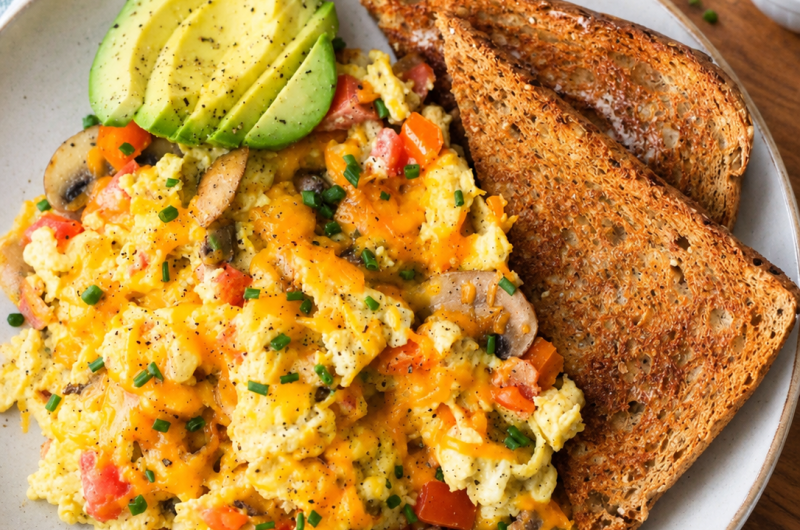

Healthy loaded scrambled eggs are a delicious way to make an ordinary breakfast more satisfying. This easy scrambled egg recipe combines fluffy eggs, creamy cheddar cheese, crispy bacon, mushrooms, bell peppers, tomatoes, and onion to create a colorful meal packed with flavor.
Every bite brings together tender vegetables, savory bacon, and soft scrambled eggs, making this dish a wonderful choice for busy mornings, relaxed weekend brunches, or a quick homemade dinner.
One of the best things about loaded scrambled eggs is how simple they are to prepare. You only need five minutes of preparation and about fifteen minutes of cooking time to bring everything together. The vegetables cook in butter until tender, the bacon adds a smoky flavor, and the eggs are gently scrambled until they reach your preferred consistency. A final sprinkle of cheddar cheese and fresh chives makes the dish even more inviting without requiring complicated cooking techniques.
If you enjoy easy high-protein breakfast recipes, these loaded eggs are worth adding to your regular meal rotation. Eggs provide protein and important nutrients, while mushrooms, tomatoes, peppers, and onions contribute additional flavor and variety. The combination creates a hearty breakfast that feels more exciting than plain scrambled eggs. Because the recipe uses familiar ingredients and one skillet, it is also convenient for home cooks who want a flavorful meal without spending too much time in the kitchen.
Why You Will Love This Loaded Scrambled Eggs Recipe
A Quick and Satisfying Breakfast
Mornings can be busy, especially when you need to prepare a meal that everyone will enjoy. This easy loaded scrambled eggs recipe keeps the process straightforward by using a single skillet for the vegetables, bacon, and eggs. With just five minutes of preparation, you can chop the ingredients, whisk the eggs with milk, and have everything ready to cook. The short cooking time makes this recipe practical for weekdays as well as leisurely weekend breakfasts.
Although the dish is quick to make, it does not feel like a basic meal. The combination of vegetables, cheese, and bacon adds different textures and flavors, so each serving feels complete and satisfying. You can serve the eggs on their own or pair them with whole-grain toast, fresh fruit, or a simple side salad. This flexibility makes the recipe useful for more than breakfast, especially when you need an uncomplicated lunch or dinner.
A Flavorful Combination of Cheese, Bacon, and Vegetables
Plain scrambled eggs can become repetitive when they appear on the menu several times a week. Adding a mixture of savory and fresh ingredients is an easy way to bring more variety to the table. In this recipe, cheddar cheese melts into the warm eggs, bacon provides a rich smoky taste, and mushrooms contribute an earthy flavor. Bell peppers and tomatoes introduce freshness, while onion adds a familiar savory foundation.
The ingredients complement one another without requiring a complicated seasoning blend. Butter helps soften the vegetables and adds richness, while milk creates a tender texture when incorporated into the beaten eggs. Fresh chives offer a light finishing touch that balances the more savory ingredients. Together, these components create cheesy vegetable scrambled eggs that are flavorful enough to serve to guests but simple enough to prepare on an ordinary morning.
An Easy Way to Add Vegetables to Breakfast
Breakfast is an excellent opportunity to include vegetables in your daily meals, and this recipe makes that easy. Mushrooms, bell peppers, tomatoes, and onions cook directly in the skillet before the eggs are added. Their flavors mingle with the butter and bacon, making the vegetables an enjoyable part of the dish rather than an afterthought. The different colors also give the finished scramble an appealing appearance.
Vegetables contribute fiber, vitamins, minerals, and variety to a balanced eating pattern. Tomatoes and bell peppers, in particular, provide vitamin C, while mushrooms and onions contribute their own range of nutrients. The exact nutritional value depends on the ingredients and portions used. If you are looking for a breakfast that combines eggs with several vegetables in one dish, this recipe offers a practical starting point.
Ingredients for Healthy Loaded Scrambled Eggs
Eggs and Milk
Eggs are the main ingredient in this recipe and provide the soft, fluffy base for the scramble. Their mild flavor works well with the stronger taste of cheddar cheese and bacon. Whisking the eggs thoroughly before cooking helps distribute the yolks and whites evenly, creating a consistent mixture. Bringing the eggs to room temperature before cooking can also help them cook more evenly, although refrigerated eggs can still be used successfully.
Milk is added to the eggs to contribute moisture and a creamy texture. Full-fat milk is the preferred option in the original ingredient notes, but other suitable milk options can also be used if needed. The important thing is to mix the milk thoroughly into the eggs before pouring the mixture into the skillet. This step helps create a smooth scramble with a tender texture rather than separate, unevenly cooked pieces of egg.
Butter, Onion, and Bell Peppers
Butter provides the cooking fat for the vegetables and contributes a rich flavor to the finished dish. It also helps prevent the ingredients from sticking when used in an appropriate skillet. The recipe calls for one to two tablespoons, allowing you to choose the amount that works best for your pan and cooking preferences. If your butter is salted, remember that it can affect the overall sodium content of the finished meal.
Diced onion and chopped bell peppers form the vegetable base of the scramble. The onion becomes softer and sweeter as it cooks, while the peppers contribute a mild, fresh flavor and attractive color. Cooking these ingredients before adding the eggs allows them to soften properly. It also helps prevent the vegetables from remaining too firm while the eggs are already finished cooking. A few minutes over medium heat is usually enough to get them started.
Mushrooms and Roma Tomatoes
Sliced mushrooms bring a savory, earthy quality that works especially well with eggs and cheddar cheese. As they cook, they soften and release some of their moisture, becoming more tender and flavorful. Allowing the mushrooms to cook with the onion and bell peppers before adding the eggs gives them time to develop a better texture. This step is particularly helpful when you want a scramble that does not taste as though the vegetables were added at the last moment.
Chopped Roma tomatoes provide a fresh, slightly tangy contrast to the richness of the butter, bacon, and cheese. They also contribute moisture and help make the dish colorful. Adding them after the initial vegetables have softened allows them to warm through without necessarily becoming completely broken down. Roma tomatoes are a convenient choice because their firm flesh works well in skillet recipes, but the recipe should retain the specified tomato variety if you want to follow the original ingredient list.
Cooked Bacon, Cheddar Cheese, and Chives
Cooked bacon gives these loaded scrambled eggs their smoky, savory flavor. Chopping the bacon into small pieces makes it easier to distribute throughout the skillet, ensuring that each serving contains a good mixture of ingredients. Because the bacon is already cooked before it is added, the recipe focuses on warming it with the tomatoes before the egg mixture goes into the pan. This also helps streamline the cooking process.
Shredded cheddar cheese melts over the warm eggs and adds a rich, creamy finish. Its distinctive flavor pairs naturally with bacon and vegetables, making it a popular choice for loaded breakfast dishes. Chopped chives are an optional garnish that adds a fresh, mild onion flavor and a touch of green color. For the best presentation, sprinkle the cheese and chives over the eggs just before serving, while the scramble is still warm.
How to Make Loaded Scrambled Eggs
Step 1: Prepare the Egg Mixture
Begin by cracking eight eggs into a large mixing bowl. Add the milk and kosher salt, then whisk everything together until the mixture looks uniform. You want the yolks and whites to be well combined, with no large streaks of egg white remaining. Whisking thoroughly at this stage helps produce a more consistent texture when the eggs cook. Set the bowl aside while you prepare the vegetables and heat the skillet.
If you have time, allow the eggs to come closer to room temperature before cooking. This can help them cook more evenly and may make it easier to control the final texture. However, there is no need to delay breakfast if your eggs are still cold from the refrigerator. Preparing the vegetables and bacon in advance can help make the cooking process smoother, particularly when you are preparing several servings at once.
Step 2: Sauté the Onion, Bell Peppers, and Mushrooms
Place a large skillet over medium heat and add one to two tablespoons of butter. Allow the butter to melt, then add the diced onion, chopped bell peppers, and sliced mushrooms. Stir the vegetables so they are coated in the butter and spread them across the skillet. Cook for a few minutes, stirring occasionally, until the onion begins to soften and the peppers and mushrooms start becoming tender.
Avoid turning the heat too high, because the vegetables need time to soften without burning. If the pan becomes too hot, the onion may brown before the mushrooms have cooked sufficiently. A moderate, steady temperature gives the vegetables a better texture and creates a flavorful base for the eggs. If necessary, stir more frequently to prevent sticking and make sure the vegetables cook evenly across the skillet.
Step 3: Add the Tomatoes and Cooked Bacon
Once the vegetables have softened, stir in the chopped Roma tomatoes and cooked, chopped bacon. Mix everything together so the bacon is distributed among the vegetables. Let the ingredients warm through briefly before adding the eggs. This gives the tomato and bacon flavors time to combine with the sautéed vegetables, creating a more cohesive mixture instead of separate layers of ingredients.
Try to keep the vegetables spread reasonably evenly across the pan. If they collect in one area, some portions of the finished scramble may contain mostly eggs while others contain too much bacon or tomato. Distributing the ingredients at this stage helps every serving include a balanced combination. There is no need to cook the tomatoes for a long time; warming them through is enough before you move to the next step.
Step 4: Pour in the Beaten Eggs
Reduce the heat slightly if your skillet is very hot, then pour the prepared egg mixture over the vegetables and bacon. Allow the eggs to begin setting around the edges before gently moving them with a silicone or other heat-resistant spatula. Draw the spatula across the bottom of the skillet, lifting the cooked portions and allowing the uncooked egg mixture to flow into the open spaces.
Continue stirring gently as the eggs cook. Rather than scraping constantly or stirring aggressively, use slow movements to form soft curds. This method helps preserve a tender texture and distributes the vegetables throughout the eggs. Keep an eye on the consistency because eggs continue cooking from residual heat after the skillet is removed from the stove. Taking them off the heat when they are just set helps prevent a dry, rubbery result.
Step 5: Finish with Cheddar Cheese and Chives
When the eggs have reached your preferred consistency and are fully cooked, remove the skillet from the heat. Sprinkle the shredded cheddar cheese over the warm scramble and allow it to soften and melt. The remaining heat should help the cheese become creamy without requiring prolonged cooking. If you prefer a more evenly distributed cheesy texture, gently fold some of the cheese into the eggs while reserving a little for the top.
Finish with chopped chives if desired. The green garnish makes the dish look fresh and adds a mild herbal, onion-like flavor. Transfer the loaded scrambled eggs to serving plates and serve promptly while the eggs are warm and the cheese is soft. If you are preparing other breakfast items, try to time them so the eggs reach the table shortly after cooking, when their texture and flavor are at their best.
Tips for Perfect Cheesy Scrambled Eggs
Cook the Eggs Over Moderate Heat
Temperature is one of the most important factors when making soft scrambled eggs. Excessive heat can cause the eggs to cook too quickly, leaving them dry on the outside before you have a chance to control their consistency. Moderate or moderately low heat gives you more control and allows the eggs to form tender curds. Since this recipe also contains vegetables, cooking gently helps prevent the bottom of the mixture from browning too quickly.
The precise cooking time depends on your skillet, stove, and preferred texture. Begin checking the eggs as soon as they start to set, and continue folding them gently until they are cooked through. Avoid leaving the pan unattended during this stage because scrambled eggs can change from soft to overcooked in a short period. Removing the skillet from the heat promptly is a simple way to improve the final result.
Choose the Right Spatula
A silicone spatula or heat-resistant spatula is especially useful for scrambling eggs in a nonstick skillet. Its flexible edge can reach the curved areas where the sides of the pan meet the bottom, helping you move the eggs without leaving cooked portions behind. A wooden spoon can work if you do not have a spatula, although it may be less effective for gently lifting and folding soft egg curds.
Avoid using metal utensils on nonstick cookware because they may scratch or damage the coating. Using the correct tool also makes it easier to stir around the mushrooms, tomatoes, and bacon without crushing the vegetables excessively. Gentle movements are all that is needed to combine the ingredients and create a fluffy scramble with evenly distributed fillings.
Prepare Ingredients Ahead of Time
One useful way to save time in the morning is to prepare the vegetables and bacon in advance. Dice the onion, chop the bell peppers and tomatoes, slice the mushrooms, and chop the cooked bacon before you begin cooking. Store the prepared ingredients in suitable covered containers in the refrigerator until you are ready to use them. This simple preparation step can make the recipe easier to manage on busy weekdays.
For the best quality, keep raw vegetables separate from cooked bacon and other ready-to-eat ingredients during storage. Use clean utensils and containers, and refrigerate perishable foods promptly. When you are ready to cook, measure the ingredients and place them near the stove. Having everything within reach helps prevent overcooking because you will not need to stop and chop ingredients while the eggs are already in the skillet.
Are Loaded Scrambled Eggs Healthy?
Protein and Nutritional Benefits
Eggs are a source of complete protein, meaning they provide all nine essential amino acids that the body needs from food. Protein supports the maintenance of muscles and other body tissues and can help make a meal more satisfying. This recipe also contains cheese and bacon, which contribute additional protein. According to the supplied nutrition information, one serving provides approximately 19 grams of protein, making it a substantial option for a protein-rich breakfast.
The vegetables add variety and provide important nutrients alongside the eggs. Bell peppers and tomatoes contribute vitamin C, while eggs supply nutrients such as vitamin A and other essential micronutrients. Mushrooms and onions add flavor and help diversify the ingredients in the dish. These benefits make loaded scrambled eggs a useful way to combine several food groups, although the overall nutritional quality of a meal also depends on portion sizes and what you serve alongside it.
Fat, Sodium, and Portion Size
Although this recipe contains nutritious ingredients, it is important to consider its saturated fat and sodium content. Butter, cheddar cheese, and bacon contribute fat, while bacon, cheese, and added salt can increase sodium. The supplied nutritional estimate lists approximately 285 calories and 20 grams of fat per serving, including 9 grams of saturated fat. These values can vary depending on the brands used, the amount of butter added, and how the ingredients are measured.
For people who are monitoring their sodium or saturated fat intake, portion size and ingredient choices may matter. You can follow the recipe as written while serving it alongside fresh fruit or vegetables and choosing other meals throughout the day that suit your nutritional needs. If you make substitutions, remember that the nutritional information will change. The dish can fit into different eating patterns, but it should not automatically be considered low-fat or low-sodium simply because it includes vegetables.
What to Serve with Loaded Scrambled Eggs
Simple Breakfast Pairings
Loaded scrambled eggs pair well with whole-grain toast, toasted sourdough, or an English muffin. Bread provides a familiar accompaniment that can be used to scoop up the cheesy eggs and vegetables. Fresh fruit, such as berries, orange segments, or sliced melon, offers a refreshing contrast to the savory bacon and cheddar. These additions can make breakfast more varied without requiring much extra preparation.
For a larger weekend brunch, serve the eggs with roasted potatoes, a simple green salad, or grilled tomatoes. Choose sides according to your appetite and the occasion rather than feeling that you need to prepare a large spread. Since the eggs already contain bacon, cheese, and several vegetables, a lighter side can be enough to round out the meal. Hot coffee, tea, or a glass of water can complete a straightforward breakfast.
Serving the Recipe for Lunch or Dinner
Scrambled eggs do not need to be limited to the breakfast table. Their quick cooking time makes them useful for lunch or dinner when you want something warm and filling without preparing a complicated recipe. Serve the eggs with a side salad, roasted vegetables, or a slice of whole-grain bread for a simple meal. The combination of protein, vegetables, and savory flavors works well at any time of day.
You can also serve the scramble as part of a larger family meal alongside other breakfast-style dishes. If you are preparing food for several people, keep the eggs warm only briefly and avoid prolonged heating, which can make them dry. Cooking them shortly before serving gives you the best texture. Because this recipe is designed for four people, it is easy to portion out the servings for a small family or a casual brunch with friends.
Common Questions About Loaded Scrambled Eggs
Can I Make Loaded Scrambled Eggs Without Bacon?
The bacon contributes a smoky, savory flavor, but the recipe can be adapted if you prefer not to use it. The supplied recipe notes that the add-ins are optional, so you can leave out ingredients you do not enjoy or do not have available. Keep in mind that omitting bacon changes the final flavor and nutritional information. If you are following the original recipe exactly, retain the specified four slices of cooked bacon.
Can I Use a Different Type of Cheese?
Cheddar cheese is the specified cheese because it melts well and has a strong, familiar flavor that complements eggs and bacon. Other cheeses may also work, depending on their moisture content and melting characteristics, but changing the cheese means the ingredient list and nutritional profile are no longer exactly the same. For the original version, use half a cup of shredded cheddar cheese and add it at the end so it melts gently over the warm eggs.
Why Are My Scrambled Eggs Dry?
Scrambled eggs often become dry when they are cooked over excessive heat or left in the skillet for too long. To avoid this, use moderate heat and gently move the eggs with a spatula as they begin to set. Remove the pan from the heat once the eggs are fully cooked but still tender. The residual heat will continue to affect their texture, so serving them promptly helps preserve their softness.
Can I Prepare the Ingredients the Night Before?
Yes, you can chop the vegetables and prepare the cooked bacon ahead of time. Store the ingredients in covered containers in the refrigerator and use them the following day. Keeping the ingredients ready before breakfast reduces preparation time and makes it easier to cook everything in the correct order. For the best texture, whisk the eggs shortly before cooking and scramble them fresh rather than preparing the complete dish far in advance.
How Should I Store Leftover Loaded Scrambled Eggs?
Allow the leftovers to cool briefly, then place them in a clean, airtight container and refrigerate promptly. The supplied recipe notes recommend storing the cooked eggs for one to two days in the refrigerator. Reheat only the portion you plan to eat, using gentle heat until it is thoroughly hot. Eggs may become firmer after refrigeration and reheating, so avoid prolonged heating if you want to maintain as much tenderness as possible.
Final Thoughts on Healthy Loaded Scrambled Eggs
Healthy loaded scrambled eggs offer a practical way to bring more flavor and variety to a familiar breakfast. With eggs, milk, mushrooms, bell peppers, tomatoes, onion, bacon, and cheddar cheese, this skillet recipe combines protein, vegetables, and savory ingredients in one easy meal. The preparation is straightforward, the cooking time is short, and the finished dish is suitable for breakfast, brunch, lunch, or dinner. It is especially useful when you want a homemade meal that feels more substantial than plain scrambled eggs.
For the best results, prepare the ingredients before heating the skillet, cook the vegetables until tender, and scramble the eggs gently over moderate heat. Add the cheddar at the end and finish with fresh chives if you like. Serve the eggs immediately with your favorite breakfast sides or a simple salad. Once you are comfortable with the basic technique, this recipe can become a reliable part of your regular meal planning while still delivering the cheesy, savory flavor that makes loaded scrambled eggs so enjoyable.
Healthy Loaded Scrambled Eggs
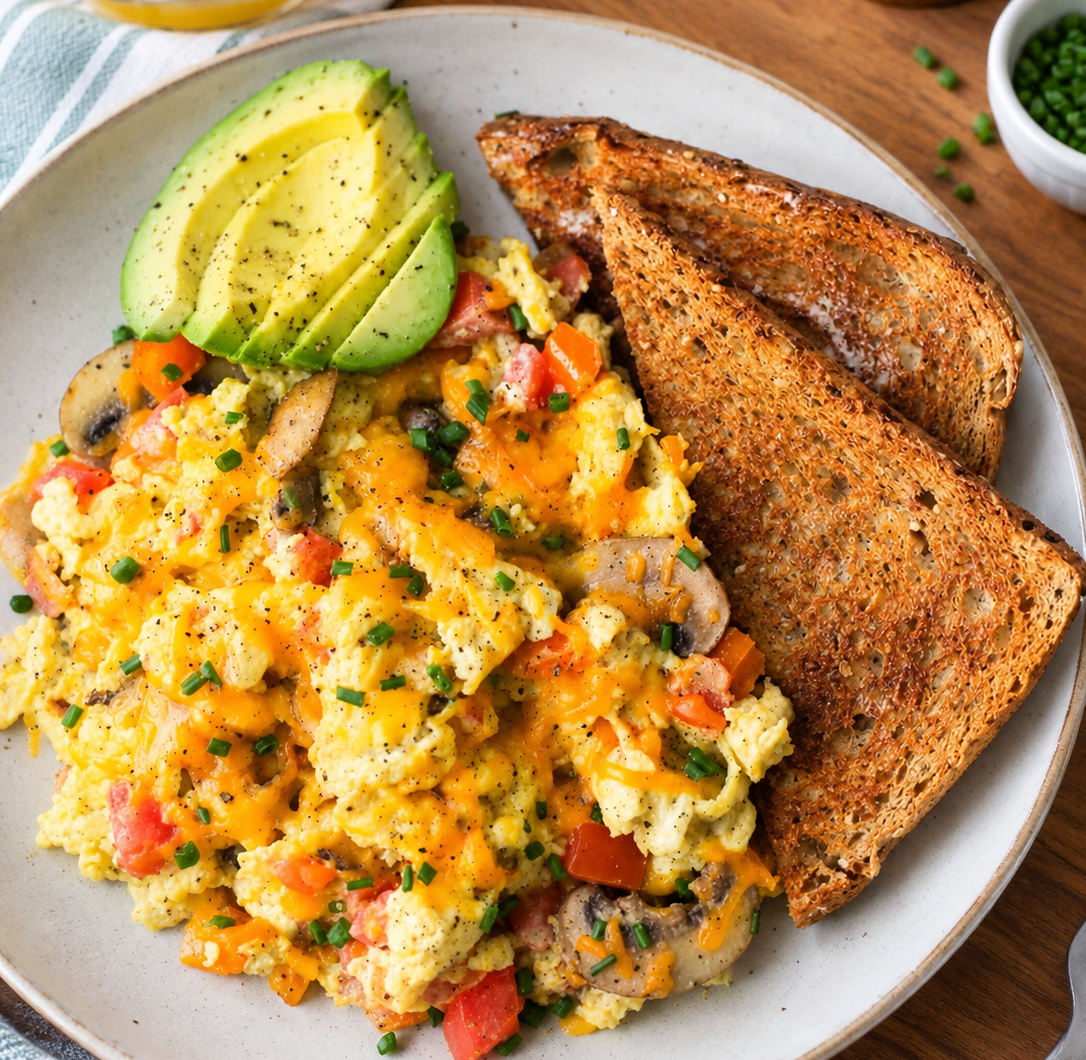
These healthy loaded scrambled eggs combine fluffy eggs, milk, cheddar cheese, cooked bacon, mushrooms, bell peppers, tomatoes, and onion in one delicious skillet. Ready in just 20 minutes, this hearty recipe is ideal for breakfast, brunch, lunch, or dinner.
4
servings5
minutes15
minutes285
kcal20
minutesIngredients
8 eggs
½ cup milk
¼ teaspoon kosher salt
1–2 tablespoons butter
½ small onion, diced
½ cup bell peppers, chopped
¾ cup mushrooms, sliced
2 Roma tomatoes, chopped
4 slices cooked bacon, chopped
½ cup shredded cheddar cheese
Chopped chives, optional, for garnish
Directions
- Whisk the eggs:
In a large bowl, whisk together the eggs, milk, and kosher salt until thoroughly combined. Set aside. - Cook the vegetables:
Melt the butter in a large skillet over medium heat. Add the diced onion, chopped bell peppers, and sliced mushrooms. Cook for a few minutes, stirring occasionally, until the vegetables begin to soften. - Add the tomatoes and bacon:
Stir the chopped Roma tomatoes and cooked, chopped bacon into the skillet. Mix well and allow the ingredients to warm through. - Scramble the eggs:
Pour the egg mixture over the vegetables and bacon. Gently stir with a heat-resistant spatula, allowing the eggs to form soft curds as they cook. Continue until the eggs are fully cooked to your preferred consistency. - Add the cheese:
Sprinkle the shredded cheddar cheese over the warm eggs. Allow it to melt, then remove the skillet from the heat. - Garnish and serve:
Finish with chopped chives, if desired. Serve immediately while the eggs are warm and the cheese is melted.
Notes
- Egg temperature: Bringing the eggs to room temperature before cooking is recommended for more even results.
- Milk choice: Milk adds moisture and creaminess. Full-fat milk is preferred for the original recipe, although cream or non-dairy milk may be used if desired.
- Salt adjustment: If using salted butter or reducing sodium, omit the kosher salt as appropriate.
- Optional additions: The vegetable and bacon add-ins can be adjusted to suit your preferences, but changing or omitting ingredients will alter the original recipe.
- Meal preparation: Chop the vegetables and cooked bacon in advance and store them in covered containers in the refrigerator.
- Recommended utensil: A silicone or other heat-resistant spatula works well for scrambling eggs. Avoid metal utensils on nonstick cookware.
- Storage: Refrigerate leftovers in an airtight container for 1–2 days. Reheat gently until thoroughly hot.
- Serving suggestion: Pair with whole-grain toast, fresh fruit, or a light salad for a more varied meal.
Nutrition Facts
4 servings per container
- Amount Per ServingCalories285
- % Daily Value *
- Total Fat
20g
26%
- Total Carbohydrate
7g
3%
- Dietary Fiber 1g 4%
- Total Sugars 4g
- Protein 19g 38%
* The % Daily Value tells you how much a nutrient in a serving of food contributes to a daily diet. 2,000 calories a day is used for general nutrition advice.
