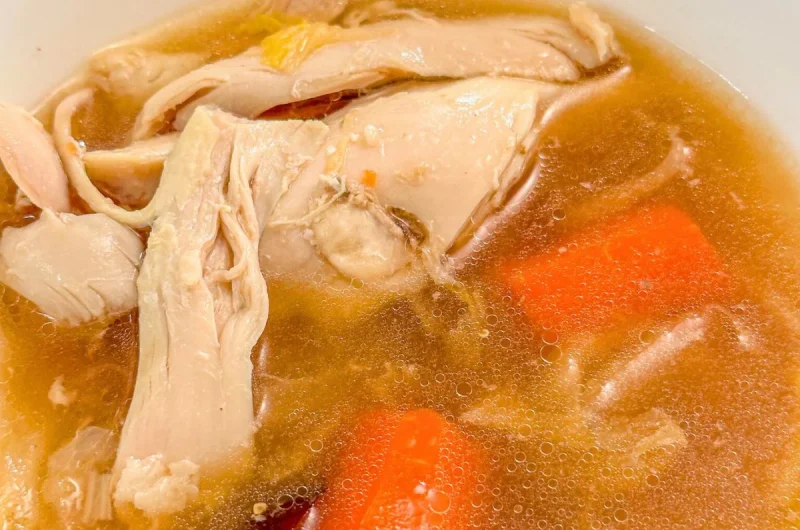

Some soups need very little preparation to turn into something special, and this No-Water Chinese Chicken Soup is a good example. Instead of adding water or chicken stock, I let the chicken and vegetables release their own juices as they cook together in a covered pot. The result is a concentrated broth with a naturally sweet and savory flavor, tender chicken, and the comforting taste of traditional Chinese-style soup.
The combination of whole chicken, napa cabbage, carrots, apple, dates, ginger, and green onions gives this soup its distinctive flavor. The cabbage releases moisture as it softens, while the apple and dates add a gentle sweetness. Ginger and green onions bring a fresh, warming flavor that balances the richness of the chicken.
I also like the option of adding a Chinese herbal soup pack. It gives the broth a deeper, more traditional herbal character, although the soup is still delicious without it. Everything cooks in one pot, which makes this a practical recipe for days when I want a homemade meal without preparing several different dishes.
The most important part of this recipe is the cooking method. The vegetables go into the pot first, and the whole chicken sits on top. Keeping the lid on allows the ingredients to cook in their own released moisture. Once the cooking is finished, I let the pot rest before removing excess oil and seasoning the broth with salt.
What Makes This Soup Different?
- No Water or Stock Is Needed
- Most chicken soup recipes begin with water or stock, but this one takes a different approach. The chicken and vegetables are layered directly into the pot, and no additional liquid is added.
- As the ingredients heat up, moisture comes out of the napa cabbage, chicken, and other vegetables. With the lid securely in place, steam stays inside the pot and helps the ingredients cook gently.
- This creates a concentrated broth rather than a large pot of thin soup. The flavor comes directly from the chicken, vegetables, fruit, and optional herbs, so there is no need to add stock to build the taste.
- Because the recipe relies on natural moisture, a heavy-bottomed pot with a well-fitting lid is helpful. Gentle heat is equally important. The pot should be hot enough to start releasing moisture, but the ingredients should not be left over high heat for too long.A Naturally Sweet and Savory Flavor
- The flavor is one of the best parts of this soup. Chicken provides a rich, savory base, while napa cabbage softens and contributes moisture. Carrots add a mild sweetness, and apple and dates give the broth a subtle fruity note.
- A Naturally Sweet and Savory Flavor
- Ginger and green onions balance those sweeter ingredients. They also help reduce the strong smell that chicken can sometimes have during cooking.
- When Chinese herbs are included, the broth develops a more pronounced herbal taste. Depending on the blend, it may have a slightly earthy or bitter finish. That flavor works well with the sweetness of the apple and dates.
- I prefer to keep the seasoning simple and add salt at the end. This makes it easier to taste the broth after all the ingredients have cooked together.
Ingredients and What Each One Does
- Whole Chicken
- A whole chicken weighing approximately 3.5 to 4 pounds is the main ingredient. Cooking the chicken with its bones and skin helps create a richer broth than using boneless meat alone.
- The bones, skin, and connective tissues contribute body to the cooking liquid. The meat also becomes tender as it cooks slowly in the covered pot.
- Before cooking, the chicken can be cleaned according to your usual kitchen practice. Some Chinese home cooks rub the chicken with salt and use a little cooking alcohol as part of their preparation. This step is optional and is not required by the ingredient list or cooking method.
- The chicken should be placed over the vegetables rather than directly against the bottom of the pot. This helps prevent the skin from browning too much or sticking as the pot heats up.
- Napa Cabbage
- Napa cabbage is especially important because it releases a considerable amount of moisture as it cooks. This makes it a suitable base for a soup that contains no added water.
- I wash the cabbage well and cut it into manageable pieces before arranging it across the bottom of the pot. It forms a soft layer beneath the chicken and helps keep the meat away from direct contact with the hottest part of the pot.
- As the cabbage cooks down, it becomes tender and contributes a mild, slightly sweet flavor to the broth.
- Bok choy or green cabbage can be used as alternatives, but they may release less moisture. Since this recipe depends on the liquid released by its ingredients, napa cabbage is the preferred choice.
- Carrots
- Carrots add color, texture, and natural sweetness. Peeling and cutting them into pieces helps them cook evenly alongside the cabbage and chicken.
- They also complement the apple and dates without making the soup taste overly sweet. As they soften, some of their flavor moves into the broth
- Apple and Dates
- Apple and dates are responsible for much of the soup’s gentle sweetness. They balance the savory chicken flavor without the need for added sugar.
- I peel and chop the apple before adding it to the pot. The dates, or jujube if available, can be added whole or prepared according to their size.
- During cooking, these ingredients soften and contribute their flavor to the broth. They can also be eaten after cooking, although they may become very soft. If preferred, remove the apple and dates before serving.
- An Asian pear or regular pear can replace the apple if you want to try a variation, but the original version uses one apple and three dates or jujube.
- Ginger and Green Onions
- Ginger gives the soup a warm, aromatic flavor, while green onions add a fresh savory note. Together, they help balance the richness of the chicken and the sweetness of the fruit.
- I peel the ginger and cut it into pieces before adding it to the pot. The green onions should also be cut into manageable lengths.
- These ingredients cook with the vegetables and chicken, allowing their flavors to spread through the broth. They can be removed before serving if you prefer a cleaner-looking bowl of soup.
- Optional Chinese Herbal Soup Pack
- A Chinese herbal soup pack is an optional addition for a more traditional herbal flavor. The pack described for this recipe includes goji berries, astragalus membranaceus, codonopsis root, Chinese yam, and polygonatum odoratum.
- Using a prepared pack is convenient because several herbs are already combined. It also avoids the need to buy each ingredient separately.
- The herbs give the soup a more earthy, medicinal taste that some people enjoy in Chinese-style soups. The flavor can be slightly bitter, especially compared with the sweeter version made with only chicken, vegetables, apple, and dates.
- If you prefer a mild chicken soup, simply leave the herbs out. The rest of the recipe stays the same.
How I Prepare the SoupStep
- 1: Prepare the Vegetables and Fruit
- I start by peeling the carrots, apple, and ginger. I cut the carrots into pieces, chop the apple, and prepare the ginger and green onions.
- Next, I wash the napa cabbage thoroughly and chop it into pieces that fit comfortably into the cooking pot.
- Preparing everything before heating the pot makes the rest of the recipe straightforward. Since the ingredients are layered together, there is no need to cook them separately or prepare a stock beforehand.
- Step 2: Build the Vegetable Basee
- I spread the napa cabbage across the bottom of the pot first. Then I add the carrots, apple, dates or jujube, ginger, and green onions.
- If I am using the optional Chinese herbal soup pack, I add it at this stage as well.
- The order matters because the cabbage forms a protective layer between the chicken and the bottom of the pot. This reduces the chance of the chicken skin browning or burning while the ingredients begin releasing moisture.
- I try to distribute the vegetables evenly so that the chicken can sit securely on top.
- Step 3: Add the Whole Chicken
- I place the whole chicken on top of the prepared vegetables. There is no need to add water or chicken stock.
- Once the chicken is positioned, I cover the pot with a well-fitting lid. Keeping the lid closed is essential because the steam and natural juices need to remain inside the pot.
- At this point, the ingredients may not look like a traditional soup because there is little or no visible liquid. That is expected. The broth develops as the chicken and vegetables heat up.
- Step 4: Start Cooking Over Medium Heat
- I begin by cooking the covered pot over medium heat for 15 minutes.
- This initial period helps the ingredients warm up and begin releasing their moisture. I avoid repeatedly lifting the lid because doing so allows steam to escape and interrupts the cooking process.
- The heat should be controlled rather than excessive. The goal is to get the cooking started without scorching the vegetables at the bottom.
- Step 5: Continue Cooking Over Low-Medium Heat
- After the first 15 minutes, I reduce the heat to low-medium and continue cooking for another 45 minutes, keeping the pot covered.
- During this time, the cabbage and other ingredients soften, the chicken cooks, and the released juices collect at the bottom of the pot. The flavors gradually combine into a concentrated broth.
- I keep the heat gentle and make sure the pot does not run dry or begin to scorch. Since no water is added, the amount of liquid depends on the moisture released by the ingredients and the cooking vessel.
- The chicken must be fully cooked before serving. For food safety, check the thickest part of the breast and the innermost part of the thigh with a food thermometer; poultry should reach 165°F (74°C).
- Step 6: Let the Covered Pot Rest
- When the cooking time is finished, I turn off the heat and leave the lid on for another 15 minutes.
- This resting period allows the cooking to settle and gives the juices time to redistribute. It also provides an opportunity for the chicken to finish resting before it is handled or served.
- I keep the lid closed during this stage rather than opening the pot immediately.
- Step 7: Remove Excess Oil and Season
- After resting, I carefully open the lid. Some fat may have risen to the surface, particularly because the soup is made with a whole chicken and its skin.
- I skim off the excess oil with a spoon so the broth tastes rich without feeling overly greasy. The amount of fat to remove is a matter of personal preference.
- I then remove the green onions and any herbal ingredients I do not want in the serving bowls. The softened apple and dates can also be removed if preferred.
- Finally, I taste the broth and add salt as needed. Starting with a small amount, such as 1/4 teaspoon, is a sensible approach because the soup is intended to have a balanced flavor rather than a heavily salted one.
Tips for a Better Result
Keep the Vegetables at the Bottom
- Always place the napa cabbage and the remaining vegetables beneath the chicken. This arrangement helps protect the chicken skin from direct heat and gives the vegetables a chance to release moisture underneath the meat.
Keep the Lid On
- The covered pot is central to this cooking method. Opening it repeatedly releases steam and may slow down cooking. Keep the lid on as much as possible, especially during the initial heating and the longer cooking period.
Use Gentle Heat
- A pot that is too hot can scorch the vegetables before they release enough moisture. Medium heat for the first 15 minutes, followed by low-medium heat for 45 minutes, is the stated method. Adjust the heat as needed for your stove and pot, and always make sure the chicken cooks through safely.
Skim the Fat Before Serving
- Removing some of the oil from the surface helps keep the broth from tasting too greasy. However, the chicken fat does not have to go to waste. It can be saved with some of the extra broth and used to make chicken rice.
Season at the End
- Adding salt after cooking allows the natural flavor of the chicken, cabbage, apple, dates, and herbs to come through. It is easier to adjust the seasoning once the broth has formed.
Serving and Storage
- I like to serve this soup warm, with the chicken and concentrated broth as the main parts of the meal. The tender meat can be served in pieces or pulled from the bones and added to individual bowls.
- For a more complete meal, the chicken can be served with ginger-scallion oil. The extra broth and reserved chicken fat can also be used when preparing chicken rice.
- If there are leftovers, refrigerate them promptly in shallow, covered containers. Cooked chicken and soup should generally be refrigerated within two hours and used within three to four days. Reheat the soup thoroughly before serving.
- Because this soup is concentrated, the amount of broth may be smaller than that of a conventional chicken soup made with added water. That is part of its character: the flavor comes from the ingredients themselves rather than from a large quantity of added liquid.
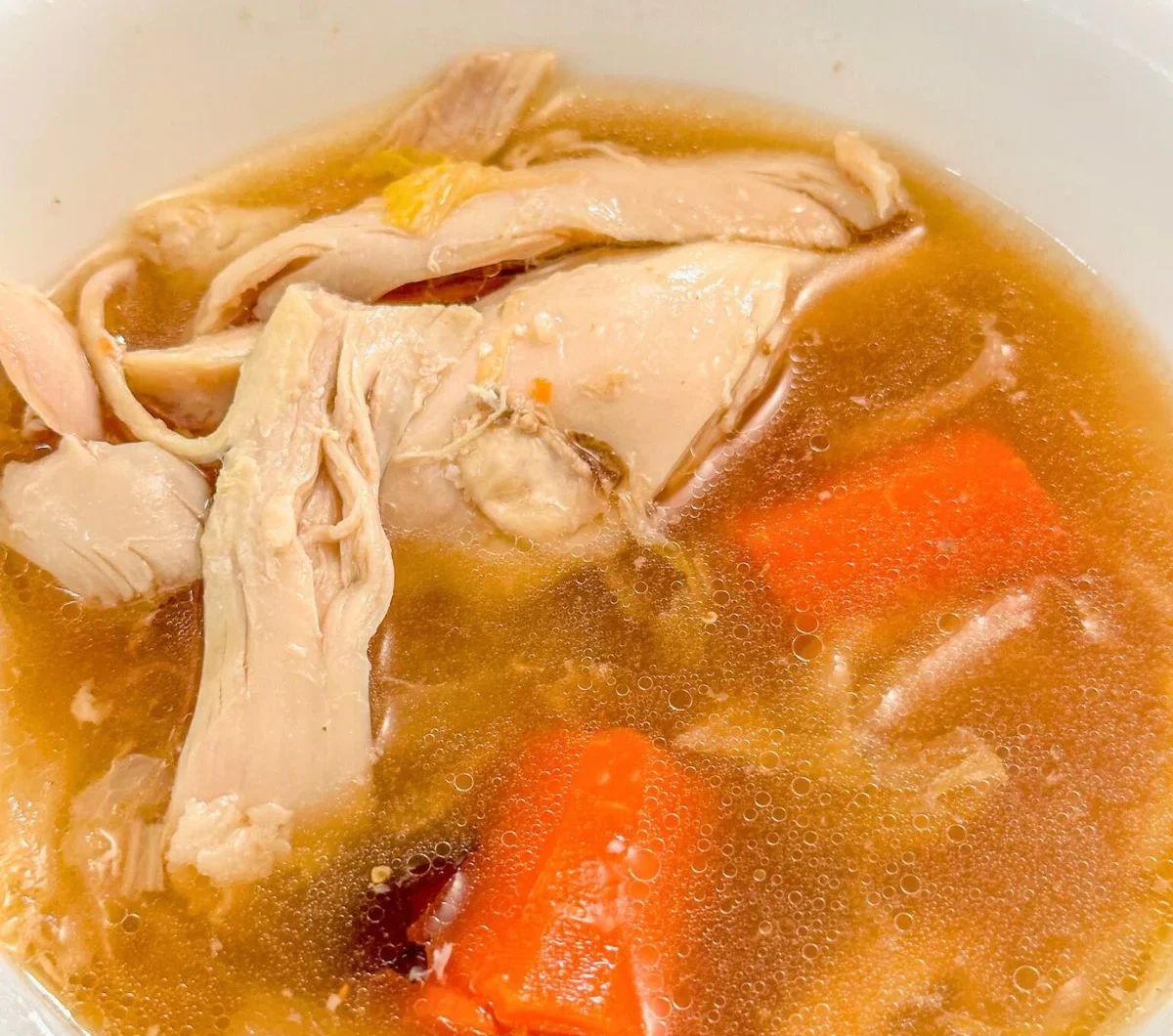
Healthy No-Water Chinese Chicken Soup
A comforting Chinese-style chicken soup made without added water or stock. Whole chicken, napa cabbage, carrots, apple, dates, ginger, and green onions cook together to create a concentrated, naturally sweet and savory broth. Chinese herbal soup ingredients are optional.
2
servings15
minutes1
hour122
kcalIngredients
1 whole chicken (3.5–4 pounds)
½ napa cabbage
2 carrots
1 apple
3 dates or jujube
3-inch piece of ginger
2 green onions
Chinese herbs (optional)
Salt to taste (start with ¼ teaspoon)
Directions
- Peel the carrots, apple, and ginger. Chop the carrots, apple, and green onions.
- Wash the napa cabbage thoroughly and cut it into pieces.
- Place the napa cabbage in the bottom of a suitable cooking pot.
- Add the carrots, apple, dates or jujube, ginger, green onions, and optional Chinese herbs.
- Place the whole chicken on top of the vegetables. Do not add water or stock.
- Cover the pot with a lid and cook over medium heat for 15 minutes
- Reduce the heat to low-medium and continue cooking, covered, for 45 minutes.
- Turn off the heat and let the covered pot rest for another 15 minutes.
- Open the lid carefully and skim excess oil from the surface of the broth.
- Remove the green onions and optional herbs if desired. Remove the apple and dates if preferred.
- Check that the chicken has reached an internal temperature of 165°F (74°C). Add salt to taste and serve warm.
Notes
- Place the vegetables at the bottom to help prevent the chicken from browning or burning.
- Keep the pot covered to retain steam and natural juices.
- Use gentle heat and ensure the pot does not scorch or run dry.
- Chinese herbs are optional and give the soup a more pronounced herbal flavor.
- Bone-in chicken thighs may be used instead of a whole chicken, but the broth yield and cooking time may vary.
- Pear or Asian pear can replace the apple
- Bok choy or green cabbage can replace napa cabbage, although they may release less moisture.
- Skim excess chicken oil before serving. Reserve it with extra broth for making chicken rice.
Nutrition Facts
- Total number of serves: 2
- Calories: 122kcal
- Fat: 1g
- Saturated Fat: 0.2g
- Trans Fat: -2g
- Polyunsaturated Fat: 0.3g
- Monounsaturated Fat: 0.1g
- Cholesterol: 04mg
- Sodium: 67mg
- Potassium: 906mg
- Carbohydrates: 23g
- Fiber: 7g
- Sugar: 17g
- Protein: 4g
- Vitamin A: 11076mcg
- Vitamin C: 71mg
- Calcium: 223mg
- Iron: 1mg
