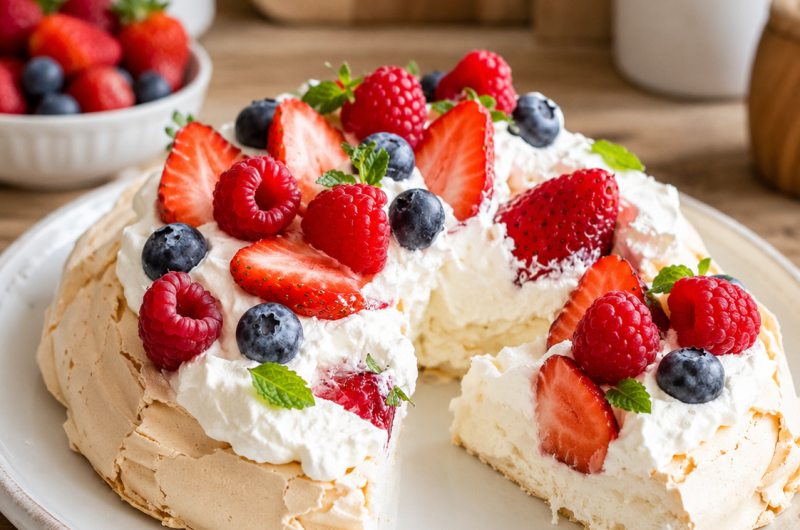

Air fryer pavlova is a simple and impressive summer dessert that combines a crisp, delicate meringue shell with a soft, marshmallow-like centre, lightly whipped cream, and juicy seasonal fruit. Using an air fryer makes this classic dessert surprisingly approachable because the controlled heat helps the meringue dry gradually while keeping the preparation straightforward. This recipe serves 6–8 people, making it an excellent choice for family gatherings, afternoon tea, dinner parties, celebrations, or warm-weather entertaining.
Pavlova is traditionally associated with a crisp exterior and a tender middle, and the contrast is what makes every bite so enjoyable. The meringue provides sweetness and a delicate crunch, while the whipped cream adds richness without overpowering the dessert. Fresh fruit brings acidity, colour, freshness, and natural juiciness. When these components are layered together just before serving, the result is an elegant dessert that looks far more complicated than it actually is.
Why Make Pavlova in an Air Fryer?
An air fryer can be particularly useful for preparing meringue because it provides a compact cooking environment and allows you to work with relatively low temperatures. Instead of heating a large conventional oven, you can prepare the pavlova in the air fryer basket or an air-fryer baking tin lined with parchment. The important part is maintaining the specified temperature and allowing the finished meringue to cool gradually inside the appliance.
This air fryer pavlova recipe is also useful when you want a dessert for a crowd without spending hours preparing complicated pastry. The meringue itself requires only a few ingredients, and most of the preparation involves whisking the egg whites until they reach the right consistency. Once the pavlova is cooking, the process becomes largely hands-off. The fruit and cream can be prepared closer to serving time, keeping the final dessert fresh and attractive.
What Makes This Pavlova Special?
The appeal of pavlova comes from its contrasting textures. Properly baked meringue should have a firm, crisp outer surface while remaining softer and slightly chewy inside. The whipped cream provides a smooth and creamy layer, while the seasonal fruit cuts through the sweetness with its natural acidity. This balance keeps the dessert from feeling overwhelmingly sugary, even though meringue is naturally sweet.
Another advantage is its appearance. A mound of white meringue topped with fluffy cream and brightly coloured fruit creates a centrepiece that works beautifully for summer lunches, birthdays, celebrations, and weekend desserts. You do not need elaborate decorating equipment either. The meringue can simply be spooned onto the parchment and shaped into a mound with a shallow dip in the centre.
Choosing and Preparing the Egg Whites
Egg whites are the foundation of a successful pavlova, so handling them carefully is important. Use clean equipment and make sure the bowl and whisk are completely free from grease. Even a small amount of fat can make it more difficult for the egg whites to develop the volume needed for a stable meringue.
The recipe calls for three egg whites, while the yolks can be saved for another recipe. Separate the eggs carefully so that no yolk gets mixed into the whites. Egg whites generally whisk best when they can increase in volume without interference from fat. Once they begin to foam, continue whisking until they develop stiff peaks before gradually incorporating the sugar.
Getting the Meringue Texture Right
The meringue should become glossy as the sugar is incorporated. Rather than adding all of the sugar at once, add it gradually, spoonful by spoonful, whisking after each addition. This gives the sugar time to dissolve into the egg whites and helps produce a smoother, more stable mixture.
A well-prepared meringue should hold its shape when the whisk is lifted. The mixture should look thick, shiny, and capable of forming firm peaks. Rushing this stage can affect the final texture, so patience is worthwhile. Once the sugar has been incorporated, the vanilla, white wine vinegar, and cornflour are whisked in to complete the meringue mixture.
The Role of Vanilla, Vinegar, and Cornflour
Each of the additional ingredients contributes to the final character of the pavlova. Vanilla adds a gentle aromatic flavour that complements both the cream and fruit. White wine vinegar provides acidity and is traditionally used in pavlova-style meringue recipes. Cornflour contributes to the characteristic texture associated with pavlova, helping the centre remain soft while the exterior becomes crisp during the long, gentle cooking process.
These ingredients should be incorporated after the egg whites and sugar have reached the glossy meringue stage. Avoid overworking the mixture once the final ingredients have been added. The goal is to combine everything evenly while maintaining the volume created during whisking.
How to Shape Pavlova for the Air Fryer
Once the meringue is ready, line the air-fryer basket or a suitable air-fryer baking tin with baking parchment. Cut the parchment into a circle that fits neatly inside the cooking area. This prevents unnecessary folds or excess paper from interfering with the meringue.
Spoon the meringue onto the parchment and shape it into a mound. Create a dip in the middle because this shallow centre will later hold the whipped cream and fruit. You can also pipe the meringue if you want a more decorative finish, but spooning and shaping it is the simplest approach and gives the pavlova a naturally rustic appearance.
Air Fryer Temperature and Cooking Time
Begin by heating the air fryer to 120°C. The pavlova initially cooks at this temperature for 20 minutes. After that, reduce the temperature to 100°C and continue cooking for another 1 hour to 1 hour and 15 minutes. This two-stage process allows the meringue to begin setting before it spends a longer period drying at the lower temperature.
Air fryers can vary, so the exact drying time may depend on the appliance and the size and thickness of the pavlova. The finished meringue should feel crisp on the outside. It is useful to check the bottom as well because the base should also have dried sufficiently before cooling. Avoid opening the appliance repeatedly during cooking because temperature fluctuations can interfere with the drying process.
Why Cooling the Pavlova Matters
One of the most important stages is cooling. When the cooking period is complete, turn off the air fryer but leave the pavlova inside until it has cooled completely. This gradual cooling helps the meringue settle and reduces the chance of a dramatic temperature change affecting its structure.
The pavlova should be handled carefully once it is cool because meringue is naturally fragile. Carefully lift it from the parchment and transfer it to a serving platter or plate. If you are preparing the meringue ahead of time, it can be kept in an airtight container for a day before assembling the dessert.
Preparing the Seasonal Fruit
The fruit topping is deliberately flexible because pavlova works well with many different seasonal fruits. Chop 400g of seasonal fruit into bite-sized pieces so that each portion is easy to eat with the cream and meringue. Using a mixture of fruits can create an attractive combination of colours, flavours, and textures.
Before serving, combine the prepared fruit with icing sugar and allow it to macerate for at least 20 minutes. Maceration gives the fruit time to soften slightly and release some of its natural juices. Those juices become an important part of the finished dessert because they can be drizzled over the fruit and cream, adding extra flavour.
Making the Whipped Cream
The cream should be whipped to soft peaks rather than beaten until very firm. Softly whipped cream has a light, smooth texture that spreads naturally over the meringue. It also provides a pleasant contrast to the crisp outer shell and tender centre.
Be careful not to over-whip the cream. Once it reaches soft peaks, stop whisking and use it immediately or keep it chilled until the pavlova is ready to assemble. The cream is best added shortly before serving because moisture from the cream and fruit can gradually soften the meringue.
How to Assemble Air Fryer Pavlova
Assembly is quick and should ideally happen shortly before the dessert reaches the table. Place the cooled pavlova on a serving platter, then spoon the whipped cream into the dip in the centre. Spread it gently without pressing too hard on the delicate meringue.
Next, arrange the macerated seasonal fruit over the cream. Use the fruit generously so that the topping covers the central area while allowing some of the white cream and meringue to remain visible. Finally, drizzle over any fruit juices left in the bowl. The result should look abundant, colourful, and inviting rather than overly precise.
Best Fruits for Pavlova
Seasonal fruit is ideal because the topping can change throughout the year. Fresh berries are especially popular because their slight acidity balances the sweetness of the meringue. Strawberries, raspberries, blueberries, blackberries, and other soft fruits can create a colourful topping, while chopped stone fruit can provide a different texture and flavour.
The most important consideration is freshness. Very watery or overripe fruit can release excessive liquid, which may soften the meringue quickly. Chop fruit into manageable bite-sized pieces and allow it to drain naturally if it produces a large amount of juice. The goal is to provide enough fruit juice for flavour without making the dessert soggy.
How to Keep Pavlova Crisp
Pavlova is at its best when the meringue retains some crispness. Moisture is its main enemy, which is why the cream and fruit should be added shortly before serving. Store the plain cooled meringue separately in an airtight container if you are preparing it ahead of time.
Avoid refrigerating an undecorated meringue unless necessary because the moisture in a refrigerator can affect its crisp texture. Once the cream and fruit have been added, however, the finished pavlova should be served promptly. The longer the toppings sit on the meringue, the softer the outer shell will become.
Serving Pavlova for a Crowd
Because this recipe makes 6–8 servings, it is particularly suitable for entertaining. Instead of preparing individual desserts, you can present one large pavlova in the centre of the table. Guests can then serve themselves generous portions containing meringue, cream, and fruit.
For a polished presentation, use a wide serving platter that gives the pavlova enough room. The irregular edges of a homemade meringue are part of its charm, so there is no need to make the shape perfectly symmetrical. The colourful fruit naturally adds decoration, while the white whipped cream creates a clean contrast against the topping.
Preparing the Pavlova in Advance
The meringue can be prepared ahead of serving time, which makes this dessert practical for entertaining. Once the pavlova has cooled completely, store it in an airtight container for up to a day. Keep the cream and fruit separate until you are ready to serve.
Preparing the meringue in advance also reduces last-minute kitchen work. On the day of serving, chop the fruit, combine it with the icing sugar, allow it to macerate for at least 20 minutes, whip the cream to soft peaks, and assemble everything shortly before dessert time.
Common Pavlova Problems
A pavlova can sometimes crack as it cools, and this does not necessarily mean the dessert has failed. Pavlova is a delicate meringue dessert and naturally develops cracks as its structure changes during cooling. The cream and fruit topping can cover many small cracks, making them part of the finished appearance rather than a major problem.
If the meringue is not crisp enough, it may need additional drying time. Since air fryers differ in their heat distribution, observe the texture rather than relying only on the clock. The outside should be dry and crisp, and the bottom should also be checked before switching off the appliance.
Notes for the Best Air Fryer Pavlova
For the best results, use a clean bowl and whisk when preparing the egg whites, add the sugar gradually, and make sure the meringue becomes glossy before moving to the next stage. Shape the mixture with a central dip so that the cream and fruit have a natural place to sit.
Do not rush the cooling stage. Leaving the pavlova inside the switched-off air fryer allows it to cool gradually. When storing the plain meringue, keep it protected from humidity. Finally, assemble the cream and fruit close to serving time so the contrast between crisp meringue, soft cream, and juicy fruit remains enjoyable.
Frequently Asked Questions About Air Fryer Pavlova
Can pavlova be made in an air fryer?
Yes. This recipe is specifically designed for an air fryer and uses a low-temperature cooking process followed by gradual cooling. The air-fryer basket or a suitable air-fryer baking tin can be lined with baking parchment before adding the meringue.
Why does pavlova need a low cooking temperature?
Low, controlled heat helps the meringue dry gradually rather than becoming heavily browned on the outside before the interior has developed the desired texture. The recipe begins at 120°C and then reduces the temperature to 100°C for the longer drying stage.
Can the pavlova be made ahead?
Yes. The plain meringue can be stored in an airtight container for a day. For the best texture, keep the whipped cream and seasonal fruit separate and assemble the dessert shortly before serving.
Why should the fruit be macerated?
Combining the fruit with icing sugar and allowing it to stand for at least 20 minutes helps soften the fruit slightly and encourages it to release some juice. The fruit juices can then be drizzled over the finished pavlova for additional flavour.
Can I pipe the meringue instead of spooning it?
Yes. The recipe allows the meringue to be piped if you prefer a more decorative shape. A simple spoon-shaped mound works equally well and is particularly easy for a large pavlova intended to serve several people.
Air fryer pavlova is an elegant dessert that combines straightforward preparation with an impressive final presentation. The crisp meringue, soft centre, lightly whipped cream, and fresh seasonal fruit create a combination of textures that makes this dessert especially appealing during warmer months. Although the meringue requires patience during cooking and cooling, the actual preparation is uncomplicated and requires only a handful of ingredients.
The recipe is also flexible enough to suit different occasions. A large pavlova can become the centrepiece of a family meal, summer gathering, afternoon tea, or celebration. By preparing the meringue ahead and adding the cream and fruit just before serving, you can make the process even easier. With careful whisking, gentle air-fryer cooking, and gradual cooling, this air fryer pavlova provides a beautiful homemade dessert that is crisp, creamy, fruity, and ideal for sharing.
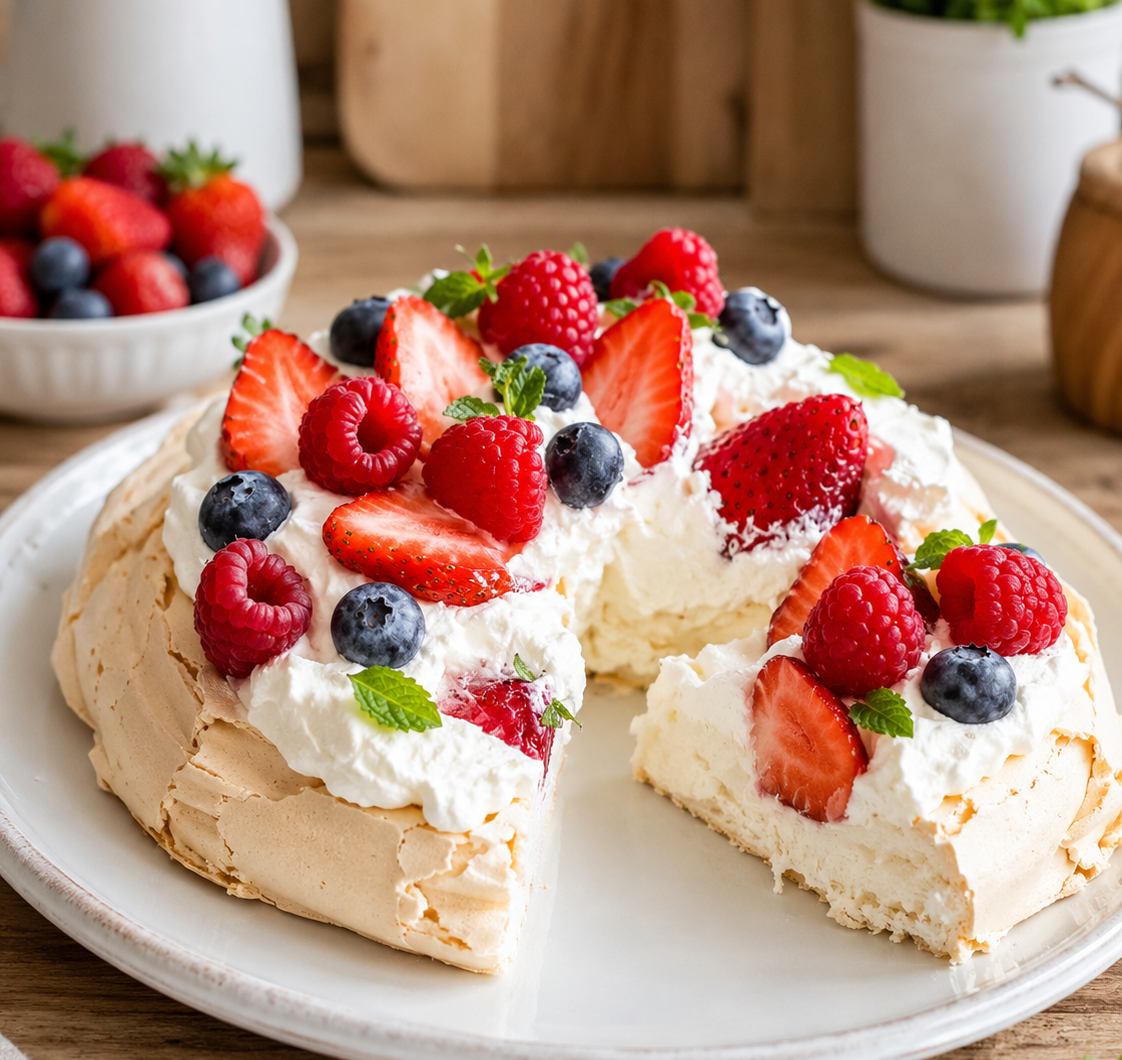
Air fryer pavlova
A light and elegant air fryer pavlova featuring a crisp meringue exterior, soft centre, whipped cream, and seasonal fruit. This easy summer dessert is designed to serve a crowd and makes an attractive centrepiece for gatherings and celebrations.
4
servings15
minutes1
hour35
minutes292
kcal1
hour50
minutesIngredients
3 egg whites (freeze the yolks for another recipe)
185g sugar
½ tsp vanilla
½ tsp white wine vinegar
½ tsp cornflour
400g seasonal fruit, chopped into bite-sized pieces
1 tbsp icing sugar
250ml cream
Directions
- Prepare the air fryer.
- Heat the air fryer to 120°C. Line the air-fryer basket or an air-fryer baking tin with baking parchment. Cut the parchment into a circle that fits neatly inside the cooking area.
- Make the meringue.
- Whisk the egg whites until they form stiff peaks. Gradually whisk in the sugar, adding one spoonful at a time and making sure each addition is incorporated before adding more. Continue until the meringue is thick and glossy.
- Add the flavouring ingredients.
- Whisk in the vanilla, white wine vinegar, and cornflour until evenly combined. Spoon the meringue onto the prepared parchment and shape it into a mound with a dip in the centre for the cream and fruit. Alternatively, pipe the meringue into your preferred shape.
- Begin cooking.
- Place the pavlova in the air fryer and cook at 120°C for 20 minutes.
- Lower the temperature.
- Reduce the air-fryer temperature to 100°C and continue cooking for 1 hour to 1 hour 15 minutes, or until the outside of the meringue is crisp. Check the bottom as well to ensure it has dried sufficiently.
- Cool gradually.
- Turn off the air fryer and leave the pavlova inside until it has cooled completely. Carefully remove the meringue from the parchment and transfer it to a serving platter or plate. The plain meringue can be kept in an airtight container for a day.
- Prepare the fruit.
- Before serving, combine the chopped seasonal fruit with the icing sugar. Leave it to macerate for at least 20 minutes.
- Whip the cream.
- Whip the cream until it reaches soft peaks. Avoid over-whipping so that the cream remains smooth and light.
- Assemble the pavlova.
- Pile the whipped cream into the centre of the cooled meringue. Spoon the macerated fruit over the cream and drizzle over any fruit juice remaining in the bowl.
- Serve immediately.
- Slice or break the pavlova into portions and serve while the meringue still has its desirable crisp exterior and soft centre.
Notes
- Ingredient note: The supplied source text had several blank ingredient descriptions. The quantities and ingredients above preserve the supplied recipe while restoring the descriptors that are explicitly indicated by the method.
Nutrition Facts
- Calories: 292kcal
- Fat: 17g
- Carbohydrates: 32g
- Fiber: 2g
- Sugar: 32g
- Protein: 2g
