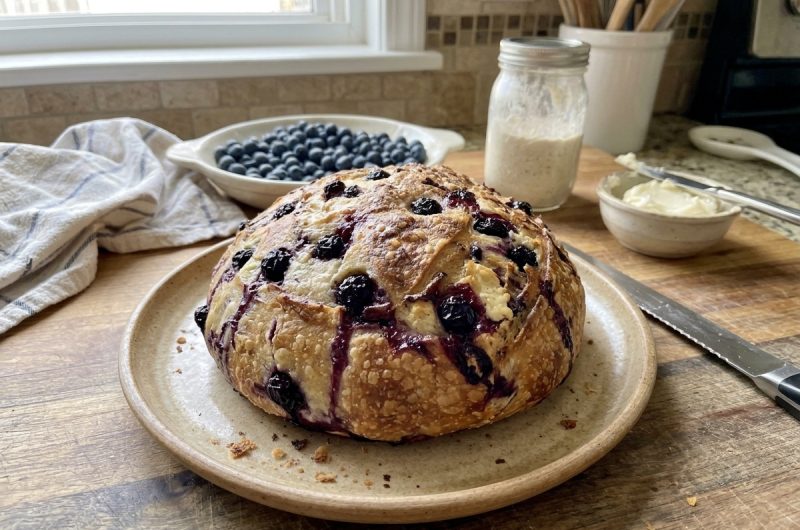

Sourdough Blueberry Cream Cheese Bread is a delicious homemade loaf that combines the naturally tangy flavor of sourdough with juicy blueberries, rich cream cheese, and a touch of sweetness. This beautiful bread has a golden, crusty exterior and a soft, flavorful interior filled with sweet fruit and creamy pockets of cheese. Every slice offers a wonderful balance of slightly sour, fruity, and creamy flavors, making it a special addition to your homemade bread collection.
Unlike traditional sweet breads made with commercial yeast, this blueberry cream cheese sourdough bread uses an active sourdough starter to develop its structure and flavor. The dough goes through a natural fermentation process, which gives the finished loaf its characteristic sourdough taste and chewy texture. Fresh blueberries provide natural sweetness and bursts of fruity flavor, while full-fat cream cheese creates rich, creamy sections throughout the bread.
This recipe is an excellent choice for anyone who enjoys experimenting with sourdough baking beyond traditional artisan loaves. Although the preparation involves several resting and fermentation periods, the ingredients are simple, and most of the process requires very little hands-on attention. Serve a slice for breakfast, enjoy it with an afternoon cup of coffee, or share it with family and friends as a homemade treat.
What Makes This Blueberry Cream Cheese Sourdough Bread Special?
A Delicious Combination of Sweet and Tangy Flavors
One of the best things about this sourdough blueberry bread is the combination of flavors in every bite. The naturally tangy sourdough dough provides a delicious contrast to the sweetness of ripe blueberries and the smooth richness of cream cheese. A small amount of sugar enhances the fruit without making the entire loaf overly sweet, allowing the sourdough flavor to remain noticeable.
The blueberries soften during baking and create juicy pockets throughout the bread. Meanwhile, the cream cheese becomes soft and creamy, giving the interior a cheesecake-inspired quality. These ingredients work together beautifully without turning the loaf into a traditional cake or quick bread. The result is a rustic sourdough boule with a distinctive flavor that is both comforting and satisfying.
Beautiful Homemade Artisan Bread
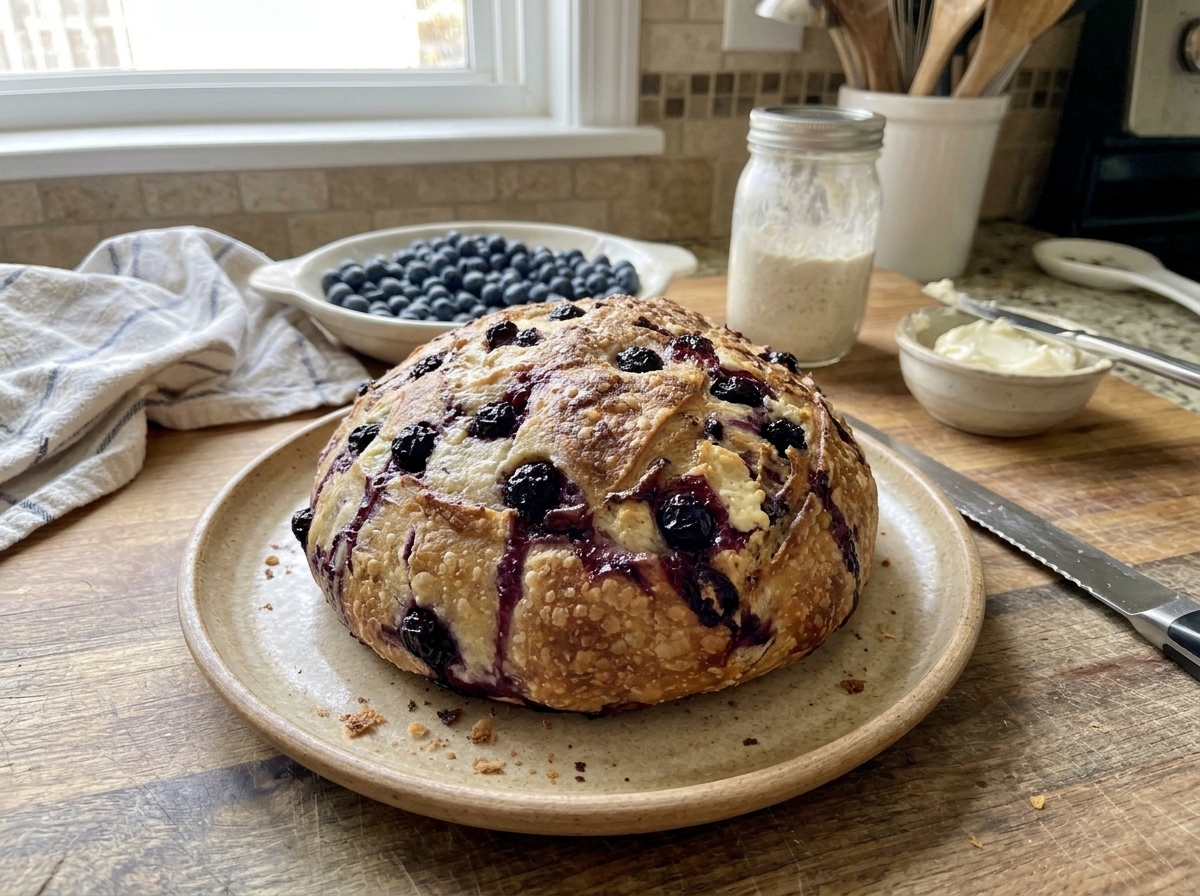
This recipe also produces an attractive loaf that looks wonderful when placed on a serving board or sliced for a breakfast table. The golden crust contrasts with the deep purple and blue shades of the blueberries, while the cream cheese adds lighter, creamy sections throughout the crumb. Each slice has a slightly different appearance because the fruit and cheese are distributed naturally inside the dough.
The round boule shape gives the bread a classic artisan appearance. Although the loaf looks impressive, it does not require complicated shaping techniques or professional baking equipment. A little patience during fermentation, gentle handling, and proper shaping are enough to create a beautiful homemade loaf that tastes as good as it looks.
How to Make Sourdough Blueberry Cream Cheese Bread
Prepare the Sourdough Dough
Start by making sure your sourdough starter is active and bubbly. Add the water, active sourdough starter, and flour to a large mixing bowl. Stir everything together until the ingredients are combined and the flour is fully hydrated. Check the bottom and sides of the bowl to make sure there are no dry patches remaining.
Cover the bowl with a damp tea towel and allow the dough to rest for 30 minutes. This resting period is known as autolyse. It gives the flour time to absorb the water and begins developing the gluten structure naturally. Allowing the dough to rest before adding salt makes it easier to work with during the following mixing and folding stages.
Add Salt and Develop the Dough
After the initial resting period, add the salt to the dough. Work it in thoroughly using your hands until it is evenly distributed. The dough may feel slightly sticky at this stage, which is normal for sourdough. Continue mixing until the salt is incorporated and the dough begins to feel more cohesive.
Cover the bowl again with the damp tea towel and let the dough rest for another 30 minutes. This short resting period gives the dough time to relax before the stretch-and-fold process. Avoid adding unnecessary extra flour simply because the dough feels sticky, as doing so can change its hydration and affect the finished bread’s texture.
Perform the Stretch and Folds
Stretching and folding helps strengthen the gluten structure without requiring traditional kneading. To begin, gently lift one edge of the dough upward using your hands. Stretch it as far as it comfortably allows without tearing, then fold it back toward the center. Rotate the bowl approximately one-quarter turn and repeat the same movement on the remaining sides.
Complete one full set of stretch and folds, then cover the bowl and let the dough rest for 30 minutes. Repeat the same process two more times, allowing another 30 minutes between each set. These gentle movements help the dough develop strength and elasticity, making it easier to hold the blueberries and cream cheese during shaping.
Allow the Dough to Bulk Ferment
Once the stretch-and-fold sessions are complete, cover the mixing bowl and leave the dough to bulk ferment for approximately 8 to 12 hours. During this period, the active sourdough starter works naturally to develop the dough’s flavor and structure. The exact fermentation time depends on the strength of your starter and the temperature of your kitchen.
Watch the dough rather than relying only on the clock. It should become noticeably larger, lighter, and more airy, ideally doubling in size. Proper fermentation is important because it helps create the characteristic texture of traditional sourdough bread. If the dough has not risen sufficiently, allowing additional fermentation time may be necessary before moving to the filling and shaping stages.
Add the Blueberries and Cream Cheese Filling
When the bulk fermentation is complete, transfer the dough onto a lightly floured work surface. Gently pat it into a circular shape approximately one inch thick. Try to handle the dough carefully so you do not remove too much of the air that developed during fermentation. A gentle approach also makes it easier to distribute the filling without damaging the dough.
Cut the full-fat cream cheese block into cubes and arrange the pieces evenly over the dough. Sprinkle the sugar across the cream cheese, then add the fresh blueberries. Spread the ingredients as evenly as possible so that different sections of the finished loaf contain both fruit and creamy filling. Press the blueberries gently into the surface to keep them from rolling away while shaping.
Shape the Bread into a Boule
Begin folding the outer edges of the dough inward to cover the blueberries and cream cheese. Bring each side toward the center and pinch the dough together to help seal the filling inside. A bench scraper can make this process easier, especially when the dough becomes sticky or the blueberries begin moving across the work surface.
Continue folding and rolling the dough until it forms a rounded shape. Use your hands to gently pull the dough across the countertop, creating surface tension. This technique helps the boule maintain its round shape and encourages the loaf to rise upward instead of spreading outward during baking. If any blueberries or cream cheese pieces escape, carefully push them back inside and pinch the dough closed.
Prepare the Final Cold Fermentation
Transfer the shaped boule into a lightly floured banneton basket. If you do not have a banneton, use a regular bowl lined with a clean tea towel and dusted with flour. Position the dough carefully so it maintains its shape. Pinch the opposite edges together in the center several times to build additional surface tension and help secure the filling.
Cover the dough and place it in the refrigerator for approximately 12 to 15 hours. This extended cold fermentation allows the dough to continue developing flavor while becoming easier to handle. It also gives the loaf time to firm up, making it more manageable when transferring and scoring before baking.
Preheat the Dutch Oven
When you are ready to bake, place the Dutch oven inside your oven and preheat to 450°F for approximately one hour. Preheating the Dutch oven thoroughly is important because the hot cooking surface helps the bread begin expanding immediately after it is placed inside. The enclosed environment also traps steam released from the dough.
While the oven heats, carefully remove the fermented dough from the refrigerator. Turn it out onto a sheet of parchment paper, keeping the shape as intact as possible. Use a sharp knife or bread lame to score the surface. Scoring gives the bread a controlled place to expand during baking and adds an attractive finish to the top of the boule.
Bake Until Golden Brown
Carefully transfer the scored dough into the preheated Dutch oven using the parchment paper. Put the lid on and bake for 30 minutes. Keeping the Dutch oven covered during this first stage traps steam, which helps the loaf expand and develop a good crust. Avoid opening the oven unnecessarily because maintaining a consistent baking environment is important.
After 30 minutes, remove the lid and continue baking for another 20 to 25 minutes. The uncovered baking period allows the crust to become golden brown and develop a more noticeable texture. The internal temperature should reach approximately 190°F when the bread is fully baked. Once finished, carefully remove the loaf from the Dutch oven and place it on a cooling rack.
Cool Completely Before Slicing
Although the bread may smell delicious straight from the oven, resist the temptation to cut it immediately. Allow the loaf to cool completely on a wire rack before slicing. The interior continues to settle as the bread cools, helping the crumb develop its proper structure. Cutting into hot sourdough can release steam too quickly and leave the center sticky or gummy.
Once cooled, use a sharp serrated bread knife to cut even slices. You will see the colorful blueberries and creamy sections of cream cheese distributed throughout the interior. The crust should have a pleasant firmness, while the inside remains soft, chewy, and flavorful. Serve the slices plain or lightly warmed according to your preference.
How to Store Sourdough Blueberry Cream Cheese Bread
Because this loaf contains cream cheese and fresh fruit, proper storage is important for maintaining its quality. Once the bread has cooled completely, place it in an airtight container and store it in the refrigerator. Keeping it chilled helps preserve the creamy filling and prevents the fruit from affecting the bread’s freshness too quickly.
When stored properly in the refrigerator, the bread can be kept for up to one week. For longer storage, cut the cooled loaf into individual slices and wrap them securely before placing them in a freezer-safe bag or container. Frozen slices can be stored for up to three months. Thaw the bread at room temperature before serving.
Frequently Asked Questions
Can I Use Frozen Blueberries Instead of Fresh Blueberries?
Yes, frozen blueberries can be used if fresh berries are unavailable. However, it is important to thaw them completely and drain away excess liquid before adding them to the dough. Frozen fruit can release additional moisture during preparation and baking, which may make the dough wetter and more difficult to shape. Fresh blueberries remain the preferred option for this recipe.
Can I Use Sourdough Discard Instead of Active Starter?
No, this recipe is designed and tested using an active sourdough starter. Active starter provides the natural leavening needed to help the bread rise during fermentation. Sourdough discard is generally less active and may not provide enough rising power for the expected texture. For the best results, use a recently fed starter that is bubbly and ready for baking.
Why Did My Sourdough Blueberry Bread Turn Out Gummy?
A gummy interior can happen for several reasons. The dough may not have fermented sufficiently, the loaf may have been removed from the oven before it was fully baked, or the bread may have been sliced while still hot. Measuring the internal temperature, allowing adequate fermentation, and cooling the finished loaf completely can help prevent this problem.
Is This Recipe a Quick Bread or Traditional Sourdough Bread?
This recipe is closer to traditional artisan sourdough bread than a quick bread. It uses an active sourdough starter, natural fermentation, stretch-and-fold techniques, and an extended resting period to develop its structure. Quick breads usually rely on baking powder or baking soda and have a softer, cake-like texture. This blueberry cream cheese loaf has a chewy sourdough crumb, a golden crust, and sweet, creamy filling.
Sourdough Blueberry Cream Cheese Bread
A soft and tender quick bread made with cream cheese, butter, vanilla, and fresh blueberries.
4
servings15
minutes45
minutes385
kcal1
hourIngredients
2 Tbsp all-purpose flour
2 c. fresh blueberries
1 c. butter, softened
8 oz cream cheese, softened
1 1/2 c. sugar
1 1/2 tsp vanilla extract
4 eggs
2 c. all-purpose flour
1 1/2 tsp baking powder
1/2 tsp salt
Directions
- Preheat the oven to 350 degrees F. Grease two 9” x 5” loaf pans.
- Place the fresh blueberries in a bowl and gently toss them with 2 tablespoons of all-purpose flour. Set aside.
- In a large mixing bowl, cream together the softened butter, cream cheese, sugar, and vanilla until well combined.
- Add the eggs one at a time, mixing well after each addition.
- In a separate bowl, combine the remaining all-purpose flour, baking powder, and salt.
- Slowly add the dry ingredients to the wet mixture. Mix just until combined.
- Gently fold the flour-coated blueberries into the batter.
- Divide the batter evenly between the two prepared loaf pans.
- Bake for approximately 45 minutes, or until a toothpick inserted into the center of each loaf comes out clean.
- Remove the loaves from the oven and let them rest on a wire rack for 10 minutes.
- Run a knife around the edges of the loaves to loosen them from the pans. Carefully turn the bread out onto the wire rack.
- Let the loaves cool completely before slicing and serving.
Notes
- Use softened butter and cream cheese so they blend smoothly into the batter
- Toss the blueberries gently with the flour to avoid breaking them.
- Do not overmix the batter after adding the dry ingredients.
- Check the center of the loaves with a toothpick before removing them from the oven.
- Let the bread cool completely on a wire rack before slicing for the best texture.
Nutrition Facts
- Calories: 385kcal
- Fat: 18g
- Saturated Fat: 10g
- Cholesterol: 88mg
- Sodium: 240mg
- Potassium: 140mg
- Carbohydrates: 50g
- Fiber: 1g
- Sugar: 25g
- Protein: 1g
- Vitamin A: 635mcg
- Vitamin C: 2.9mg
- Calcium: 50mg
- Iron: 1.8mg
