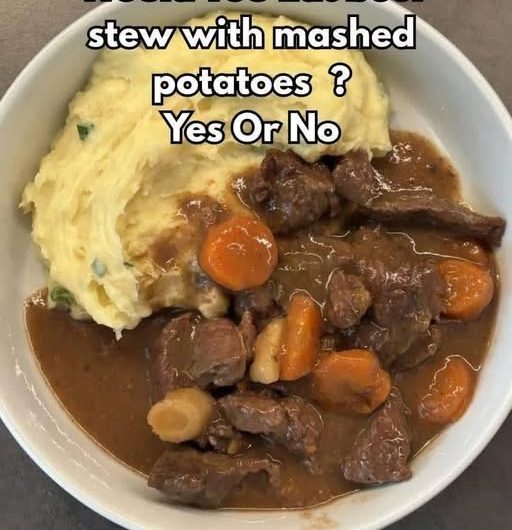

There is something especially comforting about a pot of beef stew slowly cooking on the stovetop. The beef becomes tender, the carrots soften, and the broth turns into a rich, flavorful gravy. Served over creamy mashed potatoes, this simple meal becomes hearty enough for a family dinner while still feeling like the kind of food made at home.
This beef stew keeps things straightforward. There are no complicated techniques or hard-to-find ingredients. The main ingredients are everyday staples: stew meat, carrots, onion, garlic, beef broth, a few herbs, butter, flour, and frozen peas. The long simmering time does most of the work, giving the beef plenty of time to become tender and allowing the flavors to come together.
The mashed potatoes are served underneath the stew rather than mixed into the pot. This makes every spoonful a little different. You get creamy potatoes along with tender beef, soft carrots, peas, and plenty of savory gravy.
Getting the Beef Ready
- The first step is to season the stew meat with salt and pepper. This gives the beef some flavor before it even goes into the pot.
- Heat the olive oil in a large pot or deep skillet. Once the oil is hot, add the seasoned stew meat. Brown the pieces on all sides, which takes about four minutes.
- The goal here is not to cook the beef all the way through. It is simply about giving the outside some color before the longer cooking process begins. Browning adds a deeper flavor to the finished stew and also leaves flavorful bits in the bottom of the pot.
- Try not to rush this step. Let the pieces sit long enough to develop some color before turning them. If the pot is crowded, the beef may release moisture and begin steaming instead of browning.
Adding the Vegetables and Herbs
- Once the beef has browned, add the diced onion and chopped carrots. Follow them with the minced garlic, thyme, rosemary, and bay leaf.
- Cook everything together for about five minutes.
- During this short cooking time, the onion begins to soften while the garlic and herbs become fragrant. The carrots also get a little head start before the stew begins its long simmer.
- The combination of thyme, rosemary, and bay leaf gives the broth a warm, savory flavor without making the stew overly complicated. Since the ingredient list is fairly simple, these herbs have an important role in giving the finished dish its character.
Building the Stew
- After the vegetables have cooked, pour in the beef broth. Use the broth to deglaze the pot, scraping up any flavorful browned bits from the bottom as the liquid goes in.
- Those browned pieces are worth incorporating into the broth. They add extra depth to the liquid and help turn a simple combination of beef and vegetables into a richer-tasting stew.
- Cover the pot and reduce the heat to allow the stew to simmer gently.
- This is where the dish needs patience. The stew should cook for 2 to 4 hours, or until the beef is very tender.
- There is no need to keep the stew at a vigorous boil. A gentle simmer gives the beef time to soften while the carrots cook and the broth takes on the flavors of the meat, vegetables, and herbs.
Letting the Beef Become Tender
- The long cooking time is one of the most important parts of this recipe. Stew meat benefits from slow cooking because the tougher parts of the meat have time to break down and become tender.
- Start checking the beef as it approaches the lower end of the cooking range, but allow it to continue cooking if it is not yet tender. Depending on the size and type of stew meat, the exact time can vary.
- The finished beef should be easy to cut and tender enough to break apart with a fork.
- Before finishing the stew, the meat should reach an internal temperature of 165 degrees.
Preparing the Gravy
- Once the beef is tender, the stew is almost ready. Remove the bay leaf before continuing.
- The final step is what gives the broth more body. In a small bowl, combine the softened butter and all-purpose flour. Stir them together until the mixture is smooth and well incorporated.
- This butter-and-flour mixture is then stirred into the stew.
- Adding the butter and flour mixture helps thicken the liquid, turning the broth into a more substantial gravy. It does not need to become extremely thick. The idea is to give the stew enough body so that the gravy coats the beef, carrots, and potatoes nicely.
Adding the Peas
- The frozen peas go in at the same time as the butter-and-flour mixture.
- Stir everything together and allow the gravy to thicken slightly.
- The peas add a little color and a mild sweetness to the stew. Because they are frozen, they are convenient to add near the end rather than requiring a separate cooking step.
- Once the gravy has thickened slightly, the stew is ready to serve.
Preparing the Mashed Potatoes
- The mashed potatoes are not cooked as part of the stew. They are used as the base for serving.
- Prepare the mashed potatoes separately and keep them warm while the beef stew finishes.
- For the best result, the potatoes should be creamy enough for the gravy to spread over them easily. A generous spoonful of stew on top gives you creamy potatoes, tender beef, vegetables, and gravy in the same bite.
- The contrast between the smooth potatoes and chunky beef stew is one of the best parts of serving the dish this way.
How to Serve the Stew
- Spoon the warm mashed potatoes onto each plate or into a serving bowl. Ladle the beef stew over the top, making sure to include plenty of gravy, beef, carrots, and peas.
- The stew can also be served on its own if mashed potatoes are not desired, but the combination of the two makes the meal especially filling.
- A simple piece of homemade bread alongside the stew is another easy addition. The bread can be used to soak up any extra gravy left on the plate.
- Because the stew is already rich and hearty, there is no need to prepare a complicated side dish. The potatoes and vegetables in the stew make it a satisfying dinner on their own.
Getting the Most Flavor from the Beef
- Browning the beef is a small step, but it makes a noticeable difference. Rather than placing the raw meat directly into the broth, allowing it to brown first gives the finished stew a deeper savory flavor.
- It is also helpful to scrape the bottom of the pot when adding the beef broth. The browned bits left behind after cooking the meat contain plenty of flavor, and the broth loosens them naturally.
- The herbs should remain in the pot while the stew simmers. The bay leaf, in particular, is there to gently flavor the broth and should be removed before serving.
Why the Long Simmer Matters
- A beef stew is one of those meals where the cooking time is part of the recipe. The ingredients may be simple, but slow simmering allows them to change.
- The beef becomes tender, the carrots soften, and the broth develops a richer taste. As the stew cooks, the flavors from the onion, garlic, thyme, rosemary, and beef come together.
- If the beef is still chewy when first checked, it generally needs more cooking time rather than less. Continue simmering until the meat reaches the desired tenderness.
- The cooking range of 2 to 4 hours gives enough flexibility to reach that point without forcing the recipe into one exact cooking time.
Making the Gravy Smooth
- The butter and flour mixture should be stirred together thoroughly before it is added to the stew. This creates a smooth mixture that can be incorporated more easily.
- Add it to the stew and stir well.
- The gravy only needs to thicken slightly. Since the stew is served over mashed potatoes, there is no need for an extremely thick sauce. A spoonable gravy works especially well because it can soak into the potatoes while still coating the beef and vegetables.
- If the stew seems a little loose immediately after adding the butter mixture, give it a little time. The gravy will thicken as it incorporates into the hot liquid.
A Simple Make-Ahead Dinner
- Beef stew is also convenient for making ahead. Once the stew has cooled completely, transfer it to an airtight container and place it in the refrigerator.
- It can be stored in the fridge for 4–5 days.
- This makes it useful for preparing dinner ahead of time or keeping leftovers for another meal. The stew can be reheated when needed and served with freshly prepared mashed potatoes.
- For the best texture, the mashed potatoes can be made separately rather than storing them together with the stew.
Freezing Leftover Beef Stew
- The stew can also be frozen.
- Once cooled, transfer it to a freezer-safe container or freezer Ziploc bags. Using quart-size bags is especially convenient when smaller portions are wanted for individual meals.
- If using bags, leave enough room for the stew to expand as it freezes and make sure the container or bag is properly sealed.
- When ready to use, thaw the stew safely and reheat it until hot.
- Freezing the stew separately from the mashed potatoes also makes it easier to prepare fresh potatoes when serving.
Reheating the Stew
- For stovetop reheating, place the leftover stew in a small saucepan and warm it over moderate heat for a few minutes, stirring as needed.
- It can also be reheated in the microwave for about 2 minutes, stirring periodically so that the heat distributes evenly.
- If the stew has been refrigerated, make sure it is heated thoroughly before serving.
- Once hot, spoon it over warm mashed potatoes and serve immediately.

Healthy Beef Stew with Creamy Mashed Potatoes
A hearty homemade beef stew made with tender stew meat, carrots, onion, garlic, herbs, and beef broth. The stew is finished with a simple butter-and-flour mixture and frozen peas, then served hot over creamy mashed potatoes.
4
servings20
minutes20
minutes341
kcalIngredients
2 tbsp olive oil
1 lb stew meat
4 large carrots, peeled & chopped
1 onion, diced
2 cloves garlic, minced
Salt & pepper to taste
1/4 tsp thyme
1/4 tsp rosemary
1 large bay leaf or 2 small
2 cups beef broth
2 tbsp all-purpose flour
1/3 cup frozen peas
Mashed potatoes, for serving
Directions
- Season the stew meat with salt and pepper
- Heat olive oil in a large pot or deep skillet. Add the beef and brown on all sides, about 4 minutes.
- Add the carrots, onion, garlic, thyme, rosemary, and bay leaf. Cook for about 5 minutes.
- Pour in the beef broth and scrape the bottom of the pot to loosen the browned bits.
- Cover and simmer for 2–4 hours, or until the beef is very tender and reaches an internal temperature of 165 degrees.
- Remove the bay leaf.
- In a small bowl, mix the softened butter and flour until smooth.
- Stir the butter mixture into the stew along with the frozen peas.
- Continue stirring until the gravy thickens slightly.
- Serve the hot beef stew over mashed potatoes.
Notes
- The stew can be refrigerated in an airtight container for 4–5 days after cooling completely.
- For freezing, transfer the cooled stew to a freezer-safe container or freezer Ziploc bags. Quart-size bags work well for individual portions.
- Reheat on the stovetop in a small saucepan for a few minutes, stirring as needed, or microwave for about 2 minutes, stirring periodically.
- Serve the stew over warm mashed potatoes for the creamiest combination.
- The stew can also be enjoyed on its own.
Nutrition Facts
- Total number of serves: 4
- Calories: 341kcal
- Fat: 18g
- Saturated Fat: 6g
- Cholesterol: 76mg
- Sodium: 604mg
- Potassium: 716mg
- Carbohydrates: 13g
- Fiber: 2g
- Sugar: 4g
- Protein: 28g
- Vitamin A: 5mcg
- Vitamin C: 11mg
- Calcium: 61mg
- Iron: 3.1mg
