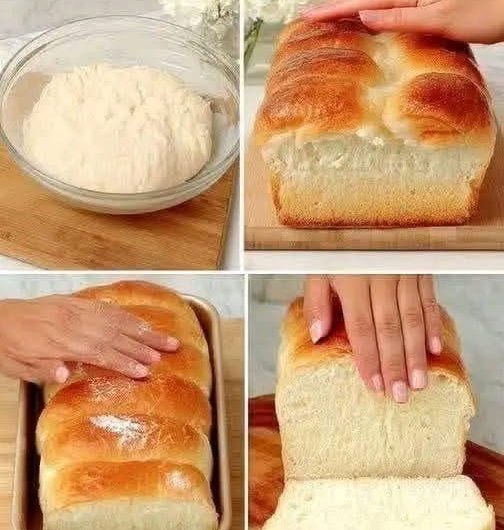

Cloud bread is one of those recipes that is surprisingly simple once you see how it comes together. It does not have the same flavor or texture as a traditional loaf of bread, so I would not expect it to behave exactly like regular sandwich bread. Instead, it has its own light, airy character. The outside develops a delicate golden color while the inside stays soft, white, and fluffy.
When I make this at home, I think of it more as a fun bread alternative than a replacement for a traditional loaf. It is especially useful when I want something different for breakfast, lunch, dinner, or even a light dessert.
The best part is that the recipe uses only a few ingredients. There is no flour involved, which also makes it gluten-free, and most of the actual work is done by the mixer and oven.
Why I Like Making Cloud Bread
- One of the reasons I keep coming back to this recipe is how little preparation it requires. There is no yeast to activate, no dough to knead, and no long rising period. Instead, the main technique is whipping the egg whites until they form stiff peaks.
- That step is what gives the bread its airy texture, so it is important to handle it carefully. Once the egg whites are whipped properly, the remaining ingredients are incorporated while the mixer is running, and the mixture is ready to shape.
- I also like that the same mixture can be used in different ways. If I want a loaf, I shape it into a loaf. If I want buns, I make individual rounds. With a little change in shape, the same recipe can work for different meals.
The Most Important Step: Separating the Eggs
- The egg whites are the foundation of this cloud bread, so I pay close attention when separating the eggs.
- Even a little yolk getting into the whites can prevent them from whipping properly. To avoid that problem, I separate the eggs one at a time into a separate bowl rather than separating them directly into the mixing bowl.
- I crack an egg and allow the white to fall into the bowl while carefully keeping the yolk intact. I can then move the yolk between the two shell halves, letting the remaining white drip into the bowl.
- Once the white is separated, I transfer it to the mixing bowl.
- This small extra step is worth doing because it gives me more control and helps prevent an entire batch of egg whites from being affected by an accidental broken yolk.
- If I use egg whites from a carton instead, the provided recipe calls for 6 tablespoons rather than the whites from three eggs.
Getting the Egg Whites Right
- Once the egg whites are ready, I put them into my stand mixer. A hand mixer and a large bowl work just as well if that is what I have available.
- I beat the whites on high until they begin forming stiff peaks. This is the stage where I want to make sure the mixture has enough structure to hold its shape.
- The texture at this point is very different from ordinary bread dough. It is light and airy rather than thick and stretchy. That is exactly what I am looking for.
- I avoid rushing this part. The whipped egg whites are responsible for much of the final texture, so getting them to stiff peaks is one of the most important things I can do for the recipe.
Adding the Remaining Ingredients
- With the egg whites whipped, I slowly add the sugar while the mixer continues running on high.
- The recipe also allows for a zero-calorie sweetener such as Splenda as an alternative to the sugar. Since the ingredient list provides both options, I can choose the one that fits what I am making.
- Next comes the cornstarch, followed by the vanilla. These ingredients are added while the mixture is still being beaten.
- I let everything mix well before moving on to shaping the bread. At this stage, I want the ingredients evenly incorporated without losing the airy quality that I worked to create in the egg whites.
Shaping the Cloud Bread
- For a loaf, I line a baking sheet with parchment paper. Then I transfer the egg-white mixture onto the prepared sheet and shape it into a loaf.
- This is where I can also have a little fun with the appearance. Before baking, I can use a butter knife to make a simple design across the top.
- The loaf does not need to look perfectly uniform. The goal is simply to give the mixture a loaf shape and make sure it is sitting on the parchment-lined baking sheet.
- If I want to make individual buns instead, I divide the mixture into round shapes on the parchment paper. These can be made roughly the size of hamburger buns.
- For hot dog buns, I shape the mixture into longer, oblong shapes.
- If I want something closer to traditional sandwich bread, a parchment-lined metal loaf pan can be used to create that familiar loaf shape.
- The recipe can even be shaped into large, flat circles when I want a tortilla-style option.
Baking the Loaf
- Once the cloud bread is shaped, I place it into an oven that has been preheated to 300 degrees.
- The baking time is 20 to 25 minutes.
- I look for the outside to develop a light golden-brown color. The appearance is quite different from traditional bread because the exterior can become lightly browned while the interior remains pale and fluffy.
- I avoid slicing the loaf as soon as it comes out of the oven. Cooling is an important part of the process, so I let the bread cool completely before cutting it.
- Once it has cooled, I can slice it and use it however I like.
What the Finished Bread Is Like
- The texture is one of the most interesting things about cloud bread. It is extremely light compared with a conventional loaf.
- The inside is soft and fluffy, while the outside has a light golden color. The texture can remind me of angel food cake, which also makes it easy to imagine this bread being used in sweet applications.
- It is important to remember that this is not regular bread. If I expect a traditional chewy sandwich loaf, I will probably be disappointed. If I treat it as its own type of light bread, however, it becomes much more versatile.
- Because it can work with both sweet and savory foods, I can use it throughout the day.
Breakfast Ideas
- For a quick breakfast, I can simply spread softened butter over thin slices and add a drizzle of honey.
- The bread can also be turned into a breakfast sandwich. If I have shaped the mixture into hamburger-style buns, I can use them with bacon, egg, and cheese.
- Another option is French toast. For this, I cut the cloud bread into thicker slices, soak the slices in an egg custard, and pan-fry them.
- These ideas make the bread more than something to eat on its own. The light texture gives me a base that can be paired with different breakfast ingredients.
Lunch Ideas
- For lunch, the sweetness of the bread works especially well with a simple peanut butter and jelly sandwich.
- I can also build a regular sandwich using my choice of meats, cheeses, and condiments. This is a good way to make the bread feel more like a traditional lunch option while still enjoying its lighter texture.
- When assembling sandwiches, I like to keep the fillings balanced so they do not overwhelm the delicate bread.
Dinner Ideas
- Cloud bread does not have to be limited to breakfast or lunch.
- At dinner, I can serve slices alongside my choice of protein and vegetables. Because the bread is light, it can work as an accompaniment rather than becoming the main part of the meal.
- This makes it a convenient option when I want something bread-like on the side without preparing a traditional loaf.
Dessert Ideas
- The light texture also opens the door to dessert.
- One simple idea is to top pieces of cloud bread with fresh fruit and whipped cream. This gives the bread a sweeter presentation without requiring a complicated preparation.
- Another idea is a deconstructed bread pudding. Instead of baking the cloud bread into a traditional pudding, I can chop it into pieces and place it in a bowl with spices, sauce, and dried fruit.
- A Few Things to Keep in Mind
- The biggest thing to remember is the egg whites. They need to be free from yolk, and they need to be beaten until stiff peaks form.
- I also find it helpful to separate the eggs in a separate bowl. That way, if a yolk breaks, I do not risk contaminating all of the egg whites already prepared for the mixer.
- The recipe is straightforward once this technique is understood.
- I also make sure the oven is fully preheated to 300 degrees before baking. Since the bread only needs 20 to 25 minutes in the oven, having the correct temperature from the beginning helps keep the timing consistent.
- Finally, I let the loaf cool completely before slicing. The bread is delicate, and giving it time to cool makes it easier to handle.
Making It Part of a Low-Carb Routine
- The recipe is designed as a low-carb and high-protein bread variation, and the supplied nutritional information changes depending on whether regular sugar or a zero-calorie sweetener is used.
- With regular white granulated sugar, the recipe information lists 179 calories, 10 grams of protein, 34 grams of net carbohydrates, and 0.1 grams of fat for the entire loaf.
- With a zero-calorie sweetener such as Splenda, the listed nutritional information is 93 calories, 10 grams of protein, 8.2 grams of net carbohydrates, and 0.1 grams of fat.
- Those figures are for the entire loaf, which the recipe considers one serving.
- The recipe is also flourless, making it a gluten-free option based on the ingredients provided.
The Bottom Line
- What I like most about this cloud bread is how uncomplicated it is. I do not need flour, yeast, or a complicated bread-making process. The main technique is whipping the egg whites properly, adding the remaining ingredients, shaping the mixture, and baking it.
- The finished loaf is light, fluffy, and different from traditional bread. That difference is part of what makes it useful.
- I can make it into a loaf for slicing, buns for breakfast sandwiches, longer shapes for hot dogs, or flat rounds for a tortilla-style option. I can pair it with savory fillings, use it for breakfast, or turn it into a simple dessert with fruit and whipped cream.
- Once the loaf has cooled completely, it is ready to slice and enjoy. It is a simple recipe to keep around whenever I want a bread alternative that comes together without the usual bread-making process.The pieces can be assembled so that the bread retains some of its fluffy texture.
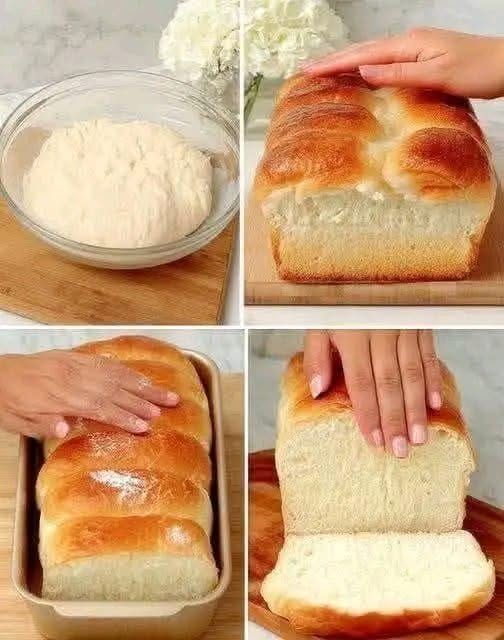
High-Protein, Low-Carb Cloud Bread
A light, fluffy, flourless cloud bread made with egg whites, sugar or a zero-calorie sweetener, cornstarch, and vanilla. Shape it as a loaf, buns, or flat rounds depending on how you plan to serve it.
1
servings10
minutes25
minutes179
kcalIngredients
3 egg whites
2 tablespoons sugar
1 tablespoon cornstarch
1 teaspoon vanilla
Use 2 tablespoons of a zero-calorie sweetener such as Splenda instead of the sugar.
Directions
- Preheat the oven to 300 degrees.
- Separate the egg whites from the yolks carefully. Make sure no yolk gets into the egg whites.
- Place the egg whites in a stand mixer, or use a hand mixer with a large bowl.
- Beat on high until stiff peaks begin to form.
- While continuing to beat on high, slowly add the sugar or Splenda.
- Add the cornstarch and vanilla while the mixture continues to beat.
- Once everything is well combined, transfer the mixture to a parchment-paper-lined baking sheet.
- Shape the mixture into a loaf.
- If desired, use a butter knife to make a design on the top.
- Bake at 300 degrees for 20–25 minutes, until the outside is lightly golden.
- Allow the cloud bread to cool completely before slicing.
Notes
- Keep all yolk out of the egg whites or they may not whip properly.
- Separating each egg into a separate bowl first can help prevent accidental yolk contamination.
- If using store-bought egg whites from a carton, use 6 tablespoons.
- For hamburger buns, shape the mixture into circles.
- For hot dog buns, shape it into oblong buns.
- For sandwich bread, use a parchment-paper-lined metal loaf pan.
- For tortilla-style bread, shape the mixture into large, flat circles.
- Store at room temperature in a Ziploc bag or airtight container for up to 3 days.
- Store in the refrigerator in an airtight container or Ziploc bag for up to 1 week.
Nutrition Facts
- Calories: 179kcal
- Fat: 0.1g
- Carbohydrates: 34g
- Protein: 10g
