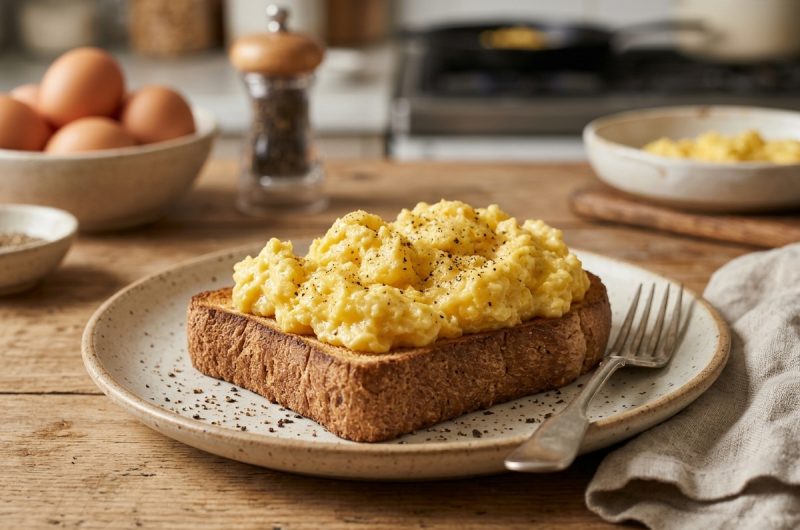

Fluffy Scrambled Eggs are a simple breakfast favorite that can turn an ordinary morning meal into something delicious and satisfying. Made with fresh eggs, butter, salt, and a little milk, this classic dish is easy to prepare using basic kitchen ingredients.
The secret to making excellent scrambled eggs is understanding how to control the heat, when to add seasoning, and how to move the eggs around the pan while they cook. With the right technique, you can make eggs that are light, tender, moist, and full of flavor.
Although scrambled eggs are one of the easiest breakfast recipes, small changes in preparation can make a noticeable difference in the final texture. Some people enjoy soft and creamy scrambled eggs with tiny curds, while others prefer large, fluffy pieces similar to those served at traditional American diners.
Both styles can be delicious, but this recipe focuses on making fluffy scrambled eggs with soft, airy curds and a slightly firm texture. It is a wonderful option for breakfast, brunch, or a quick meal whenever you need something filling without spending much time in the kitchen.
This Fluffy Scrambled Eggs Recipe
One of the best things about homemade fluffy scrambled eggs is how quickly they come together. You do not need special cooking equipment, complicated preparation methods, or a long list of ingredients. A mixing bowl, whisk, nonstick skillet, and silicone spatula are enough to prepare a satisfying breakfast. Because the recipe uses everyday ingredients, it is also easy to make whenever you have eggs available in the refrigerator.
Another reason to enjoy this recipe is its versatility. Fluffy scrambled eggs taste delicious on their own, but they can also be served with buttered toast, breakfast potatoes, fresh fruit, or sliced avocado. You can keep the seasoning simple with salt and butter or introduce additional ingredients such as shredded cheese, fresh herbs, and cooked vegetables. This flexibility makes scrambled eggs suitable for different tastes and breakfast preferences.
The cooking technique is equally important because it allows you to control how soft or firm the eggs become. Instead of cooking them until they turn dry and rubbery, you can remove the skillet from the heat as soon as the eggs reach your preferred consistency. The remaining warmth helps finish the cooking process while keeping the curds tender. Once you understand this simple technique, preparing delicious scrambled eggs becomes much easier.
Should You Salt Eggs Before or After Cooking?
One common question when making scrambled eggs is whether salt should be added before cooking or sprinkled over the eggs after they are finished. Some home cooks believe that seasoning eggs too early makes them watery or changes their texture. However, adding salt to beaten eggs before cooking is perfectly acceptable and can actually help produce tender results.
Salt interacts with the proteins in eggs and can influence how tightly they connect as the mixture heats. When egg proteins become tightly linked, they can push moisture out of the mixture, creating a firmer and sometimes drier texture. Salt helps moderate this process, which can make the cooked eggs slightly more tender. The difference is not dramatic, but it is a useful detail when trying to achieve a better result.
For everyday cooking, you can simply add salt while whisking the eggs before placing them in the skillet. There is no need to prepare the mixture several hours in advance. Seasoning immediately before cooking gives you a convenient way to distribute the salt evenly throughout the mixture. You can also adjust the seasoning near the end if you prefer more control over the final flavor.
Should You Add Milk, Cream, or Water to Scrambled Eggs?
Adding milk, cream, or water to scrambled eggs is a popular way to change their texture. Each ingredient produces a slightly different result, so your choice depends on whether you prefer lighter, richer, or softer eggs. Although plain beaten eggs can produce excellent scrambled eggs, a small amount of liquid may help create a different consistency when used carefully.
Whole milk is a useful option for people who enjoy moist scrambled eggs with a mild creamy flavor. It contributes both water and fat, which can make the finished eggs feel richer without becoming excessively heavy. For a balanced mixture, a small quantity of milk is generally enough. Too much can make the eggs loose and increase the chance of moisture separating during cooking.
Heavy cream produces a richer and denser result because it contains more fat than regular milk. It can make scrambled eggs taste luxurious, but larger quantities may create a custard-like texture that is not ideal for everyone. Water, on the other hand, adds moisture without contributing much flavor or richness. It can create lighter eggs, although the overall result depends heavily on how gently and evenly the mixture is cooked.
For this recipe, milk is a practical choice when you want fluffy eggs with a little extra tenderness. However, remember that adding liquid is optional. You can still make excellent scrambled eggs without milk by controlling the temperature and avoiding overcooking. The cooking method has a greater influence on the final texture than the liquid you choose to add.
How Heat Affects the Texture of Scrambled Eggs
Heat is one of the most important factors in preparing fluffy scrambled eggs. Eggs contain proteins that begin changing structure as soon as they are exposed to heat. If the temperature is too high for too long, the proteins tighten and squeeze out moisture. This can make the eggs dry, tough, or rubbery instead of soft and tender.
For large, fluffy scrambled eggs, medium-high heat works well when using a nonstick skillet and a little butter. The pan should be hot enough to cook the mixture efficiently without burning the butter or browning the eggs too quickly. When the beaten eggs enter the skillet, they should begin setting on the bottom within a short time. This creates the foundation for larger curds.
The most important thing is to watch the eggs rather than relying entirely on a cooking timer. Different skillets, burners, and egg quantities can affect how quickly the mixture cooks. If the bottom begins setting too rapidly, reduce the heat slightly. If nothing happens after the eggs are added, the skillet may not be hot enough. Learning to recognize these changes will help you achieve consistent results.
The Best Technique for Large and Fluffy Egg Curds
The way you move the eggs around the skillet determines the size and texture of the curds. For diner-style scrambled eggs, you want larger pieces rather than continuously stirring the mixture into tiny fragments. A silicone spatula is especially helpful because it allows you to lift the cooked portions gently while moving the uncooked eggs toward the hot surface.
Begin by melting butter in a nonstick skillet over medium-high heat. Once the butter has melted and started foaming, pour in the beaten eggs. Allow the mixture to sit briefly so that a thin layer begins setting along the bottom of the skillet. Use your spatula to gently move the cooked egg toward the center while allowing the uncooked mixture to spread into the empty spaces.
Continue this process without breaking every piece into smaller sections. Large, soft folds should gradually form as the eggs cook. Gently turn the curds so that the uncooked portions come into contact with the warm skillet. This technique helps create fluffy scrambled eggs with a light interior and larger pieces that hold their shape.
When most of the liquid has disappeared but the eggs still look slightly moist, remove the skillet from the heat. The residual warmth will continue cooking them for a short time. This final step is important because waiting until the eggs look completely dry in the pan can result in overcooked scrambled eggs by the time they reach the serving plate.
Soft Scrambled Eggs vs. Fluffy Scrambled Eggs
There are several ways to prepare scrambled eggs, and the best technique depends on the texture you enjoy. Soft scrambled eggs are cooked gently and stirred frequently to create small, delicate curds. They often have a creamy consistency and may appear slightly loose when served. This style is popular in restaurants where eggs are prepared slowly over lower heat.
Fluffy scrambled eggs are different because they usually contain larger curds and have a more noticeable structure. The cooking temperature is generally higher, and the eggs are moved less frequently. Instead of continuously stirring the mixture, the cook gently folds the setting eggs into larger pieces. This creates the familiar texture associated with classic American breakfast plates.
Neither method is necessarily better than the other. Soft scrambled eggs are ideal when you enjoy a creamy texture, while fluffy scrambled eggs are a great choice when you prefer larger, airy curds that can be served alongside toast, bacon, potatoes, or vegetables. Understanding the difference allows you to adjust the technique to suit your taste.
Delicious Ingredients to Add to Scrambled Eggs
Once you are comfortable making basic scrambled eggs, you can experiment with different additions. Cheese is one of the easiest choices because it melts into the warm eggs and creates a richer flavor. Cheddar, mozzarella, Monterey Jack, and Parmesan are all suitable options. Add shredded cheese near the end of cooking so it has enough time to melt without affecting the texture of the eggs.
Fresh herbs can also bring a pleasant flavor and a little color to the finished dish. Chives, parsley, dill, and green onions work particularly well. Chop the herbs finely and stir them into the eggs shortly before removing the skillet from the heat. This helps preserve their fresh flavor while allowing them to become evenly distributed throughout the mixture.
Vegetables are another excellent addition, especially when you want a more substantial breakfast. Bell peppers, spinach, mushrooms, onions, and tomatoes can all complement scrambled eggs. However, vegetables should be prepared carefully because some release a considerable amount of water during cooking. Excess moisture can make the eggs watery and interfere with the fluffy texture you are trying to achieve.
How to Add Vegetables Without Making Eggs Watery
Vegetables such as mushrooms, tomatoes, zucchini, and spinach contain moisture that can be released when exposed to heat. If they are added directly to raw eggs, their liquid may collect in the skillet and affect the final consistency. Cooking these vegetables separately before combining them with the eggs is a simple way to prevent this problem.
Mushrooms and onions should be cooked until softened and their excess moisture has evaporated. Spinach can be wilted in a separate pan and drained before being added to the finished eggs. For fresh tomatoes, removing some of the seeds and watery interior can help. You can also lightly salt diced tomatoes and allow them to sit briefly so that some of their moisture is released before cooking.
If you want colorful vegetables without changing the appearance of your eggs, prepare them separately and add them just before serving. This gives you better control over both the flavor and presentation. It also prevents vegetables from overcooking while you concentrate on achieving the right consistency in the eggs.
What to Serve with Fluffy Scrambled Eggs
Fluffy scrambled eggs are easy to pair with many breakfast foods. Toast is a traditional option because its crisp texture contrasts nicely with the soft eggs. You can use white bread, whole wheat bread, sourdough, or English muffins. A little butter or avocado spread makes the meal even more satisfying without requiring additional preparation.
For a more filling breakfast, serve the eggs with roasted potatoes, breakfast hash browns, or sautéed vegetables. These sides add different textures and flavors while making the meal suitable for a relaxed weekend brunch. Fresh fruit such as berries, orange slices, or melon can provide a refreshing contrast to the warm and savory eggs.
You can also use fluffy scrambled eggs as a filling for breakfast sandwiches, wraps, or burritos. Add cheese, cooked vegetables, or other prepared breakfast ingredients and wrap everything in a warm tortilla. Because the eggs are quick to prepare, they are a convenient choice for both simple weekday breakfasts and more elaborate morning meals.
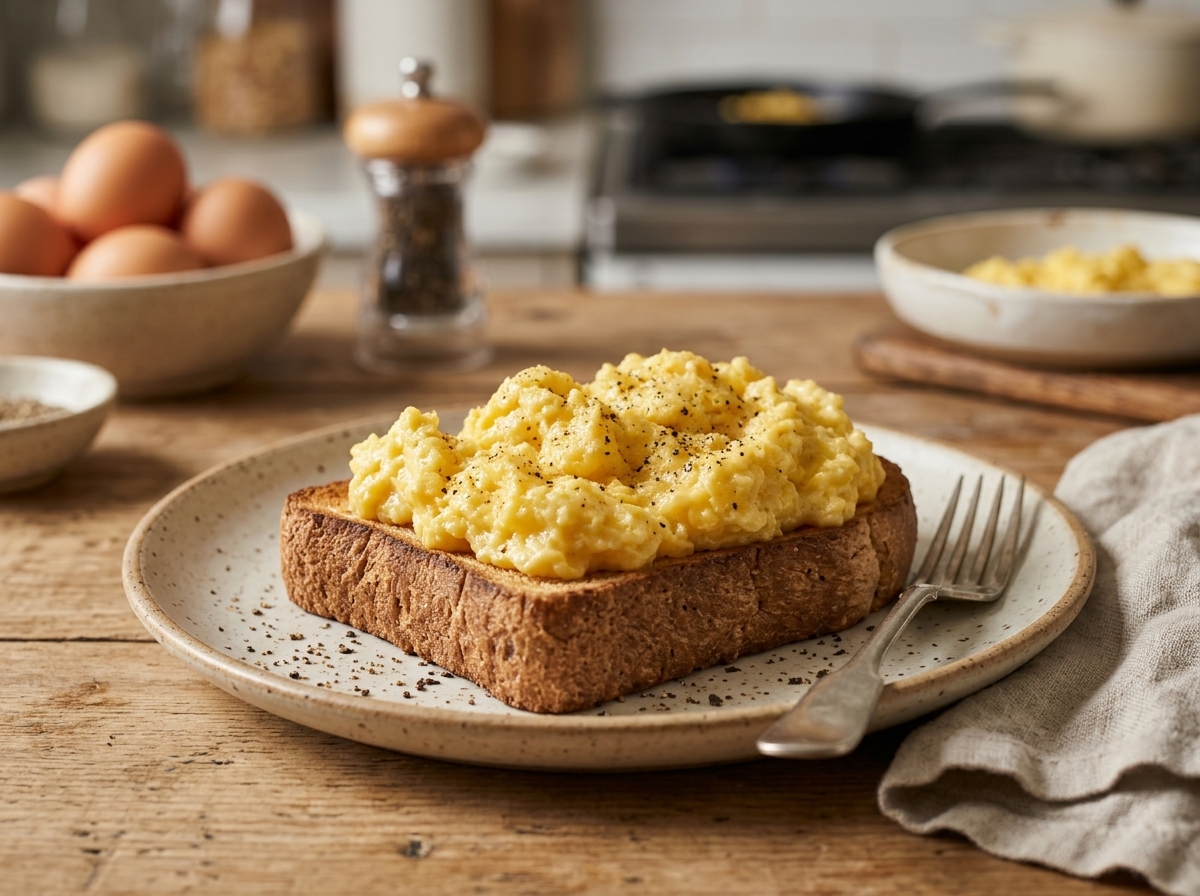
High Protein Soft Fluffy Scrambled Eggs
Tender scrambled eggs made with a little whole milk and butter for a light, moist texture. The eggs are cooked over medium-high heat and gently folded into large, fluffy curds
1
servings5
minutes5
minutes266
kcal10
minutesIngredients
3 large eggs
1/8 teaspoon kosher salt (see note
2 tablespoons (1 ounce; 30 ml) milk (optional)
1/2 tablespoon (1/4 ounce; 8 g) unsalted butter
Freshly ground black or white pepper
Directions
- Crack the eggs into a small bowl. Add the kosher salt and milk, if using. Beat until the eggs are evenly combined.
- Place a nonstick skillet over medium-high heat. Add the butter and let it melt until it becomes hot and foamy
- Pour the beaten eggs into the skillet. As the eggs begin to set, use a silicone spatula to gently lift and fold them.
- Continue cooking and gently scrambling until large, fluffy curds form and the eggs are fully cooked through, about 3 minutes.
- Remove the skillet from the heat as soon as the eggs are cooked. Season with freshly ground black or white pepper and serve immediately.
Notes
- Season the eggs according to taste. About 1.5 g of salt is approximately 1% of the weight of three large eggs, but the volume of kosher salt can vary considerably between brands.
- For softer scrambled eggs, avoid overcooking them. The eggs will continue to cook slightly from the residual heat after leaving the skillet
- The milk is optional, but using the specified amount gives the eggs a moist, light texture with a little extra richness.
Nutrition Facts
- Calories: 266kcal
- Fat: 20g
- Carbohydrates: 1g
- Protein: 19g
