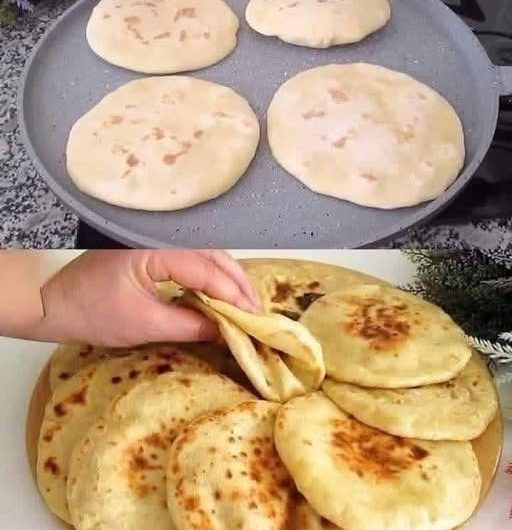

When I want homemade bread but don’t have yeast on hand, this skillet flatbread is one of the easiest recipes I turn to. It uses a short list of everyday ingredients and comes together quickly, so there is no need to wait for a long rise or deal with complicated bread-making steps.
The dough is made with all-purpose flour, baking powder, salt, olive oil, and unsweetened non-dairy milk or water. Because baking powder is used instead of yeast, the process is much quicker. The finished flatbreads are soft, lightly golden, and especially good while they are still warm from the skillet.
I like making these when I need something flexible enough to serve with a meal, turn into a wrap, or use as a quick homemade pizza base. They are also useful when I want to make bread without turning on the oven.
Why This Flatbread Is So Easy
- The biggest advantage of this recipe is that there is no yeast involved. That means there is no need to prepare yeast, wait for the dough to double in size, or plan hours ahead.
- The dough only needs a short 10-minute rest before it is divided and rolled. After that, the flatbreads are cooked directly in a skillet for a few minutes on each side.
- I find the dough easiest to work with when it is soft and smooth. It should not feel wet and sticky, but it also shouldn’t be dry or crumbly. Getting that texture right makes rolling the flatbreads much easier.
- The recipe makes four flatbreads, with each one rolled into a round about 6 inches in diameter and approximately ¼-inch thick.
Getting the Ingredients Ready
Before I start mixing, I gather everything I need:
- 1 ½ cups all-purpose flour
- 1 ½ teaspoons baking powder
- 1 teaspoon salt
- 2 tablespoons olive oil
- ½ cup unsweetened non-dairy milk or water
- I also keep a little extra flour nearby in case the dough needs it and some olive oil for cooking the flatbreads.
- For the liquid, either unsweetened non-dairy milk or water works. Non-dairy milk gives the flatbread a slightly softer and chewier texture, while water works perfectly well when that is what I have available.
- There is no need to add yeast or any additional ingredients. The simplicity is part of what makes this recipe so convenient.
Mixing the Dough
- I start with the dry ingredients. In a large mixing bowl, I whisk together the all-purpose flour, baking powder, and salt. Mixing these ingredients thoroughly helps distribute the baking powder and salt throughout the flour.
- In a separate small bowl, I whisk together the olive oil and unsweetened non-dairy milk or water.
- Then I slowly pour the wet mixture into the bowl of dry ingredients while stirring. At first, a wooden spoon or spatula is enough to bring everything together.
- As the dough thickens, stirring becomes harder. That’s when I switch to using my hands and gently bring the dough together into a soft ball.
- This is the point where I pay attention to the texture. The dough should come together easily and feel smooth rather than wet or crumbly.
If the Dough Is Too Sticky
- If the dough feels too sticky to handle, I add a little more flour. The original recipe uses another tablespoon when needed.
- I don’t add a large amount all at once. A little extra flour is enough to make the dough easier to handle without making the finished flatbread tough.
If the Dough Is Too Dry
- If the dough is crumbling and won’t hold together, I add another teaspoon of water. Again, I add it gradually so I don’t accidentally make the dough too wet.
- The goal is a soft dough that can be shaped and rolled without sticking excessively to my hands or the work surface.
Letting the Dough Rest
- Once the dough has come together, I place it back in the mixing bowl and cover the bowl with a kitchen towel.
- The dough rests for 10 minutes.
- This is a short rest, so it doesn’t add much time to the recipe. While it rests, I can prepare the work surface and skillet so everything is ready when the dough is divided.
- Since this is a baking-powder flatbread rather than a yeast bread, the dough doesn’t need a long rising period.
Dividing and Rolling the Flatbreads
- After the 10-minute rest, I divide the dough into four equal pieces.
- I roll each piece into a ball and then flatten it. A rolling pin works well, although the palm of my hand can also be used to flatten the dough.
- I roll each piece into a roughly circular shape, aiming for a round about 6 inches in diameter and around ¼-inch thick.
- The circles don’t have to look perfectly uniform. Homemade flatbread can have slightly uneven edges, and that’s completely fine. The important thing is to keep the thickness reasonably even so the flatbread cooks properly.
- I work on a lightly floured surface to make rolling easier.
Cooking the Flatbread in a Skillet
- Once the dough is rolled, I heat a skillet over medium-low heat and add a teaspoon of olive oil.
- I place one flatbread in the skillet and let it cook for about 3 to 4 minutes on the first side.
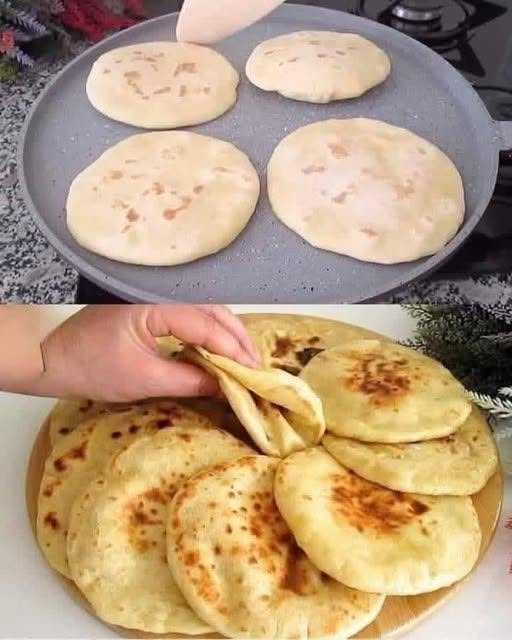
- As it cooks, the surface begins to change. The flatbread develops golden-brown spots, and larger bubbles can form across the dough. These are good signs that it is ready to turn.
- I flip it and cook the second side for another 3 to 4 minutes, until it is nicely browned.
- I repeat the process with the remaining flatbreads, adding more olive oil to the skillet as needed.
- Because the flatbreads cook one at a time, I find it helpful to have the dough rounds prepared before I begin cooking. That way, I can concentrate on the skillet instead of trying to roll dough while another flatbread is cooking.
Keeping the Flatbreads Soft
- These flatbreads are best when they are served fresh and warm. Straight from the skillet, they have a soft, pillowy texture that makes them particularly good for wraps and dipping.
- If I’m not serving them immediately, I let them cool to room temperature before storing them.
- For leftovers, they can be kept in the refrigerator for up to a week or frozen for several months.
- The freezer option is especially handy when I make a double or triple batch. I can prepare several flatbreads at once and save them for another meal.
- When I want to use frozen flatbread, I reheat it in a warm skillet on the stovetop or place it in the oven for a couple of minutes.
Different Ways to Serve Flatbread
- One of the reasons I like this recipe is that the flatbread doesn’t have to be used in just one way.
- Wraps and Sandwiches
- I can use a flatbread instead of regular sandwich bread. It works well with vegetables, plant-based proteins such as tofu, tempeh, or seitan, and vegan condiments.
- It is also convenient for meals that need to be wrapped and taken along.
- Quick Pizza Crust
- The flatbread can also become a quick pizza base. I can add tomato sauce, vegan cheese, mushrooms, bell peppers, olives, or onions and turn it into a simple mini pizza.
- Dipping Bread
- For dipping, I can cut the flatbread into strips or triangles and bake them until crispy. They work well with hummus, guacamole, salsa, or another favorite vegan dip.
- Quesadillas
- Two flatbreads can be used to make vegan quesadillas. I can add vegan cheese, vegetables, and optionally a plant-based protein, then cook everything in a pan until the flatbread becomes crisp and the filling is hot.
- Taco-Style Flatbreads
- The flatbreads can be folded or shaped into taco shells and filled with seasoned beans, lettuce, tomatoes, and vegan sour cream.
- Roll-Ups
- For an easy snack or light meal, I can spread vegan cream cheese, pesto, or another spread over a flatbread. Sliced vegetables and greens can be added before rolling it up and slicing it into smaller pieces.
- Flatbread Chips
- Cutting the flatbread into small pieces and baking them until crisp turns the soft bread into homemade chips. Herbs and spices can be added for extra flavor.
- Soups, Stews, and Curries
- I also like serving warm flatbread alongside soups, stews, or curries. It makes a simple alternative to traditional bread or rolls and is useful for scooping up sauces.
- A Simple Sweet Treat
- Flatbread doesn’t have to stay savory. It can be spread with vegan chocolate spread, fruit preserves, or nut butter. Adding sliced bananas or strawberries and folding the flatbread in half makes a quick sweet option.
- Breakfast Flatbread
- For breakfast, the flatbread can be filled with vegan scrambled eggs, avocado, salsa, and vegan cheese.
- Vegan Gyros or Shawarma
- The soft flatbread is also suitable for vegan gyros or shawarma. It can be filled with seasoned plant-based proteins, tomatoes, cucumbers, onions, and vegan tzatziki sauce.
- Vegan Naan-Style Option
- When serving an Indian-inspired meal, I can use this homemade flatbread as a simple vegan naan-style option alongside the food.
- Herbed Flatbread
- Fresh herbs can be added to the dough just before cooking for a simple variation.
- Quick Snack
- For something very simple, warm flatbread can be served with a drizzle of olive oil and balsamic glaze.
A Few Things I Keep in Mind
- The texture of the dough is the most important part of this recipe. If it is too sticky, a little more flour helps. If it is crumbly and won’t hold together, a small amount of water brings it back together.
- I also avoid cooking the flatbreads over excessively high heat. Medium-low heat gives them enough time to cook through while developing those attractive golden-brown areas on the surface.
- The flatbreads don’t need to be perfectly round. I focus more on getting them to roughly the same thickness so they cook evenly.
- For the softest result, I serve them warm. If I’m saving them for later, I cool them completely before placing them in the refrigerator or freezer.
Making a Batch for Later
- Since the recipe is already quick, making a larger batch is an easy way to keep homemade flatbread available.
- A double or triple batch can be prepared and stored in the freezer for several months. When I need one, I simply reheat it in a warm skillet on the stovetop or warm it in the oven for a couple of minutes.
- That makes these flatbreads particularly useful for busy days. Instead of making bread from scratch every time I need it, I can have a batch ready to warm and serve.
Keto Easy Skillet Flatbread
Soft and pillowy homemade vegan flatbread made without yeast. These skillet flatbreads are ready in about 30 minutes and can be used for wraps, dipping, pizza, quesadillas, soups, curries, and more.
4
servings15
minutes15
minutes249
kcalIngredients
1 ½ cups all-purpose flour
1 ½ teaspoons baking powder
1 teaspoon salt
2 tablespoons olive oil
½ cup unsweetened non-dairy milk or water
Directions
- In a large mixing bowl, whisk together the flour, baking powder, and salt
- In a small bowl, whisk together the olive oil and unsweetened non-dairy milk or water.
- Slowly pour the wet mixture into the dry ingredients while stirring. Once the dough becomes too thick to stir, use your hands to bring it together into a soft ball. If it is too sticky, add a little more flour. If it is crumbly and doesn’t hold together, add another teaspoon of water.
- Return the dough to the bowl and cover it with a kitchen towel. Let it rest for 10 minutes.
- Divide the dough into four equal pieces and roll each piece into a ball. Flatten each ball with a rolling pin or the palm of your hand into a round about 6 inches in diameter and ¼-inch thick.
- Heat a teaspoon of olive oil in a skillet over medium-low heat. Cook the flatbreads one at a time for 3 to 4 minutes on each side, until golden brown and bubbles appear. Add more olive oil to the skillet as needed.
- Serve the flatbreads warm, or allow them to cool to room temperature before storing.
Notes
- Unsweetened non-dairy milk gives the flatbread a slightly softer and chewier texture, but water works well too.
- If the dough is sticky, add a little more flour. If it is crumbly, add another teaspoon of water.
- Store leftover flatbreads in the refrigerator for up to 1 week.
- Flatbreads can be stored in the freezer for several months.
- Reheat refrigerated or frozen flatbreads in a warm skillet or in the oven for a couple of minutes.
Nutrition Facts
- Serving Size: 1 g
- Total number of serves: 4
- Calories: 249kcal
- Fat: 8.1g
- Saturated Fat: 1.1g
- Trans Fat: 0g
- Cholesterol: 0mg
- Sodium: 598.2mg
- Carbohydrates: 39.5g
- Fiber: 1.6g
- Sugar: 1g
- Protein: 5.2g
