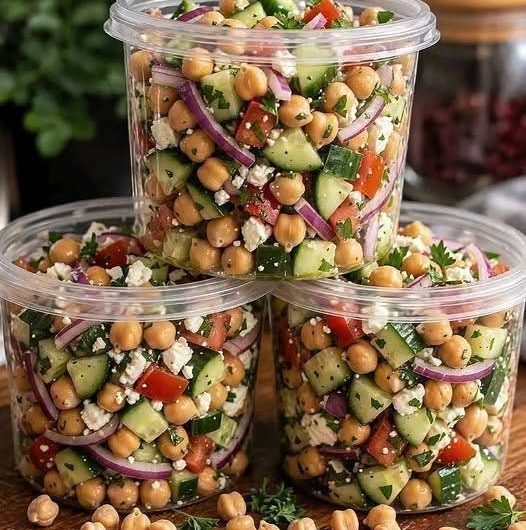

Mediterranean chickpea salad is a fresh, satisfying dish made with tender chickpeas, crisp cucumber, juicy tomatoes, roasted red peppers, creamy avocado, and fragrant fresh herbs. Everything comes together with a bright lemon Dijon dressing seasoned with garlic and Mediterranean-inspired spices.
This easy chickpea salad recipe takes approximately 10 minutes to prepare, making it an excellent choice for busy weekdays, relaxed family meals, outdoor gatherings, and healthy lunch preparation.
What makes this Mediterranean chickpea salad especially appealing is its combination of textures and flavors. The chickpeas provide a hearty base, while the cucumber adds a refreshing crunch and the tomatoes bring natural sweetness.
Roasted red peppers contribute a smoky flavor, red onion adds a gentle sharpness, and avocado creates a smooth, creamy finish. Fresh parsley and mint brighten every bite, while the lemon dressing ties all the ingredients together without overpowering their natural taste.
Whether you are searching for a quick Mediterranean lunch, a refreshing vegetarian salad, or a make-ahead chickpea salad for meal prep, this recipe offers plenty of versatility. It works beautifully as a light main dish, a colorful side for grilled foods, or a simple addition to a picnic spread. With familiar ingredients and an easy homemade dressing, you can prepare a flavorful salad without spending much time in the kitchen.
What Makes This Mediterranean Chickpea Salad Special?
One of the best things about this Mediterranean chickpea salad is how easily it fits into different meal plans. It contains plant-based ingredients, fresh vegetables, herbs, and extra virgin olive oil, creating a combination that feels both nourishing and satisfying. Chickpeas are particularly useful in everyday cooking because they are convenient, affordable, and easy to incorporate into salads, soups, grain bowls, and other simple meals.
Another advantage is the balance of flavors. Lemon juice provides acidity, Dijon mustard gives the dressing a subtle tang, and garlic adds savory depth. Sumac contributes a pleasantly tart note, while Aleppo pepper introduces gentle warmth. These seasonings complement the sweetness of the roasted peppers and tomatoes, creating a dressing that tastes much more interesting than a basic oil-and-vinegar mixture.
The recipe is also easy to adapt to different occasions. You can prepare it for a quick lunch at home, serve it alongside grilled chicken or fish, or bring it to a family gathering. Because the ingredients are colorful and easy to recognize, the finished salad looks inviting on the table. Its combination of fresh produce, chickpeas, and herbs makes it a practical option when you want a meal that feels vibrant without requiring complicated cooking techniques.
Ingredients for Mediterranean Chickpea Salad
Chickpeas: The Hearty Foundation
Chickpeas are the main ingredient in this salad and provide a satisfying texture that works particularly well with crunchy vegetables and fresh herbs. Canned chickpeas make preparation simple because they are already cooked and only need to be drained, rinsed, and dried before use. Using canned chickpeas also helps keep the total preparation time close to 10 minutes, making this recipe suitable for busy days.
If you prefer cooking chickpeas from scratch, you can use homemade chickpeas instead. The important thing is to ensure they are tender but still hold their shape when mixed with the dressing. Rinsing canned chickpeas helps remove excess liquid and improves the overall texture of the salad. Drying them before combining them with the other ingredients also prevents unnecessary water from diluting the lemon dressing.
Cucumber and Grape Tomatoes
Cucumber and tomatoes bring freshness, color, and contrasting textures to this easy Mediterranean salad. English and Persian cucumbers are particularly suitable because their skins are tender and their flavor is mild. If you use a regular slicing cucumber with thick or waxy skin, peeling it can improve the eating experience. Chop the cucumber into bite-sized pieces so it mixes evenly with the chickpeas and other vegetables.
Grape tomatoes contribute sweetness and juiciness, balancing the sharper flavors of lemon, garlic, and red onion. Cutting them in half helps distribute their flavor throughout the salad. Other varieties of tomatoes can also work, provided they are firm enough to cut into manageable pieces. Choose ripe tomatoes that feel fresh and have a pleasant aroma for the best results.
Roasted Red Peppers and Red Onion
Roasted red peppers add a gentle smoky sweetness that makes this chickpea salad more flavorful than a simple mixture of raw vegetables. You can roast fresh red bell peppers yourself or use prepared roasted peppers from a jar. If using jarred peppers, drain them well before chopping so their liquid does not make the salad watery. Remove any seeds and cut the peppers into small pieces for an even distribution throughout the dish.
Red onion adds a crisp texture and a sharp, savory flavor that contrasts nicely with the sweet peppers and creamy avocado. It also gives the salad an attractive color combination. If raw red onion tastes too strong for your preference, you can use a smaller amount or substitute shallot or green onion. These alternatives provide a slightly different flavor while maintaining the fresh character of the salad.
Avocado, Parsley, and Mint
Avocado adds a creamy texture and contributes unsaturated fats to the recipe. Its mild flavor works particularly well with lemon juice and fresh herbs. However, avocado begins to brown after its flesh is exposed to air, which makes it less suitable for salads prepared several days in advance. For the best appearance and texture, cut the avocado shortly before serving and fold it into the salad gently.
Fresh parsley and mint provide an aromatic finish that makes the salad taste bright and refreshing. Parsley brings a clean, green flavor, while mint adds a cool, fragrant note. Using both herbs creates a distinctive Mediterranean-inspired combination. Chop the leaves and tender stems of the parsley finely enough to distribute them throughout the salad, and roughly chop the mint leaves. If needed, other tender herbs such as dill, cilantro, or basil can be used as alternatives.
The Secret to a Flavorful Lemon Dijon Dressing
Why the Dressing Matters
The homemade dressing is what brings all the individual ingredients together. Rather than relying on a heavy or creamy sauce, this Mediterranean chickpea salad uses a lemon-based Dijon vinaigrette made with extra virgin olive oil, garlic, and spices. The result is tangy, aromatic, and light enough to let the vegetables, chickpeas, and herbs remain the main focus.
Fresh lemon juice gives the dressing a lively acidity that balances the richness of the avocado and olive oil. Dijon mustard contributes a mild sharpness and helps the oil and lemon juice combine into a more cohesive mixture. Garlic adds savory flavor, while salt and black pepper bring out the natural taste of the vegetables and legumes.
Aleppo pepper and sumac give the dressing its distinctive character. Aleppo pepper generally provides a gentle warmth rather than overwhelming heat, while sumac adds a tart, citrus-like flavor. If sumac is unavailable, lemon zest is a useful alternative. Red pepper flakes can replace Aleppo pepper if that is what you have in your kitchen. These substitutions make it easier to prepare the salad without purchasing unfamiliar spices.
How to Make the Dressing Smooth
Begin by mincing the garlic and placing it in a large mixing bowl. Add the Dijon mustard, Aleppo pepper, sumac, lemon juice, salt, and black pepper. Whisk everything together until the mustard and seasonings are evenly combined. Slowly drizzle in the extra virgin olive oil while continuing to whisk. Adding the oil gradually helps form a blended vinaigrette instead of leaving separate layers of oil and lemon juice.
Once the dressing looks lightly thickened and evenly mixed, taste a small amount before adding the vegetables. It should taste bright, savory, and pleasantly tangy. Adjusting the seasoning at this stage makes it easier to distribute the flavor evenly throughout the salad. The chickpeas and vegetables will absorb some of the dressing, so a well-seasoned vinaigrette helps ensure that the finished dish does not taste bland.
How to Make Mediterranean Chickpea Salad
Step 1: Prepare the Lemon Dressing
Start by making the dressing directly in a large salad bowl. Mince one garlic clove, then combine it with one teaspoon of Dijon mustard, one teaspoon of Aleppo pepper or red pepper flakes, and one teaspoon of sumac or lemon zest. Squeeze in the juice of one lemon and add approximately half a teaspoon each of salt and black pepper, adjusting to your taste. Whisk the mixture while slowly pouring in one-quarter cup of extra virgin olive oil until the dressing is well combined.
Preparing the dressing first allows the garlic and seasonings to mingle with the lemon juice and oil. It also means you can add the salad ingredients directly to the same bowl, reducing the amount of washing up afterward. Make sure the bowl is large enough to accommodate the chickpeas, chopped vegetables, herbs, and avocado without making it difficult to toss everything together.
Step 2: Drain and Prepare the Chickpeas
Open two 15-ounce cans of chickpeas, drain the liquid, and rinse the chickpeas thoroughly under cool running water. Allow them to drain well, then pat them dry with a clean kitchen towel or paper towels. Add the chickpeas to the bowl containing the dressing and stir gently to coat them. This allows the chickpeas to begin absorbing the lemon, garlic, and spice flavors before the remaining ingredients are added.
Drying the chickpeas is a small but useful step because excess water can weaken the flavor of the vinaigrette. You do not need to remove the skins individually, as they are perfectly suitable for this salad. If you have cooked chickpeas from scratch, allow them to cool completely before adding them to the dressing so the fresh vegetables retain their crisp texture.
Step 3: Chop the Fresh Vegetables
Wash and chop one large cucumber into bite-sized pieces. Halve two cups of grape tomatoes and chop two roasted red bell peppers, removing their seeds if necessary. Add the prepared vegetables to the bowl with the chickpeas and dressing. Cutting the ingredients into similar sizes makes the salad easier to eat and helps ensure that every serving contains a balanced mixture of chickpeas, vegetables, and dressing.
If you are using a cucumber with thick or waxy skin, peel it before chopping. Drain jarred roasted peppers thoroughly before cutting them, particularly if they are stored in liquid. Try to avoid chopping the tomatoes too far in advance because cut tomatoes release moisture as they sit. Adding the vegetables to the dressing shortly before serving helps preserve their fresh texture and keeps the salad looking appealing.
Step 4: Add Fresh Parsley and Mint
Prepare enough fresh parsley leaves and tender stems to make one cup, then chop enough mint leaves to measure half a cup. Add both herbs to the salad bowl and toss gently. Their fragrant flavor complements the tangy dressing and brings freshness to the chickpeas and vegetables. Fresh herbs make a noticeable difference here, so use clean, dry leaves whenever possible.
For the best distribution, sprinkle the chopped herbs over the mixture rather than leaving them in one area of the bowl. Stir gently with a large spoon so the herbs become evenly mixed with the chickpeas, tomatoes, cucumber, and roasted peppers. At this point, the salad can be prepared in advance and refrigerated without the avocado, making it especially convenient for lunches or gatherings.
Step 5: Add the Avocado and Finish the Salad
Cut the avocado in half lengthwise, remove the pit, and carefully scoop out the flesh. Roughly chop it into bite-sized pieces, then add it to the prepared salad. Use a large spoon to fold the avocado into the other ingredients without crushing it. The aim is to coat the pieces lightly with dressing while preserving their creamy texture and attractive green color.
Taste the finished salad and adjust the seasoning if necessary. Depending on the sweetness of the tomatoes and the acidity of the lemon, you may prefer a little more salt, black pepper, or lemon juice. Serve the salad immediately for the freshest flavor and texture. If you are preparing it for a later meal, leave the avocado out until just before serving to help it maintain its color.
Tips for the Best Mediterranean Chickpea Salad
Choose Good-Quality Ingredients
Because this recipe uses relatively few ingredients, the quality of each one affects the final result. Fresh cucumber, ripe tomatoes, aromatic herbs, and good extra virgin olive oil help create a more flavorful salad. Choose chickpeas that remain intact after rinsing, and use roasted peppers with a pleasant smoky sweetness. Freshly squeezed lemon juice is particularly useful because it provides a bright flavor that bottled juice may not fully reproduce.
Avoid a Watery Salad
Excess moisture can dilute the dressing and make the salad less appealing. Drain the chickpeas thoroughly, dry them before adding them to the bowl, and drain jarred roasted peppers well. If you wash the vegetables shortly before preparing the recipe, dry them before chopping. These simple steps help the vinaigrette cling to the ingredients and prevent a pool of liquid from collecting at the bottom of the bowl.
Keep the Avocado Fresh
Avocado is delicious in this recipe, but its exposed flesh can turn brown when it reacts with oxygen. If you are preparing the salad ahead, leave the avocado out until serving time. If you need to cut it early, place the diced avocado in a small bowl, squeeze the juice of half a lemon over it, and toss gently. The acidity can slow browning, although it will not prevent discoloration completely.
Taste Before Serving
The flavor of fresh produce can vary depending on the season and ripeness, so the final seasoning may need small adjustments. After tossing the salad, taste a chickpea along with a little cucumber and dressing. If the mixture tastes flat, a small amount of salt or lemon juice may help. If it tastes too sharp, allow the olive oil and natural sweetness of the tomatoes to balance the acidity.
How to Prepare Mediterranean Chickpea Salad Ahead of Time
This recipe is particularly useful for meal prep because most of its ingredients can be prepared in advance. You can make the dressing, rinse the chickpeas, chop the cucumber and roasted peppers, and prepare the herbs before combining everything. Store the prepared components in suitable airtight containers in the refrigerator if you prefer to assemble the salad closer to mealtime.
For the best texture, keep the avocado separate and add it immediately before serving. You can also reserve some dressing if you want to refresh the salad shortly before eating. Once the chickpeas and vegetables have been mixed with the dressing, the flavors will continue to develop as they rest. However, the vegetables may gradually release moisture, so the salad is best enjoyed while the cucumber remains crisp.
Without avocado, the prepared chickpea salad can be refrigerated for up to four days, provided it is kept in an airtight container at a safe refrigerator temperature. The tomatoes may soften slightly as they sit, but the salad can still taste delicious. If you have already added avocado, the quality may decline sooner because the fruit can discolor and soften. Use clean utensils when serving and refrigerate leftovers promptly.
What to Serve with Mediterranean Chickpea Salad
Mediterranean chickpea salad can be served on its own as a light lunch or as part of a larger meal. Its fresh vegetables and tangy dressing pair well with grilled chicken, roasted fish, baked salmon, or other simply seasoned proteins. The bright lemon flavor also complements grilled vegetables and roasted potatoes, making the salad an easy side dish for everyday dinners and weekend gatherings.
For a vegetarian meal, serve the salad with warm pita bread, flatbread, or a simple grain dish. Couscous, bulgur, and rice can provide additional substance when you want a more filling plate. You can also spoon the salad into lettuce cups or serve it alongside hummus and other Mediterranean-inspired dishes. Since the recipe already contains chickpeas, vegetables, herbs, and olive oil, it offers several different textures without requiring a complicated menu.
This colorful salad is also well suited to picnics, potlucks, and backyard barbecues. Prepare the main salad mixture in advance, transport it in a covered container with an ice pack when necessary, and add the avocado shortly before serving. Keep perishable ingredients chilled, especially in warm weather, and avoid leaving the salad at room temperature for extended periods. These simple precautions help preserve both quality and food safety.
Is Mediterranean Chickpea Salad Healthy?
Mediterranean chickpea salad combines legumes, fresh vegetables, herbs, lemon juice, and olive oil. Chickpeas provide plant-based protein, dietary fiber, and carbohydrates, while cucumber and tomatoes contribute water, vitamins, and other nutrients. Avocado supplies unsaturated fats, and extra virgin olive oil is another source of unsaturated fat. Together, these ingredients create a varied dish that can fit into a balanced eating pattern.
The salad’s nutritional value depends on portion size and the precise ingredients used. Chickpeas contain carbohydrates as well as protein and fiber, while olive oil and avocado contribute most of the recipe’s added fat and energy. These ingredients are not inherently undesirable; they are part of what makes the salad satisfying. If you are monitoring particular nutrients, consider the quantities of oil, chickpeas, and avocado in your serving rather than judging the recipe by a single ingredient.
This recipe is naturally vegetarian and can be suitable for vegan diets when the Dijon mustard and other packaged ingredients contain no animal-derived additives. It is also naturally gluten-free when all packaged ingredients are free from gluten-containing additives or cross-contact. However, nutritional needs vary, and a salad alone does not automatically meet every person’s dietary requirements. Pairing it with other foods can help create a meal that suits your appetite and preferences.
Common Questions About Mediterranean Chickpea Salad
Can I Use Dried Chickpeas Instead of Canned Chickpeas?
Yes, you can use chickpeas cooked from dried beans. Soak and cook them according to the instructions for your chosen variety, then allow them to cool before preparing the salad. The recipe calls for two 15-ounce cans, so use an equivalent amount of cooked, drained chickpeas rather than substituting the same weight of dried beans. Canned chickpeas remain the quickest option when you want the salad ready in approximately 10 minutes.
Can I Make This Chickpea Salad Without Avocado?
Yes, the salad tastes excellent without avocado. The chickpeas, roasted peppers, tomatoes, cucumber, herbs, and lemon Dijon dressing already provide plenty of flavor and texture. Leaving out the avocado is particularly useful when preparing the salad for a gathering or storing it for later meals. You can simply omit it without changing the remaining ingredients or preparation method.
What Can I Use Instead of Sumac?
Lemon zest is the suggested substitute for sumac in this recipe. It provides a fresh citrus aroma that complements the lemon juice in the dressing. Add the zest in the same quantity as the sumac, then taste the dressing before adjusting the seasoning. Although the flavor will not be identical, lemon zest keeps the dressing bright and works well with the chickpeas and fresh herbs.
What Can I Use Instead of Aleppo Pepper?
Red pepper flakes are a practical substitute for Aleppo pepper. Both can provide a gentle peppery kick, although their heat levels and flavor profiles may differ. If you are sensitive to spicy food, begin with a smaller amount and adjust according to your preference. The goal is to add warmth to the dressing without overpowering the fresh herbs, tomatoes, and lemon.
How Long Does Mediterranean Chickpea Salad Last in the Refrigerator?
When stored in an airtight container without avocado, this salad can keep in the refrigerator for up to four days. The vegetables may soften slightly, particularly the tomatoes, but the mixture can remain enjoyable. For the best quality, keep the salad chilled and use clean utensils. If it has an unusual smell, visible mold, or other signs of spoilage, discard it rather than tasting it.
Can I Prepare the Dressing in Advance?
Yes, the lemon Dijon dressing can be prepared ahead and stored in a sealed container in the refrigerator. Olive oil may become cloudy or firm when chilled, which is a normal response to cold temperatures. Let the dressing sit briefly at room temperature and whisk it again before using. Preparing the dressing ahead can make assembling the salad even faster when you are ready to eat.
Final Thoughts on This Easy Mediterranean Chickpea Salad
Mediterranean chickpea salad is a practical recipe for anyone who enjoys fresh vegetables, satisfying legumes, and bright homemade dressing. Its combination of chickpeas, cucumber, grape tomatoes, roasted red peppers, red onion, avocado, parsley, and mint creates a dish with plenty of color and contrasting textures. The lemon Dijon vinaigrette adds a tangy finish, while sumac and Aleppo pepper introduce extra character without making the preparation complicated.
With approximately 10 minutes of preparation, this salad is an easy option for weekday lunches, family dinners, meal prep, and shared gatherings. Most of the ingredients can be prepared in advance, and leaving the avocado out until serving helps maintain its fresh appearance. Serve it as a light main dish or alongside grilled foods, warm bread, or other Mediterranean-inspired sides. Simple to prepare and easy to adapt, it is a useful recipe to keep in your regular meal rotation.
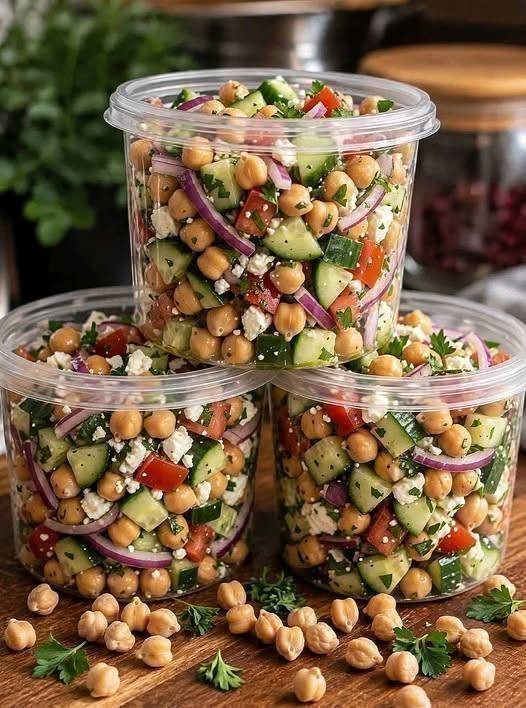
Mediterranean Chickpea Salad
A fresh and filling Mediterranean-inspired chickpea salad made with chickpeas, crisp vegetables, feta, Kalamata olives, and a simple homemade dressing. It comes together without cooking and works well as a hearty salad or a side dish
4
servings15
minutes430
kcalIngredients
2 (15.5-oz.) cans chickpeas, drained, rinsed
1 medium cucumber, sliced into quarter-moons
1 red bell pepper, seeds and ribs removed, finely chopped
1/2 red onion, thinly sliced
1/2 cup crumbled feta (about 3 oz.)
1/2 cup halved pitted Kalamata olives
Kosher salt
Freshly ground black pepper
- For the Dressing
1/2 cup extra-virgin olive oil
1/4 cup white wine vinegar
1 Tbsp. finely chopped fresh parsley
1 Tbsp. fresh lemon juice
1/4 crushed red pepper flakes
Directions
- Add the drained and rinsed chickpeas, cucumber, red bell pepper, red onion, feta, and Kalamata olives to a large bowl.
- Season the salad with kosher salt and freshly ground black pepper. Toss gently until the ingredients are evenly combined.
- Add the extra-virgin olive oil, white wine vinegar, finely chopped fresh parsley, fresh lemon juice, and crushed red pepper flakes to a jar with a lid.
- Secure the lid tightly and shake the jar until the dressing is emulsified.
- Season the dressing with kosher salt and freshly ground black pepper, then taste and adjust the seasoning as needed.
- Pour the dressing over the chickpea salad just before serving. Add it gradually so the salad does not become overly dressed.
- Toss gently until everything is coated with the dressing. Taste once more and adjust the seasoning if needed.
Notes
- Drain and rinse the chickpeas thoroughly, then pat them dry to remove excess moisture.
- Add the dressing gradually rather than using all of it at once.
- The salad can be prepared ahead by keeping the chickpeas and chopped vegetables in separate airtight containers in the refrigerator for up to 2 days
- The dressing can be prepared ahead and stored in an airtight container in the refrigerator for up to 10 days.
- Toss the salad with the dressing just before serving for the best texture.
Nutrition Facts
- Total number of serves: 6
- Calories: 430kcal
- Fat: 27g
- Saturated Fat: 5g
- Sodium: 750mg
- Carbohydrates: 39g
- Fiber: 10g
- Sugar: 7g
- Protein: 11g
