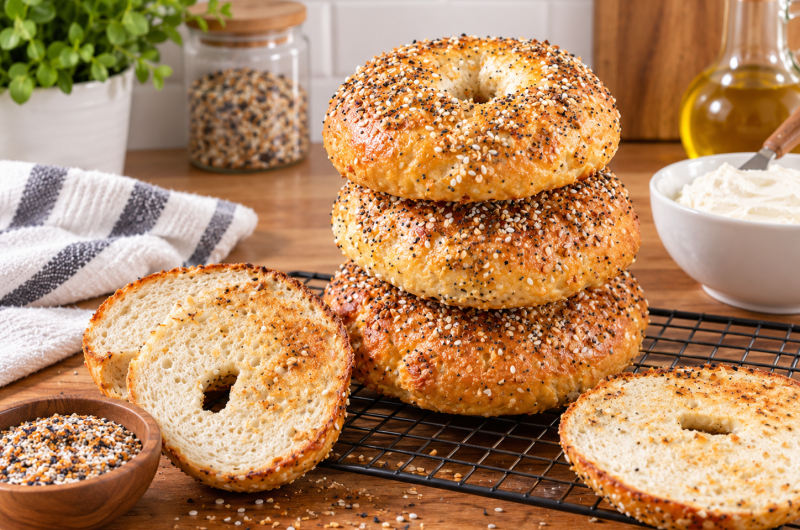

Homemade high protein bagels are an easy breakfast option when you want something filling without spending a lot of time in the kitchen. This Greek yogurt bagel recipe uses a short ingredient list and can be baked in the oven or cooked in an air fryer. The finished bagels have a soft center with a lightly browned outside.
Why Make These Protein Bagels?
These homemade protein bagels are useful for breakfast, a quick lunch, or a simple snack. Greek yogurt gives the dough a soft texture while adding protein, and self-rising flour keeps the preparation straightforward. Protein powder can also be included when you want the bagels to provide more protein per serving.
Two Ways to Make the Dough
There are two ingredient versions in the original recipe. One uses self-rising flour with Greek yogurt and optional protein powder, while the other uses a little more self-rising flour without protein powder. Both versions include one egg for brushing the tops before cooking.
Using Self-Rising Flour
Self-rising flour makes this recipe especially convenient because the flour already contains the ingredients needed to help the dough rise. If you have a bag of self-rising flour available, you can use the stated amount directly. This keeps the ingredient list short and avoids preparing a separate flour mixture.
Making Self-Rising Flour
If self-rising flour is not available, the recipe provides a simple homemade version. Combine 2 cups of all-purpose flour with 1 ½ teaspoons of baking powder and ½ teaspoon of salt. This mixture can then be used in place of the self-rising flour called for in the recipe.
The Role of Greek Yogurt
Plain Greek yogurt is an important part of the dough. The recipe allows whole, reduced-fat, or fat-free Greek yogurt, so you can use any of these versions. Its creamy consistency helps bring the flour together and gives the finished bagels a tender texture.
Adding Protein Powder
Protein powder is optional rather than required. The original recipe calls for 2 scoops of protein powder when using the protein powder version. Unflavored protein powder or a vanilla powder that is not too sweet works well for a savory-style bagel.
Choosing Protein Powder
The type of protein powder can affect the flavor of the finished bagels. Unflavored powder keeps the taste more neutral, while a mildly flavored vanilla powder can add a slight sweetness. Avoiding an overly sweet powder is useful if you plan to add savory toppings or seasonings.
Making Bagels Without Protein Powder
You can prepare the bagels without protein powder by using the second ingredient option. This version uses 2 ½ cups of self-rising flour and 10.6 ounces of plain Greek yogurt. The recipe states that when making this version, six smaller bagels can be made instead of four large ones.
Adding an Egg Wash
One whole egg is used for brushing the tops of the bagels before cooking. Lightly beating the egg makes it easier to spread across the dough. The egg wash helps the outside develop a more appealing browned appearance as the bagels cook.
Optional Mix-Ins
The dough can also be prepared with optional additions such as raisins, dried onion, dried garlic, or cheese. These are mix-in ideas provided with the original recipe and are not part of the required ingredient list. They can change the flavor depending on whether you want a sweeter or savory bagel.
Starting the Dough
Place the ingredients into a mixing bowl, leaving the whole egg aside for later. Mix everything together until the ingredients begin to form clumps. At this stage, the mixture may look rough, but continuing to work the dough will bring the ingredients together.
Kneading the Dough
Once the mixture begins to clump, use your hands to knead it until it becomes a workable dough. The goal is to combine the flour and yogurt evenly so that there are no dry pockets. Avoid rushing this stage because the dough needs to come together before shaping.
Fixing Dry Dough
The texture of the dough can vary depending on the flour and yogurt used. If it looks too dry or begins cracking, add 1–2 tablespoons more Greek yogurt at a time. Work the dough again after each addition until it becomes easier to handle.
Fixing Sticky Dough
If the dough feels too wet or sticks heavily to your hands, add 1–2 tablespoons of flour at a time. Make small adjustments rather than adding a large amount all at once. This helps you reach a dough that is firm enough to shape without becoming unnecessarily dry.
Shaping the Bagels
Once the dough is ready, break off one portion and roll it into a rope. Bring the ends of the rope together to form a circle, then press the ends into each other so they stay connected. Repeat the process until all of the dough has been shaped.
Keeping the Portions Even
Try to divide the dough into portions that are as even as possible. Equal portions help the bagels cook at a similar rate. The original recipe is designed to make four large bagels when using the protein powder version, although the no-protein-powder version can also be divided into six.
Adding Seasonings
After shaping the bagels and brushing them with beaten egg, you can add your preferred seasonings. Sesame seeds, dried herbs, garlic seasoning, or other suitable toppings can be used according to your taste. Keep in mind that extra toppings may change the final nutrition values.
Baking the Bagels in the Oven
For the oven method, line a baking sheet with parchment paper. Place the prepared bagels on the sheet with enough space between them. Bake at 350°F (176°C) for 20–25 minutes, or until the outside has reached the level of browning you prefer.
Using an Air Fryer
The air fryer provides another way to cook these Greek yogurt bagels. Lightly coat the basket with non-stick cooking spray, then place the shaped bagels inside. Cook them at 300°F (148°C) for 10–12 minutes, or until they are browned enough to your liking.
Oven or Air Fryer?
Both cooking methods are included in the original recipe, so the choice depends on the equipment you have. The oven cooks the bagels at a higher temperature for a longer period, while the air fryer uses a lower temperature and shorter cooking time. Check the bagels toward the end because appliances can vary.
How to Tell When They Are Ready
The bagels should have a browned exterior when they are finished. If the tops are still very pale, they may need a little more cooking time. Since ovens and air fryers can differ in performance, use the stated time as a guide and check the appearance before removing them.
Getting a Soft Center
The Greek yogurt helps keep the inside of these homemade bagels soft. Avoid adding excessive flour while adjusting the dough because too much flour can make the finished bagels firmer. Add flour or yogurt gradually until the dough reaches a manageable consistency.
Protein in Each Bagel
When the recipe is prepared with fat-free Greek yogurt and protein powder and divided into four large bagels, the provided nutrition information lists 27.5 grams of protein per bagel. This makes the recipe suitable for people looking for a higher-protein breakfast or snack.
Making Smaller Bagels
The recipe also provides nutrition information for making six bagels without protein powder. In that version, each bagel contains 10.6 grams of protein according to the supplied nutrition information. Smaller portions can also make the bagels easier to serve alongside other breakfast foods.
Serving Ideas
These bagels can be eaten plain or paired with other foods. The original recipe suggests higher-protein toppings for the version without protein powder, including Greek yogurt cream cheese, cottage cheese, or deli meat. Choose toppings according to whether you prefer a sweet or savory breakfast.
Sweet Bagel Options
If you use a mildly sweet vanilla protein powder, the bagels can work with sweeter toppings. Raisins can also be added to the dough as one of the suggested mix-ins. Keep the protein powder flavor in mind when deciding on toppings so the finished bagel has a balanced taste.
Savory Bagel Options
For a savory version, dried onion, dried garlic, or cheese can be mixed into the dough. These additions work well with plain or unflavored protein powder. Seasonings can also be sprinkled over the egg-washed surface before baking or air frying.
Why the Recipe Is Convenient
The dough requires only a few main ingredients, and the preparation does not involve yeast or a long rising period. That means you can move from mixing to shaping and cooking without waiting for the dough to rise. This makes the recipe practical for a quick homemade breakfast.
Preparing the Dough Ahead
The most important part of the process is getting the dough to the correct consistency before shaping. If the dough is dry, adjust it with Greek yogurt gradually. If it is too sticky, add flour gradually. These small changes help make shaping easier without changing the basic recipe.
Air Fryer Cooking Tips
When using an air fryer, lightly coat the basket with non-stick cooking spray before adding the bagels. Avoid overcrowding the basket so that the hot air can circulate around the bagels. Depending on the size of your air fryer, you may need to cook them in batches.
Oven Cooking Tips
For oven baking, parchment paper helps prevent the bagels from sticking to the baking sheet. Leave some space between each bagel so they can cook evenly. Begin checking them around the 20-minute mark and continue cooking if they need more browning.
Storage and Serving
These bagels are best served once they have cooled enough to handle. If you are preparing several at once, allow them to cool before storing them properly. Reheating can help bring back some of the warmth and softness when serving them later.
Flour Mixture
The homemade self-rising flour mixture is useful when you do not have packaged self-rising flour. The provided combination is 2 cups all-purpose flour, 1 ½ teaspoons baking powder, and ½ teaspoon salt. Measure these ingredients carefully so the flour mixture remains consistent.
Protein Powder
Protein powder is optional, so the recipe can be made without it. If you use it, choose an unflavored variety or a vanilla option that is not too sweet. The quantity should remain at the stated 2 scoops for the protein powder version.
Dough Texture
Dough consistency is one of the main things to watch during preparation. Flour can absorb liquid differently, so the dough may need a small adjustment. Add 1–2 tablespoons of Greek yogurt when it is dry or 1–2 tablespoons of flour when it is too wet.
High Protein Bagels
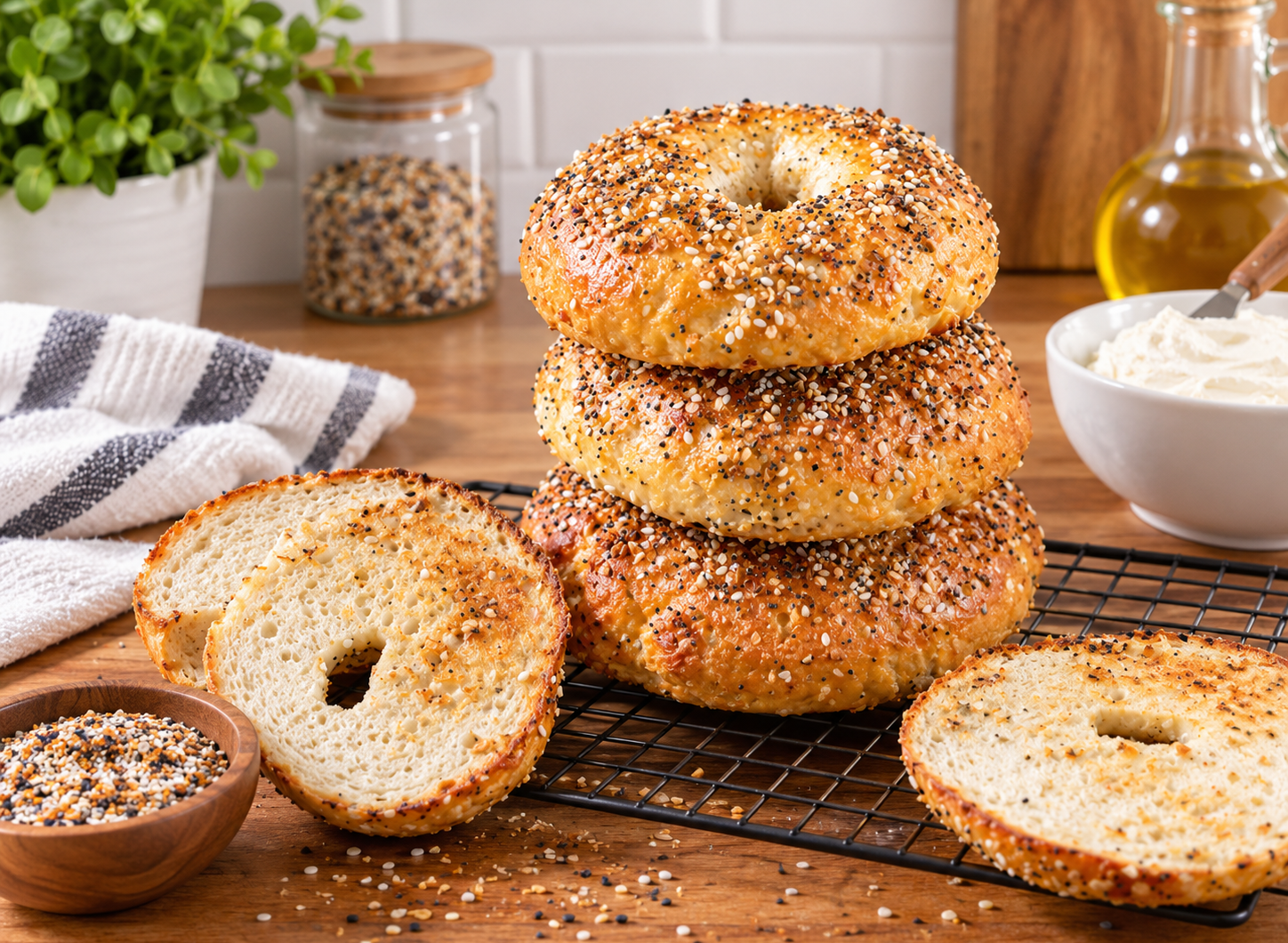
Soft homemade bagels made with Greek yogurt and self-rising flour, with an optional addition of protein powder. They can be baked in the oven or cooked in an air fryer for a quick high-protein breakfast.
4
large bagels5
minutes20
minutes308
kcal25
minutesIngredients
- With Self-Rising Flour:
2 Cups Self Rising Flour
10.6 Ounces Greek Yogurt – Plain (Whole, Reduced, or Fat Free all work)
2 Scoops Protein Powder – *Optional (Unflavored or a vanilla that’s not too sweet unless you’re going for a dessert bagel)
1 Whole Egg – For brushing!
- Without Protein Powder
2 ½ Cups Self Rising Flour
10.6 Ounces Greek Yogurt – Plain (Whole, Reduced, or Fat Free all work)
1 Whole Egg – For brushing!
- Homemade Self-Rising Flour:
2 Cups All Purpose Flour
1 ½ Teaspoons Baking Powder
½ Teaspoon Salt
Directions
- Add all the ingredients except the whole egg to a mixing bowl, including any desired mix-ins such as raisins, dried onion, dried garlic, or cheese. Mix until the ingredients begin to clump together.
- Use your hands to knead the mixture until it comes together as a dough. If it is dry or cracking, add 1–2 tablespoons of Greek yogurt at a time. If it is too wet or sticky, add 1–2 tablespoons of flour at a time.
- Divide the dough into portions, roll each piece into a rope, and connect the ends to form bagel shapes. Try to keep the portions as even as possible.
- Beat the whole egg and lightly brush it over each bagel. Add your preferred seasonings or toppings if desired.
- Oven: Place the bagels on a parchment-lined baking sheet and bake at 350°F (176°C) for 20–25 minutes, or until browned enough.
- Air Fryer: Lightly coat the basket with non-stick cooking spray, place the bagels inside, and air fry at 300°F (148°C) for 10–12 minutes, or until browned enough.
Notes
- If self-rising flour is not available, combine 2 cups all-purpose flour, 1 ½ teaspoons baking powder, and ½ teaspoon salt to make the stated homemade flour mixture.
- The protein powder is optional. For a less sweet bagel, use unflavored protein powder or a vanilla variety that is not too sweet.
- When making the recipe without protein powder, the original recipe suggests making 6 bagels and using higher-protein toppings such as Greek yogurt cream cheese, cottage cheese, or deli meat.
Nutrition Facts
Per Bagel (If you make 4 Big Bagels)
- Calories: 308kcal
- Fat: 0.5g
- Sodium: 655mg
- Carbohydrates: 48.5g
- Fiber: 2g
- Sugar: 2.1g
- Protein: 27.5g
