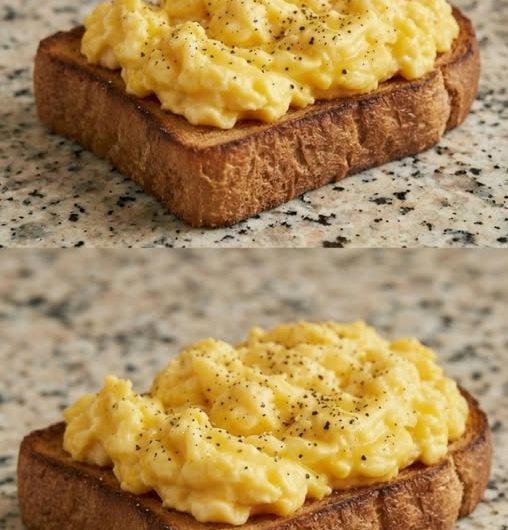

Scrambled eggs are one of the easiest things to make, but getting the texture just right takes a little attention. A few small choices—when to season the eggs, whether to add milk, how hot the pan should be, and how much you stir—can make a noticeable difference.
For a good everyday batch of scrambled eggs, the goal is simple: soft, moist eggs with fluffy curds and enough richness to make them satisfying without making them heavy.
The method below is designed for making one serving at home. It takes only a few minutes, so the most important thing is to have everything ready before the eggs go into the pan.
Start With the Eggs
- Crack three large eggs into a small bowl. Add the kosher salt and the milk if you are using it.
- The milk is optional, but it works particularly well here. A small amount adds moisture and a little richness while keeping the eggs light. The amount used in this recipe is enough to make the eggs tender without turning them overly creamy or custard-like.
- Whisk the eggs until the yolks and whites are well combined. There is no need to whip them aggressively or try to create a large amount of foam. The mixture should simply look evenly blended, with no obvious streaks of separate egg white and yolk.
Why Salt Matters
- Salt is sometimes added only after scrambled eggs have been cooked, but there is no real need to wait.
- Seasoning the eggs before cooking can actually help them retain moisture. Salt affects the way the egg proteins behave as they heat. When proteins tighten during cooking, they can push moisture out of the eggs. Salt helps moderate that process, which can contribute to a softer and more tender result.
- You do not need to salt the eggs hours ahead of time. Simply adding the salt while you beat the eggs is convenient and works well for this quick recipe.
- The exact amount of salt can also be adjusted to taste. Different brands of kosher salt can vary considerably in volume, so what tastes properly seasoned to one person may taste different to another.
Add a Little Milk for Balance
- The two tablespoons of whole milk in this recipe are there to improve the texture rather than to make the eggs taste strongly of milk.
- Milk adds moisture while bringing a small amount of richness. Compared with using a larger amount of cream, whole milk keeps the finished eggs relatively light. It also helps prevent the eggs from feeling dense.
- You can leave the milk out if you prefer. The eggs will still cook successfully, but the texture will be somewhat different. The important thing is not to compensate by adding a large amount of extra liquid.
- Too much liquid can make scrambled eggs more difficult to cook evenly. As the eggs become firmer, excess moisture may separate from the curds, especially if the eggs are cooked for too long.
- For this reason, the small amount specified in the recipe is enough.
Use a Nonstick Skillet
- A nonstick skillet is particularly helpful when making scrambled eggs. It allows the eggs to move easily around the pan and makes it easier to form large, tender curds without leaving a layer of egg stuck to the bottom.
- Place the skillet over medium-high heat and add the unsalted butter.
- Let the butter melt completely. As it heats, it should begin to foam. This is the point when the pan is ready for the eggs.
- The butter should be hot, but it should not be allowed to burn. Once it has melted and become foamy, move fairly quickly and add the beaten eggs.
Why Heat Makes a Difference
- The temperature of the pan has a major effect on scrambled eggs.
- If the pan is too cool, the eggs take longer to set. You may end up stirring them repeatedly while they slowly thicken, producing smaller, tighter curds.A hotter pan causes the eggs to begin setting quickly. This allows you to create larger curds and finish cooking before the eggs have a chance to become dry.
- That does not mean the eggs should be cooked over maximum heat from beginning to end. Medium-high heat gives enough energy to create fluffy curds while still giving you control over the cooking process.
- Once the eggs hit the hot, buttered skillet, watch them closely.
Let the Curds Form
- Pour the egg mixture into the skillet and allow it to begin setting.
- As the bottom layer cooks, use a silicone spatula to gently move the eggs around the pan. Instead of constantly stirring the mixture into tiny pieces, focus on lifting and folding the portions that have started to set.
- Large, soft sheets of egg should begin forming fairly quickly.
- Push or fold those cooked portions through the still-liquid egg. This allows uncooked egg to reach the hot surface while keeping the already-cooked portions from sitting on the pan for too long.
Gentle Scrambling Creates Larger Curds
- The amount of agitation determines the size of the finished curds.
- If you stir continuously and vigorously, the eggs break apart into smaller pieces. That can be useful if you prefer a finer scramble, but it is not the goal here.
- For fluffy scrambled eggs, use deliberate movements with the spatula. Lift, fold, and gently turn the eggs as they set.
- The curds should remain substantial rather than being broken down into tiny fragments.
- There is no need to keep the spatula moving every second. Letting the eggs briefly set against the pan before folding them helps create the larger pieces that give scrambled eggs their fluffy texture.
Stop Cooking at the Right Moment
- One of the easiest ways to ruin scrambled eggs is to cook them too long.
- The eggs continue to cook from their own residual heat even after they are removed from the skillet. Because of this, it is better to take them off the heat as soon as they are fully cooked rather than waiting for them to become noticeably dry.
- For this recipe, the eggs should be cooked through and formed into large, fluffy curds. They should not have obvious raw liquid egg remaining, but they also should not look dry or crumbly.
- A little softness is desirable.
- Once the eggs have reached that point, remove them from the heat.
Finish With Pepper
- Freshly ground black or white pepper is added at the end.
- Adding pepper after cooking keeps the seasoning fresh and gives you more control over the final flavor. You can use either black or white pepper depending on your preference.
- Taste the eggs if necessary and adjust the seasoning to suit your preference.
- Because the recipe uses a relatively small amount of salt, the final seasoning can be adjusted according to the saltiness you like.
Getting the Texture You Want
- Scrambled eggs do not have to look exactly one way.
- Some people prefer firm, well-done eggs with clearly defined pieces. Others prefer soft, delicate curds that remain moist. Both styles are possible with the same basic ingredients.
- The difference comes largely from heat, stirring, and cooking time.
- For softer eggs, use gentler agitation and remove them from the heat as soon as they are cooked through.
- For firmer eggs, continue cooking slightly longer and stir more frequently. The longer the eggs remain on the heat, the more moisture they will lose and the firmer the proteins will become.
- The method here aims for a middle ground that is particularly good for breakfast: fluffy, tender curds that are cooked through but not dry.
Why the Butter Matters
- The unsalted butter serves two purposes.
- First, it helps prevent the eggs from sticking to the skillet. This is especially useful when working with a nonstick pan because it adds another layer of richness and protection.
- Second, butter contributes flavor.
- Allowing the butter to melt and foam before adding the eggs also helps signal that the pan is hot enough. Once the foam appears, the eggs can go straight into the skillet.
- Keep an eye on the butter while it heats. You want it melted and foamy rather than browned or burned.
A Simple Approach to Add-Ins
- This recipe is intentionally straightforward, but scrambled eggs can be adapted once the basic technique is comfortable.
- If adding ingredients such as cheese, herbs, or cooked vegetables, it is usually best to add them toward the end. This prevents them from interfering with the initial cooking of the eggs.
- Ingredients that contain a lot of water should be cooked separately first. Mushrooms, for example, release moisture as they cook. Adding them raw to the eggs can introduce extra water and make the final texture less predictable.
- Cook those ingredients until their excess moisture has been released, then add them near the end of the egg-cooking process.
- Cheese can also be added shortly before the eggs are finished so that it has time to melt without requiring the eggs to remain on the heat for too long.
- Fresh herbs can be folded in at the end for a fresh flavor.
- The important principle is to avoid overloading the skillet while the eggs are still trying to set.
Common Problems to Avoid
- Cooking Over Low Heat
- A very low temperature may seem safer, but it can make the eggs cook slowly and encourage constant stirring. The result can be small, dense curds rather than fluffy ones.
- Medium-high heat gives the eggs enough energy to cook quickly while still allowing you to control them.
- Stirring Too Aggressively
- Constant, vigorous stirring breaks the eggs into very small pieces. If you want larger, fluffy curds, use a silicone spatula to lift and fold rather than simply stirring in circles.
- Cooking Until Completely Dry
- Eggs do not need to be dry to be fully cooked.
- If you wait until every trace of moisture has disappeared from the skillet, the finished eggs can become firm and rubbery. Remove them when they have just finished setting.
- Adding Too Much Liquid
- Milk can improve the texture, but more is not necessarily better.
- Excess liquid can increase the chance of moisture separating from the eggs during cooking. A modest amount gives the eggs moisture and richness without making them unnecessarily wet.
- Leaving the Eggs in the Pan
- The skillet remains hot after the burner is turned off. Eggs left sitting in the hot pan can continue cooking and become firmer than intended.
- Once they reach the desired texture, transfer them to the plate.
A Reliable Morning Method
- For an easy routine, start by cracking the eggs into a bowl and seasoning them. Add the milk and beat everything together.
- Place the nonstick skillet over medium-high heat. Add the butter and wait until it melts and becomes foamy.
- Pour in the eggs.
- Give them a moment to begin setting, then use a silicone spatula to gently move the cooked portions. Fold the larger curds over themselves and allow the remaining liquid egg to contact the hot skillet.
- Continue this process until the eggs form large, fluffy curds and are cooked through.
- Do not wait for them to become dry.
- Take the skillet off the heat, season with freshly ground black or white pepper, and serve immediately.
- The entire process is quick enough that there is little benefit to preparing the eggs far in advance. Scrambled eggs are at their best right after cooking, while the curds are still tender and warm.
The Main Things to Remember
- There are only a few details worth keeping in mind.
- Season the eggs before cooking. Salt does not need to be saved for the end and can help the eggs retain moisture.
- Use a small amount of whole milk if you want softer, richer eggs. The amount in this recipe adds moisture without making the eggs excessively heavy.
- Heat the skillet properly. Medium-high heat helps the eggs cook quickly and encourages large curds.
- Scramble gently. Folding and turning the eggs produces a fluffier texture than constantly breaking them apart.
- Stop when the eggs are just cooked. Residual heat will continue cooking them after they leave the skillet.
- With those points covered, scrambled eggs become a very reliable meal. The ingredient list is short, the cooking time is brief, and the technique can easily be adjusted depending on whether you prefer your eggs softer or firmer.
- For a simple home breakfast, there is no need to complicate the process. Good heat, properly seasoned eggs, a little butter, and controlled movement in the pan are enough to produce tender, fluffy scrambled eggs every time
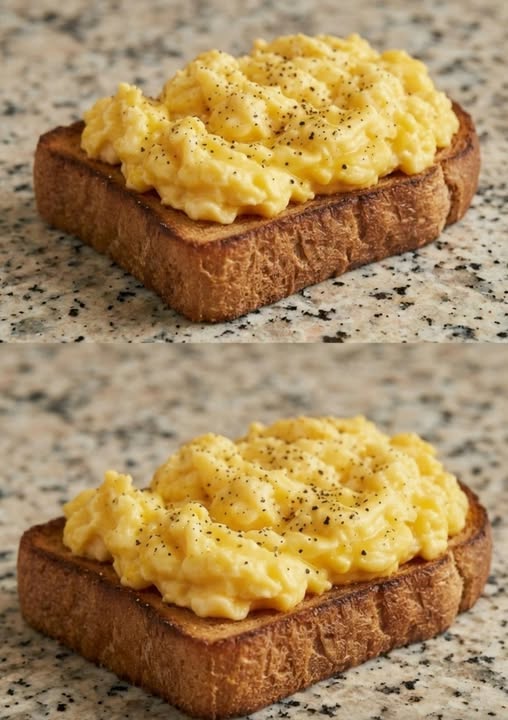
High Protien Soft, Fluffy Scrambled Eggs
Tender scrambled eggs made with a little whole milk and butter for a light, moist texture. The eggs are cooked over medium-high heat and gently folded into large, fluffy curds
1
servings5
minutes5
minutes266
kcalIngredients
3 large eggs
1/8 teaspoon kosher salt (see note
2 tablespoons (1 ounce; 30 ml) milk (optional)
1/2 tablespoon (1/4 ounce; 8 g) unsalted butter
Freshly ground black or white pepper
Directions
- Crack the eggs into a small bowl. Add the kosher salt and milk, if using. Beat until the eggs are evenly combined.
- Place a nonstick skillet over medium-high heat. Add the butter and let it melt until it becomes hot and foamy
- Pour the beaten eggs into the skillet. As the eggs begin to set, use a silicone spatula to gently lift and fold them.
- Continue cooking and gently scrambling until large, fluffy curds form and the eggs are fully cooked through, about 3 minutes.
- Remove the skillet from the heat as soon as the eggs are cooked. Season with freshly ground black or white pepper and serve immediately.
Notes
- Season the eggs according to taste. About 1.5 g of salt is approximately 1% of the weight of three large eggs, but the volume of kosher salt can vary considerably between brands.
- For softer scrambled eggs, avoid overcooking them. The eggs will continue to cook slightly from the residual heat after leaving the skillet
- The milk is optional, but using the specified amount gives the eggs a moist, light texture with a little extra richness.
Nutrition Facts
- Calories: 266kcal
- Fat: 20g
- Carbohydrates: 1g
- Protein: 19g
