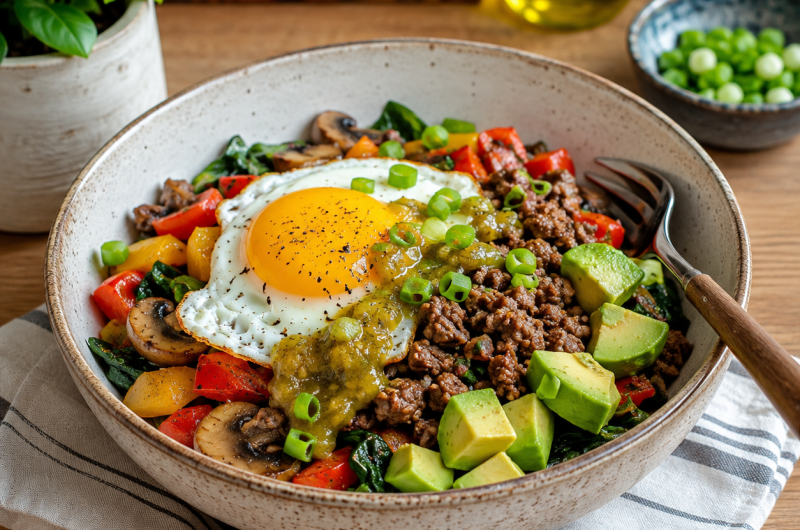

A High Protein Beef Bowl is a quick, filling meal made with lean ground beef, cottage cheese, colorful bell peppers, fresh spinach, scallions, and flavorful seasonings. It is an excellent option when you want a protein-rich meal without relying on rice, pasta, bread, or other heavy bases. With 66 grams of protein per serving according to the supplied nutrition information, this bowl is especially suitable for anyone looking for an easy high-protein breakfast, lunch, dinner, or meal-prep option.
The combination of warm seasoned beef and vegetables with cool, creamy cottage cheese makes this bowl especially satisfying. Cottage cheese creates a creamy base at the bottom, while the ground beef adds a savory and hearty element. Bell peppers bring sweetness, crunch, and color, while spinach cooks down quickly and adds another vegetable to the meal. A final sprinkle of scallions and bagel seasoning gives the bowl an appealing finishing touch.
Why This Beef Bowl Is So Satisfying
One of the best things about this healthy beef bowl is how little preparation it requires. The ingredients are cooked in a single skillet, which keeps the cooking process straightforward and reduces cleanup. The bell peppers and scallions are cooked first, followed by the prepared ground beef and spinach. Once everything is hot and tender, the ingredients are layered over cottage cheese and finished with seasoning.
This makes the recipe particularly useful on busy days when you want a substantial meal without spending a long time in the kitchen. The supplied recipe lists a total preparation time of approximately 20 minutes, making it practical for a quick meal during the week. Despite its short cooking time, the finished bowl provides a combination of protein, vegetables, creamy texture, and savory flavor.
The Protein-Rich Base
Lean ground beef is the main savory component of this recipe. Using cooked lean ground beef keeps the preparation especially quick because the meat only needs to be heated through with the seasonings. The beef provides the hearty flavor and substantial texture that makes this bowl feel like a complete meal.
When reheating the beef, use the same skillet that was used for the vegetables. This allows the beef to pick up some of the flavor left behind by the peppers and scallions. Seasoning the beef as it warms also helps distribute the flavor evenly throughout the bowl.
The supplied recipe uses 6 ounces of cooked, lean ground beef for one serving. This provides a substantial protein foundation and works particularly well with the creamy cottage cheese underneath. The combination creates a meal that is much more filling than a simple vegetable bowl.
Cottage Cheese Adds Creaminess and Protein
Cottage cheese serves as the base of this high-protein beef bowl rather than being mixed directly into the beef. This creates a pleasant contrast between the cool, creamy cottage cheese and the warm beef and vegetables layered over it.
The recipe uses 1 cup of 2% fat cottage cheese. Cottage cheese is particularly useful in high-protein recipes because it provides a creamy texture while contributing a significant amount of protein. When paired with lean ground beef, it helps bring the protein content of the finished bowl to an impressive level.
To assemble the bowl, spread the cottage cheese evenly across the bottom. This creates a creamy foundation for the other ingredients and ensures that every spoonful can include some of the cottage cheese along with the beef and vegetables.
Colorful Bell Peppers
Diced bell peppers provide sweetness, color, and texture. The supplied recipe calls for 1 cup of diced bell peppers, which gives the bowl plenty of vegetable volume without requiring a complicated preparation process.
The peppers are cooked in the skillet for approximately three to four minutes, or until they begin to soften. This short cooking time allows them to retain some texture rather than becoming completely soft. Slightly tender peppers work particularly well with the soft cottage cheese and cooked ground beef.
Because bell peppers cook quickly, they are one of the first ingredients added to the hot skillet. Once they reach the desired texture, they are removed from the pan so the beef can be heated separately.
Fresh Spinach for an Easy Vegetable Addition
Fresh spinach is another simple ingredient that adds color and vegetable volume without significantly increasing the cooking time. The recipe uses a big handful of fresh spinach, which is added after the ground beef has been heated.
Spinach requires very little time to cook. Once added to the warm beef, it only needs approximately one minute to wilt. This makes it a convenient choice for quick skillet meals. The spinach becomes tender while still contributing a fresh vegetable component to the finished bowl.
Adding the spinach toward the end is important because it cooks much faster than bell peppers. Cooking it for too long can make it overly soft, while a short cooking time allows it to retain more of its natural character.
Scallions Bring Fresh Flavor
Scallions are used in two stages in this recipe. They are sliced and separated, with some being cooked alongside the bell peppers and the remaining portion used as a finishing garnish.
Cooking some of the scallions softens their flavor and allows them to blend with the bell peppers. Reserving the rest for the top gives the finished bowl a fresher onion flavor and adds a little color.
This simple technique gives the recipe more variety without adding another complicated ingredient or cooking step. The combination of cooked and fresh scallions works especially well with the savory beef and creamy cottage cheese.
Choosing the Seasonings
The supplied recipe includes dried oregano, an additional seasoning listed in the ingredient section, salt, and bagel seasoning. These ingredients provide the basic flavor profile for the bowl without requiring a separate sauce or marinade.
Bagel seasoning is particularly useful as a finishing ingredient because it adds a mixture of savory texture and flavor over the cottage cheese, beef, and vegetables. Sprinkle it over the assembled bowl rather than mixing it into the beef so its texture remains noticeable.
Salt can be adjusted according to taste. Because cottage cheese and bagel seasoning can both contain sodium, it is worth tasting the finished combination before adding a large amount of additional salt.
How to Cook the Vegetables
Begin by placing a medium-sized nonstick skillet over medium-high heat. Once the pan is hot, add the olive oil, diced bell peppers, and scallions. Cook the vegetables for approximately three to four minutes.
The goal is to soften the peppers without cooking them until they lose all of their texture. Stir them occasionally so they cook evenly. When they are ready, transfer them out of the pan temporarily.
Removing the vegetables before adding the beef makes it easier to heat the meat properly while preventing the peppers from becoming overly soft. The vegetables can be added back during assembly, so there is no need to keep them hot in the skillet while the beef cooks.
Heating the Ground Beef
After removing the peppers and scallions, place the cooked lean ground beef into the same skillet. Add the specified seasonings and stir the mixture while it heats.
Because the beef is already cooked, this stage is primarily about heating it thoroughly and allowing the seasonings to coat the meat. Break apart any larger pieces with a spatula so the beef becomes evenly distributed.
Using the same pan is an efficient approach because it reduces cleanup and allows the beef to benefit from the savory flavors remaining in the skillet after cooking the vegetables.
Adding the Spinach
Once the beef is hot, add the fresh spinach directly to the skillet. Stir it into the beef and cook for approximately one minute, or just until the leaves wilt.
There is no need to cook the spinach for an extended period. As soon as the leaves have softened and blended with the beef, the mixture is ready for assembly. Keeping this step short helps the entire recipe remain quick and prevents the spinach from becoming excessively soft.
The combination of beef and spinach creates a warm, savory topping for the cottage cheese. The contrast between the textures makes the bowl more interesting than simply combining all of the ingredients together.
How to Assemble the High Protein Beef Bowl
Assembly is one of the easiest parts of this recipe. Start by spreading the cottage cheese across the bottom of a serving bowl. Try to create an even layer so the cottage cheese is distributed throughout the bowl rather than remaining in one area.
Next, spoon the warm ground beef and spinach mixture over the cottage cheese. Add the cooked bell peppers and scallions on top. Finish the bowl with the reserved sliced scallions and bagel seasoning.
The layering method gives the bowl a visually appealing appearance while keeping each ingredient recognizable. It also means the creamy cottage cheese remains a distinct component instead of disappearing into the beef mixture.
Why This Is a Great High Protein Meal
The nutritional profile supplied with the recipe makes this bowl particularly appealing for high-protein meal planning. One serving contains approximately 66 grams of protein, along with 568 calories, 17 grams of carbohydrates, and 25 grams of fat.
The combination of lean beef and cottage cheese provides the majority of the protein. Vegetables contribute fiber and important nutrients while adding volume and flavor. This balance makes the bowl filling without needing a large amount of bread, rice, or pasta.
For people searching for high-protein meal ideas, healthy beef recipes, protein-packed breakfast recipes, or easy low-carb-style bowls, this recipe provides a practical option that can be prepared with basic ingredients.
A Convenient Meal for Breakfast, Lunch, or Dinner
Although beef and eggs are often associated with breakfast-style protein bowls, this particular version can be enjoyed at almost any time of day. The warm beef and vegetables make it substantial enough for lunch or dinner, while the cottage cheese and high protein content also make it suitable for breakfast.
The recipe does not depend on a traditional breakfast ingredient such as toast or cereal. Instead, it provides a savory meal that can work especially well when you prefer something filling and protein-rich in the morning.
For lunch or dinner, the bowl can be served as a complete meal without needing a separate side dish. The cottage cheese, beef, vegetables, and toppings provide enough variety to make the bowl satisfying on its own.
Meal Prep and Storage
This recipe can also be adapted for meal preparation. The beef and vegetables can be prepared ahead and stored in the refrigerator, making it easier to assemble a quick meal later.
For the best texture, keep the cottage cheese separate from the cooked beef and vegetables until serving. Reheat the beef and vegetable mixture, then add it over the cottage cheese. Finish with fresh scallions and bagel seasoning.
Preparing the ingredients ahead can save valuable time during busy weekdays. Instead of cooking an entire meal from scratch, you can simply warm the prepared beef and vegetables and assemble the bowl in a few minutes.
Notes for the Best Results
Use a hot skillet before adding the bell peppers so they begin cooking immediately. Avoid overcooking them because a little remaining texture makes the bowl more enjoyable. Once the peppers have softened, remove them and use the same pan for the beef.
Add the spinach only after the beef has been heated. Since spinach wilts quickly, approximately one minute is enough. Overcooking it is unnecessary and can make the vegetable mixture wetter than desired.
For the final assembly, spread the cottage cheese evenly across the bottom of the bowl. This ensures the creamy base is incorporated into every serving. Finish with scallions and bagel seasoning immediately before eating for the freshest flavor and texture.
This High Protein Beef Bowl is a straightforward recipe that combines lean ground beef, cottage cheese, bell peppers, spinach, scallions, and flavorful seasonings into one satisfying meal. The preparation is simple, the ingredient list is manageable, and the cooking process uses one skillet for most of the work.
With 66 grams of protein per serving, it is particularly useful for anyone looking for a protein-rich meal that can fit into a busy routine. The creamy cottage cheese balances the savory beef, while bell peppers and spinach provide color and vegetable texture. A final sprinkle of scallions and bagel seasoning brings the entire bowl together.
Whether served for breakfast, lunch, dinner, or prepared ahead for the week, this beef protein bowl is an easy way to create a filling homemade meal without relying on complicated cooking techniques. Its simple ingredients and short preparation time make it a practical choice whenever you want something warm, flavorful, and packed with protein.
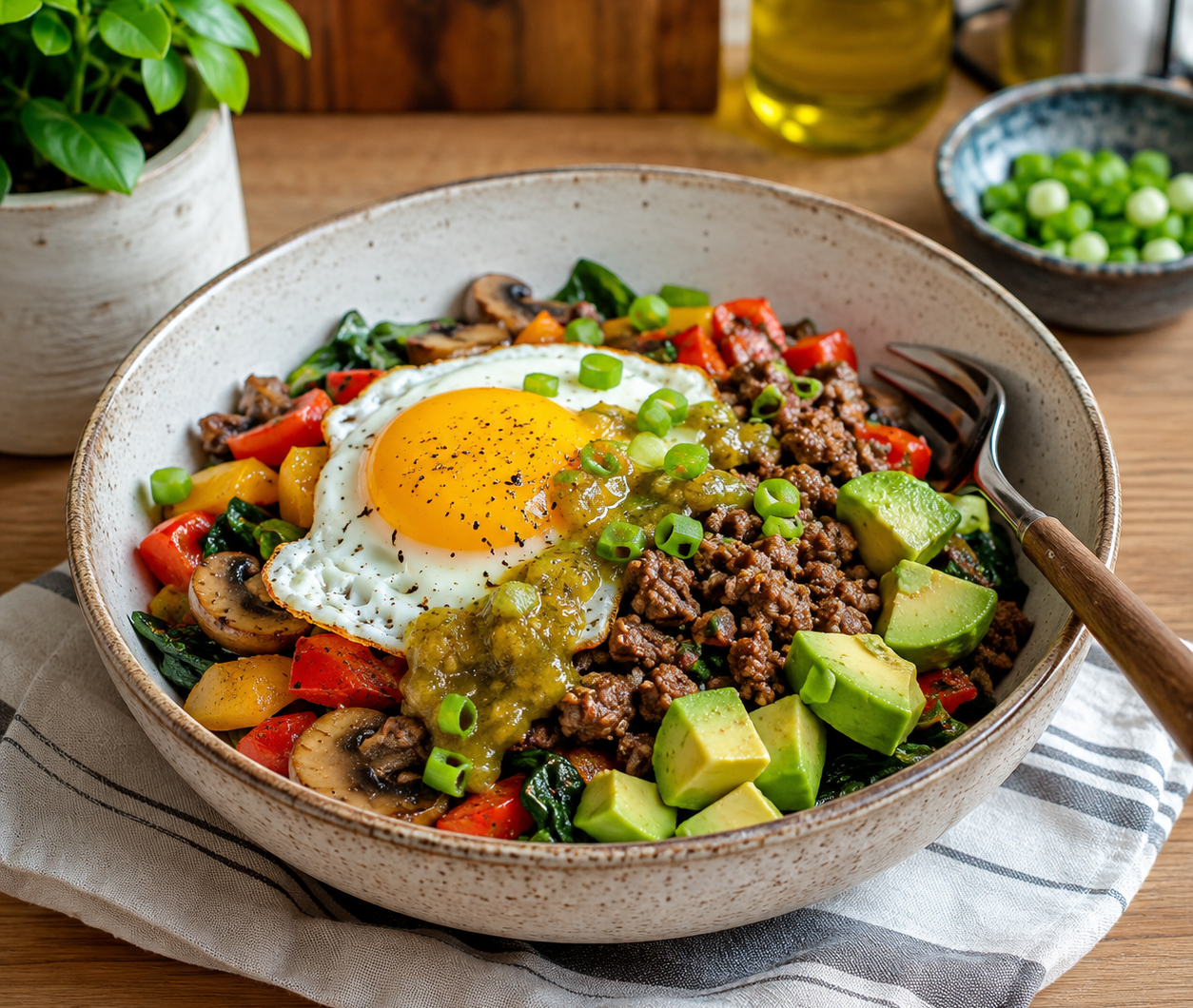
High Protein Beef Bowl
A quick and satisfying protein-rich bowl made with lean ground beef, creamy 2% cottage cheese, colorful bell peppers, fresh spinach, scallions, and savory seasonings.
1
servings20
minutes568
kcalIngredients
6 ounces cooked, lean ground beef
1 cup 2% fat cottage cheese
1 cup diced bell peppers
A big handful of fresh spinach
1 scallion, sliced and separated
1 tablespoon
1/2 teaspoon dried oregano
1/2 teaspoon
Salt, to taste
Bagel seasoning, for topping
Directions
- Place a medium-sized nonstick skillet over medium-high heat.
- Once the skillet is hot, add the olive oil, diced bell peppers, and sliced scallions.
- Cook the peppers for approximately 3–4 minutes, or until they begin to soften.
- Remove the cooked peppers and scallions from the skillet and set them aside.
- Add the cooked lean ground beef to the same skillet.
- Season the beef with the listed seasonings and heat for several minutes until warmed through.
- Add the fresh spinach to the beef and cook for approximately 1 minute, just until the spinach wilts.
- To assemble the bowl, spread the cottage cheese evenly across the bottom of a serving bowl.
- Spoon the warm ground beef and spinach mixture over the cottage cheese.
- Add the cooked bell peppers and scallions.
- Finish with the remaining sliced scallions and a sprinkle of bagel seasoning.
- Serve immediately while the beef and vegetables are warm.
Nutrition Facts
- Calories: 568kcal
- Fat: 25g
- Carbohydrates: 17g
- Fiber: 4g
- Sugar: 13g
- Protein: 66g
