

There are times when I want something sweet, but I do not necessarily want a heavy dessert. This flourless protein lemon cake is the kind of recipe I make when I am looking for something light, fresh, and satisfying. It has a bright lemon flavor, a soft texture, and a creamy, almost cheesecake-like center. It is also naturally gluten-free because there is no regular flour in the recipe.
What I particularly like about this cake is how simple the ingredient list is. There are only five ingredients, yet the finished cake feels much more special than the short list might suggest. Eggs, Greek yogurt, powdered sugar, cornstarch, and a fresh lemon come together to make a dessert that is sweet, zesty, and wonderfully creamy.
Each slice contains about 195 calories and 12 grams of protein, making it a nice option when I want a lighter dessert. The recipe also works well as an afternoon treat in spring or as a refreshing dessert after a heavier meal.
A Simple Lemon Dessert
- When I make a lemon cake at home, I want the lemon to be noticeable without making the cake overly sharp. Fresh lemon zest and juice do exactly that here. The zest brings a fragrant citrus flavor, while the juice gives the cake its bright, tangy character.
- The Greek yogurt is what helps give this cake its creamy texture. Since the recipe does not use traditional flour, the finished cake is quite different from a classic fluffy lemon sponge. Instead, it has a soft, rich texture that falls somewhere between a delicate cake and a cheesecake.
- That texture is one of the reasons I like serving it chilled. Once the cake has cooled and spent some time in the refrigerator, it becomes firmer and easier to slice.
What I Need
The ingredient list is short, so I like to have everything measured before I start. For one cake, I use:
- 6 medium eggs
- 3 cups unsweetened low-fat Greek yogurt
- 1 cup powdered sugar
- 1 cup cornstarch
- 1 lemon, zested and juiced
- That is all I need for the cake itself.
- Because there are so few ingredients, I find that using them in the right condition makes a difference. I prefer to let the eggs and Greek yogurt come to room temperature before mixing. About 30 minutes on the counter is enough.
- The fresh lemon is also worth using. I zest the lemon before squeezing it because it is much easier to collect the zest while the lemon is still firm.
Getting the Pan Ready
- Before I begin mixing, I prepare an 8-inch springform cake pan. I line the pan with parchment paper so the cake is easier to remove after it has cooled.
- I also preheat the oven to 340°F. Having the oven ready before the batter goes into the pan keeps the process simple and means I can bake the cake as soon as it is mixed.
- Since this is a soft cake, I do not want to be struggling with the pan after the batter is ready. Preparing it first makes the rest of the recipe much easier.
Mixing the Batter
- I start with a large bowl and add the six eggs. I whisk them until they are combined.
- Next, I add the Greek yogurt and whisk again. At this point, I am looking for a smooth mixture rather than trying to whip lots of air into it.
- Then I sift the powdered sugar and cornstarch into the bowl. This is an important little step. Cornstarch can easily form lumps when it is added directly, and powdered sugar can also have small clumps. Sifting both ingredients helps create a smoother batter.
- I whisk everything together until the mixture is evenly combined.
- The batter should look smooth and creamy at this stage. I do not keep whisking once everything is incorporated. There is no need to overwork the mixture.
Adding the Lemon
- Once the main batter is smooth, I prepare the lemon.
- I grate the zest of one lemon directly into the bowl and then squeeze in the lemon juice. I give everything another gentle whisk to distribute the lemon throughout the batter.
- This is where the cake really starts to smell like lemon. The fresh zest adds a stronger citrus aroma than juice alone, while the juice brings the tanginess that makes the finished dessert taste fresh rather than simply sweet.
- I make sure the lemon zest is spread through the batter instead of sitting in one place. A few seconds of gentle mixing is enough.
Into the Springform Pan
- With the batter ready, I pour it into the prepared 8-inch springform pan.
- I give the pan a quick look to make sure the batter is sitting evenly. Then I place it in the preheated oven.
- The first stage of baking is 50 minutes at 340°F. During this time, I avoid opening the oven unnecessarily. The cake needs time to set properly.
- After the first 50 minutes, I increase the oven temperature to 350°F and continue baking for another 20 minutes. I look for the edges to turn golden brown as an indication that the cake is ready for the cooling stage.
- Because ovens can vary, I keep an eye on the cake toward the end of baking. The center is meant to have a soft, creamy texture, so I do not expect it to look exactly like a traditional sponge cake.
Letting the Cake Cool
- This is one part of the recipe where patience really matters.
- When the cake comes out of the oven, I leave it inside the springform pan and allow it to cool for about two hours. I do not rush to remove it while it is still warm.
- The cake continues to settle as it cools. Since it has a creamy, cheesecake-like texture, giving it enough time to cool helps it become easier to handle and slice.
- Once it has cooled, I like to add a little extra lemon zest over the top. This is not necessary for the cake to work, but it gives the finished dessert an extra hit of fresh lemon flavor.
- After cooling, I place the cake in the refrigerator for a couple of hours.
Why Chilling Helps
- I find that this cake is particularly good when it is cold. Refrigerating it allows the texture to firm up, making the slices cleaner and giving the cake that creamy consistency I enjoy.
- It can be served directly from the refrigerator, which is especially refreshing on a warm day. If I want it a little softer, I let a slice sit at room temperature for around 15 to 20 minutes before eating it.
- The lemon flavor also seems to become more pronounced after the cake has had time to rest.
Keeping the Texture Smooth
- There are a few small things I pay attention to whenever I make this recipe.
- First, I use room-temperature eggs and Greek yogurt. Cold ingredients can still work, but allowing them to sit out for about 30 minutes makes it easier to create a smooth, uniform mixture.
- Second, I avoid overmixing. Once the ingredients are combined, I stop whisking. The goal is simply to bring everything together evenly.
- Finally, I do not skip sifting the powdered sugar and cornstarch. With such a short ingredient list, there are not many complicated steps, so this extra minute is well worth it.
Serving the Cake
- This lemon cake is simple enough for an everyday dessert but has a texture that makes it feel a little more special.
- I like serving thin slices chilled, particularly as an afternoon treat. The bright lemon flavor makes it feel light, while the Greek yogurt and eggs give each slice a satisfying texture.
- It also works nicely after a heavier meal because the citrus flavor keeps the dessert from feeling too rich.
- The finished cake has a soft, creamy interior and lightly golden edges. A little fresh lemon zest on top gives it a simple finish without needing anything else.
Storing Leftovers
- If I have leftovers, I cover the cake and keep it refrigerated. It can be stored in the refrigerator for up to five days.
- In fact, I often find that the cake tastes even better after it has rested for a day or two. The lemon flavor has more time to settle into the creamy cake.
- I keep it covered while refrigerated so it stays fresh and does not pick up other flavors from the refrigerator.
- When I am ready to eat it, I can enjoy it cold or let it sit at room temperature for 15 to 20 minutes.
A Few Things to Remember
- The recipe is straightforward, but the cooling time is important. The cake needs approximately two hours to cool in the pan, followed by a couple of hours in the refrigerator, so I plan ahead when making it.
- I also make sure not to confuse this cake with a conventional flour-based lemon cake. Its texture is intentionally creamy and dense rather than light and fluffy. That is part of what makes it different.
- With only five ingredients, there is also very little preparation involved. Most of the work is simply whisking the ingredients together, baking, and allowing the cake enough time to cool and chill.
The Finished Lemon Cake
- Once the cake is completely chilled, I remove it from the pan and slice it.
- The result is a bright, zesty lemon dessert with a creamy cheesecake-like texture. It is sweet, but the fresh lemon keeps the flavor lively. With 12 grams of protein and about 195 calories per slice, it is a lighter way to enjoy a homemade dessert.
- This is one of those recipes that reminds me that a good cake does not need a long ingredient list. A handful of basic ingredients, fresh lemon, and a little patience are enough to make something that feels special.
- For me, the best part is serving it cold, when the texture is firm and creamy and the lemon flavor is at its freshest
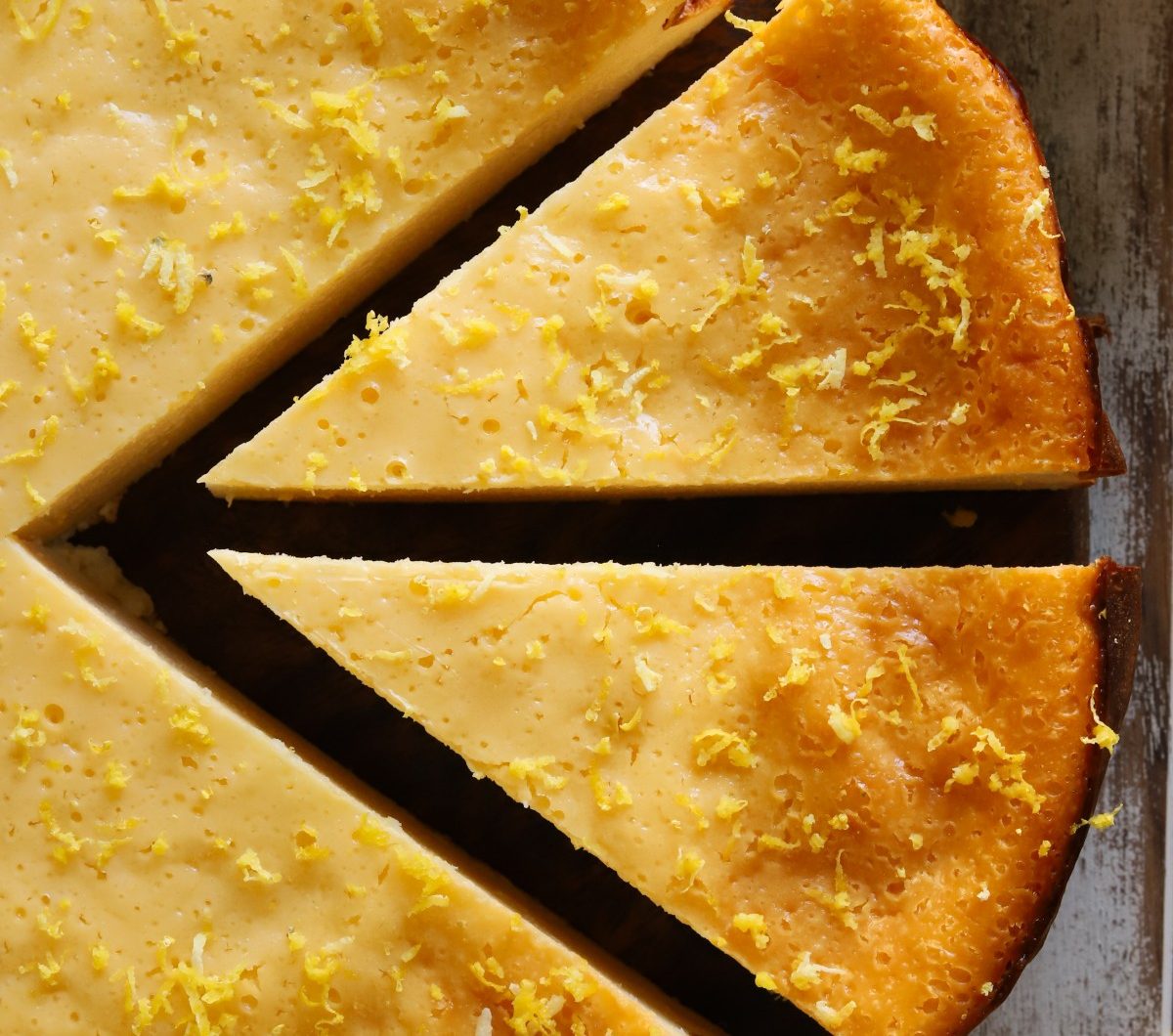
Flourless Protein Lemon Cake
A bright and zesty flourless lemon cake with a creamy, cheesecake-like texture. Made with just five ingredients, this gluten-free dessert is light, refreshing, and high in protein, with about 195 calories and 12 grams of protein per slice.
10
servings15
minutes1
hour195
kcalIngredients
6 medium eggs
3 cups unsweetened low-fat Greek yogurt
1 cup powdered sugar
1 cup cornstarch
1 lemon, zested and juiced
Directions
- Preheat the oven to 340°F. Line an 8-inch springform cake pan with parchment paper.
- Add the eggs to a large bowl and whisk until combined.
- Add the Greek yogurt and whisk until smooth.
- Sift the powdered sugar and cornstarch into the bowl.
- Whisk everything together until the batter is smooth and evenly combined. Avoid overmixing.
- Zest one lemon into the bowl, then squeeze in the lemon juice. Stir gently until the lemon is evenly distributed.
- Pour the batter into the prepared springform pan.
- Bake at 340°F for 50 minutes.
- Increase the oven temperature to 350°F and continue baking for another 20 minutes, or until the edges of the cake turn golden brown.
- Remove the cake from the oven and let it cool completely in the pan for about 2 hours.
- Sprinkle a little lemon zest over the top.
- Refrigerate the cake for a couple of hours before slicing and serving.
Notes
- For the smoothest batter, let the eggs and Greek yogurt sit at room temperature for about 30 minutes before mixing.
- Sifting the powdered sugar and cornstarch helps prevent lumps.
- Do not overmix the batter once all the ingredients are combined.
- Keep leftover cake covered in the refrigerator for up to 5 days.
- The cake can be served straight from the refrigerator or left at room temperature for 15–20 minutes before serving.
Nutrition Facts
- Serving Size: 1 g
- Total number of serves: 10
- Calories: 195kcal
- Fat: 4g
- Saturated Fat: 1.5g
- Cholesterol: 60mg
- Sodium: 90mg
- Carbohydrates: 27g
- Sugar: 21g
- Protein: 12g
