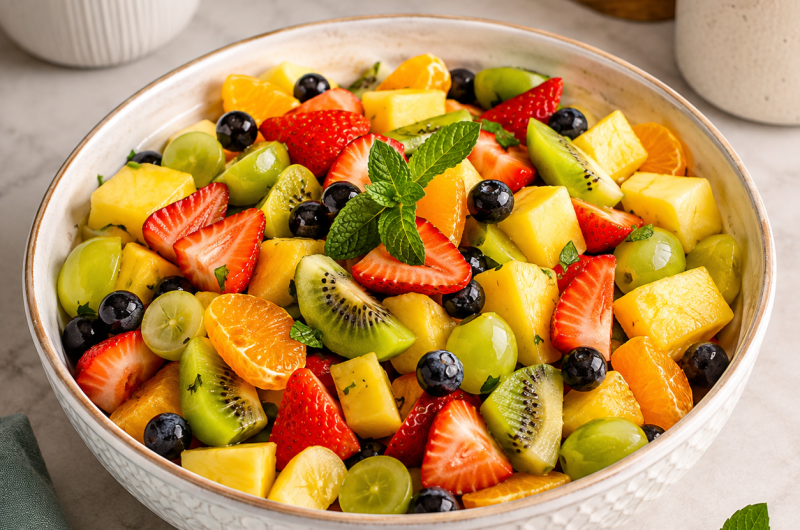

This easy fruit salad recipe is a fresh and colorful side dish made with strawberries, blueberries, green grapes, mandarin oranges, pineapple, kiwi, and optional fresh mint. Everything is brought together with a simple honey lemon dressing made from lemon juice, lemon zest, and honey. The result is juicy, bright, lightly tangy, and naturally sweet without relying on refined sugar. It is an excellent choice for summer gatherings, family meals, potlucks, brunches, picnics, and holiday tables.
Fresh fruit salad is one of those recipes that looks impressive while requiring very little preparation. There is no cooking involved, and most of the work consists of washing, peeling, slicing, and combining the fruit. The homemade lemon dressing takes only a few minutes to whisk together. Once everything is combined, the fruit is ready to serve, making this a particularly convenient recipe when you need a quick side dish for a crowd.
Why This Fruit Salad Is So Good
The appeal of this recipe comes from the variety of fruit used in one bowl. Strawberries provide a soft, juicy texture and a pleasant sweetness, while blueberries add a deeper berry flavor. Green grapes bring a crisp bite, mandarin oranges contribute bright citrus notes, pineapple adds tropical sweetness, and kiwi provides a slightly tart flavor that keeps the salad from tasting overly sweet.
The fruit is not simply mixed together without a dressing. A fresh lemon and honey dressing adds acidity and sweetness while allowing the natural flavor of the fruit to remain the focus. Lemon juice gives the salad a refreshing tang, lemon zest adds concentrated citrus aroma, and honey rounds everything out with gentle sweetness. The dressing is simple enough that it does not overpower the fruit.
The Best Fruit Combination for a Summer Fruit Salad
The combination of strawberries, blueberries, grapes, mandarin oranges, pineapple, and kiwi gives this salad a wide range of colors and textures. The red strawberries, blue-purple blueberries, green grapes and kiwi, orange mandarins, and golden pineapple create a naturally attractive presentation.
Using several different types of fruit also makes each bite slightly different. Some pieces are juicy, some crisp, some soft, and some pleasantly tart. This variety is one of the reasons fruit salad works so well as a side dish. It can complement heavier main dishes while providing a fresh and refreshing element on the table.
Choosing Fresh Strawberries
Strawberries are an important part of the fruit mixture because they provide a bright color and familiar berry flavor. Choose strawberries that look fresh and firm, without obvious bruising or overly soft areas. Since the fruit is served raw, using fresh ingredients makes a noticeable difference in the final result.
For this recipe, the strawberries are quartered. Cutting them into pieces of a similar size to the other fruit makes the salad easier to serve and eat. Smaller pieces also allow the lemon honey dressing to coat more of the fruit, helping distribute the flavor throughout the bowl.
Adding Blueberries
Blueberries require very little preparation, which makes them especially convenient for a quick fruit salad. Simply wash them and add them to the bowl once they are ready. Their small size means they can easily move throughout the other fruit instead of needing to be cut.
Blueberries also contribute a beautiful color contrast. When combined with strawberries, kiwi, pineapple, and mandarin oranges, they help create the bright appearance that makes a homemade fruit salad ideal for parties and summer entertaining.
Preparing Green Grapes
Green grapes add a crisp texture that contrasts with softer fruits such as strawberries, mandarin oranges, and pineapple. For this recipe, the grapes are halved before being added to the salad. Halving them makes them easier to eat and helps the dressing reach more of the fruit.
Choose grapes that are firm and fresh. Remove any stems and wash them thoroughly before preparation. If the grapes are particularly large, halving them also creates a better balance with the other fruit pieces.
Sweet Mandarin Oranges
Mandarin oranges bring a natural citrus flavor to the fruit salad and complement the fresh lemon dressing. Peel the mandarins and separate them into individual wedges before adding them to the bowl.
Handle the segments gently because they are delicate and can break apart easily. Keeping the wedges reasonably intact gives the finished fruit salad a more attractive appearance and adds another soft, juicy texture to the mixture.
Fresh Pineapple for Tropical Flavor
Fresh pineapple adds sweetness and a tropical character that works beautifully with berries and citrus. The recipe uses diced fresh pineapple, which can be cut into small, manageable pieces before being added to the bowl.
Because pineapple is naturally juicy, it contributes moisture to the salad as it sits. This is one reason the fruit salad is best enjoyed relatively soon after preparation, particularly if you want the fruit to maintain its individual textures.
Kiwi Adds a Tangy Contrast
Kiwi provides a slightly tart flavor that balances the sweeter fruit in the bowl. It can be diced or sliced into wedges, depending on the presentation you prefer. Either option works well with the other ingredients.
The green color of kiwi also adds another vibrant shade to the finished salad. Its soft texture pairs nicely with pineapple and mandarin oranges, while its tanginess works with the lemon dressing to create a refreshing overall flavor.
Optional Fresh Mint
Fresh mint is optional, but it can add a bright herbal note that makes the fruit taste even fresher. Roughly chop the mint before mixing it with the fruit so it distributes throughout the bowl.
If you enjoy experimenting with fresh herbs, the supplied recipe notes that fresh basil can sometimes be used instead. Mint, however, is the listed optional herb for this recipe and provides a particularly classic pairing with fresh berries, citrus, pineapple, and melon-style fruit salads.
Making the Honey Lemon Dressing
The dressing is one of the simplest parts of this recipe. Combine lemon juice, lemon zest, and honey in a small bowl and whisk until the ingredients are well combined. Fresh lemon is recommended because the recipe uses both juice and zest.
The lemon juice provides the acidity that keeps the salad bright and refreshing. Lemon zest adds a more concentrated citrus aroma, while honey provides natural sweetness. Together, these ingredients create a dressing that enhances the fruit without hiding its natural flavor.
Why Fresh Lemon Is Better
Fresh lemons are especially useful here because the recipe requires both lemon juice and lemon zest. The zest contains fragrant citrus oils that bottled lemon juice cannot provide. Using the whole lemon allows the dressing to have a more pronounced fresh citrus character.
Lime can also be used if you prefer a lime-based fruit salad dressing. Both the juice and zest can be substituted according to the supplied recipe notes. Lime gives the dressing a slightly different citrus profile while maintaining the refreshing acidity that works so well with fresh fruit.
How to Make the Fruit Salad
Begin by preparing all the fruit before making the dressing. Peel the mandarins, cut the strawberries into quarters, halve the grapes, dice the pineapple, and prepare the kiwi. Wash the blueberries and prepare the fresh mint if you are using it.
Place the prepared fruit into a large bowl. Add the chopped mint and gently combine the ingredients. Avoid aggressive stirring because some fruits are delicate and can become crushed. A gentle toss is enough to distribute the fruit while keeping the pieces attractive.
Adding the Dressing
Once the fruit is prepared, whisk the lemon juice, lemon zest, and honey together in a small bowl. Make sure the honey is evenly incorporated into the lemon juice rather than sitting at the bottom of the bowl.
Pour the dressing over the fruit and gently toss everything together. Use a large spoon or soft spatula and mix carefully. The goal is to coat the fruit without crushing the strawberries, blueberries, or mandarin segments.
How to Keep Fruit Salad Fresh
Fruit salad is best when the fruit is fresh and the textures are still distinct. If you are preparing it ahead of time, keep the salad refrigerated and serve it within the recommended storage period. The supplied recipe notes that it can be kept in the refrigerator for up to three to four days, although it is best within the first one to two days.
As the fruit sits, it naturally releases juices. This is not necessarily a problem, because the extra liquid can make the salad even more juicy and flavorful. However, after several days the fruit can become softer and the mixture may contain more liquid than desired.
Can You Make Fruit Salad Ahead?
Yes, fruit salad can be prepared ahead, which makes it particularly useful for parties and potlucks. Preparing it the day before can save time on the day of an event. Once assembled, cover the bowl or transfer the salad to an airtight container and refrigerate it.
If you want the freshest possible texture, prepare the fruit shortly before serving. For gatherings, however, making it the day before is a practical option. The flavors have time to come together, and the honey lemon dressing spreads throughout the fruit.
Best Occasions for This Easy Fruit Salad
This colorful fruit salad works well for summer parties, potlucks, brunches, picnics, family breakfasts, and casual dinners. Because it requires no cooking, it is particularly convenient when the oven and stovetop are already occupied with other dishes.
It can also be served alongside grilled meats, sandwiches, breakfast dishes, pancakes, waffles, or other brunch favorites. The refreshing fruit provides a pleasant contrast to savory foods and richer dishes.
Fruit Substitutions and Variations
One of the advantages of homemade fruit salad is how flexible the fruit selection can be. The supplied recipe specifically suggests alternatives such as raspberries, blackberries, apples, peaches, cantaloupe, watermelon, pears, honeydew, plums, nectarines, apricots, pomegranate seeds, cherries, and bananas.
When making substitutions, consider both flavor and texture. Crisp fruits such as apples and pears can add a different bite, while watermelon and cantaloupe bring extra juiciness. Peaches, nectarines, and apricots provide soft summer fruit flavor, while raspberries and blackberries increase the berry component.
Bananas can also be used, although the supplied recipe notes that they are preferred when the salad will be eaten fresh. Bananas soften and darken more quickly than many other fruits, so they are less suitable when preparing the salad several days ahead.
Making a Naturally Sweet Fruit Salad
This recipe uses honey rather than refined sugar in the dressing. The fruit itself already provides plenty of natural sweetness, so the dressing only needs a modest amount of honey to balance the tartness of the lemon.
The amount of sweetness can vary depending on the fruit. Very ripe pineapple and strawberries may create a sweeter salad, while tart kiwi or berries may make the overall mixture more acidic. The honey lemon dressing helps bring these flavors into balance without turning the fruit into a heavily sweetened dessert.
Tips for the Best Texture
Choose fruit that is ripe but still firm enough to hold its shape. Overripe fruit can become mushy during mixing, especially when the salad is prepared ahead. Cut the fruit into reasonably similar pieces so that the salad is easy to serve and each portion receives a variety of ingredients.
Another useful tip is to add the dressing carefully. You do not need to aggressively stir the fruit after adding the lemon honey mixture. A gentle toss is enough to coat the pieces while protecting delicate berries and mandarin segments.
Storage and Meal Preparation Notes
The completed fruit salad can be refrigerated for up to three to four days according to the supplied recipe information, although the preferred eating window is the first one to two days. The longer the salad sits, the more juice the fruit releases and the softer some pieces may become.
Freezing is not recommended for this recipe. Freezing changes the texture of fresh fruit, and once thawed, many of the ingredients can become softer and more watery. For the best experience, prepare only as much fruit salad as you expect to serve within the recommended refrigerated storage period.
Frequently Asked Questions
What is the best dressing for fresh fruit salad?
A simple honey lemon dressing is an excellent choice because it combines fresh citrus acidity with natural sweetness. This recipe uses lemon juice, lemon zest, and honey. The dressing is light enough to complement the fruit without covering up its individual flavors.
Can I make fruit salad the day before?
Yes. The supplied recipe notes that preparing the salad the day before is a convenient option. Refrigerate it after preparation and serve it the following day. The fruit may release some extra juice while resting, but this can add to the juicy texture and flavor.
How long does homemade fruit salad last?
The supplied recipe states that the fruit salad can be refrigerated for up to three to four days, with the best quality during the first one to two days. As it sits, the fruit releases more juice and some pieces gradually become softer.
Can I use lime instead of lemon?
Yes. The supplied recipe notes that lime juice and lime zest can be used instead of lemon. Lime creates a slightly different citrus flavor while still providing the acidity needed to balance the natural sweetness of the fruit.
Can I add other fruits?
Yes. Suggested fruit variations include raspberries, blackberries, apples, peaches, cantaloupe, watermelon, pears, honeydew, plums, nectarines, apricots, pomegranate seeds, cherries, and bananas. Choose fruits according to your preferred flavors and the texture you want in the finished salad.
Is fresh mint necessary?
No. Fresh mint is optional. It adds a bright herbal flavor, but the fruit salad remains flavorful without it. The supplied recipe also mentions that fresh basil can sometimes be used as an alternative herb.
Final Notes
This easy fruit salad recipe is a practical combination of fresh ingredients, simple preparation, and a bright homemade dressing. Strawberries, blueberries, grapes, mandarin oranges, pineapple, and kiwi create a colorful mixture with plenty of natural sweetness, while fresh lemon and honey provide a light dressing that ties the flavors together.
The recipe is especially useful when you need a quick summer side dish that can be prepared without cooking. It works beautifully for potlucks, brunches, family gatherings, picnics, and warm-weather meals. Preparing the fruit carefully, using fresh lemon, and tossing the dressing gently are the main details that help produce the best result.
For make-ahead convenience, prepare the salad the day before and keep it refrigerated. Although it can remain refrigerated for several days, the first one to two days provide the best balance of texture and freshness. Serve it chilled and enjoy the natural combination of juicy fruit, bright citrus, gentle honey sweetness, and optional fresh mint.
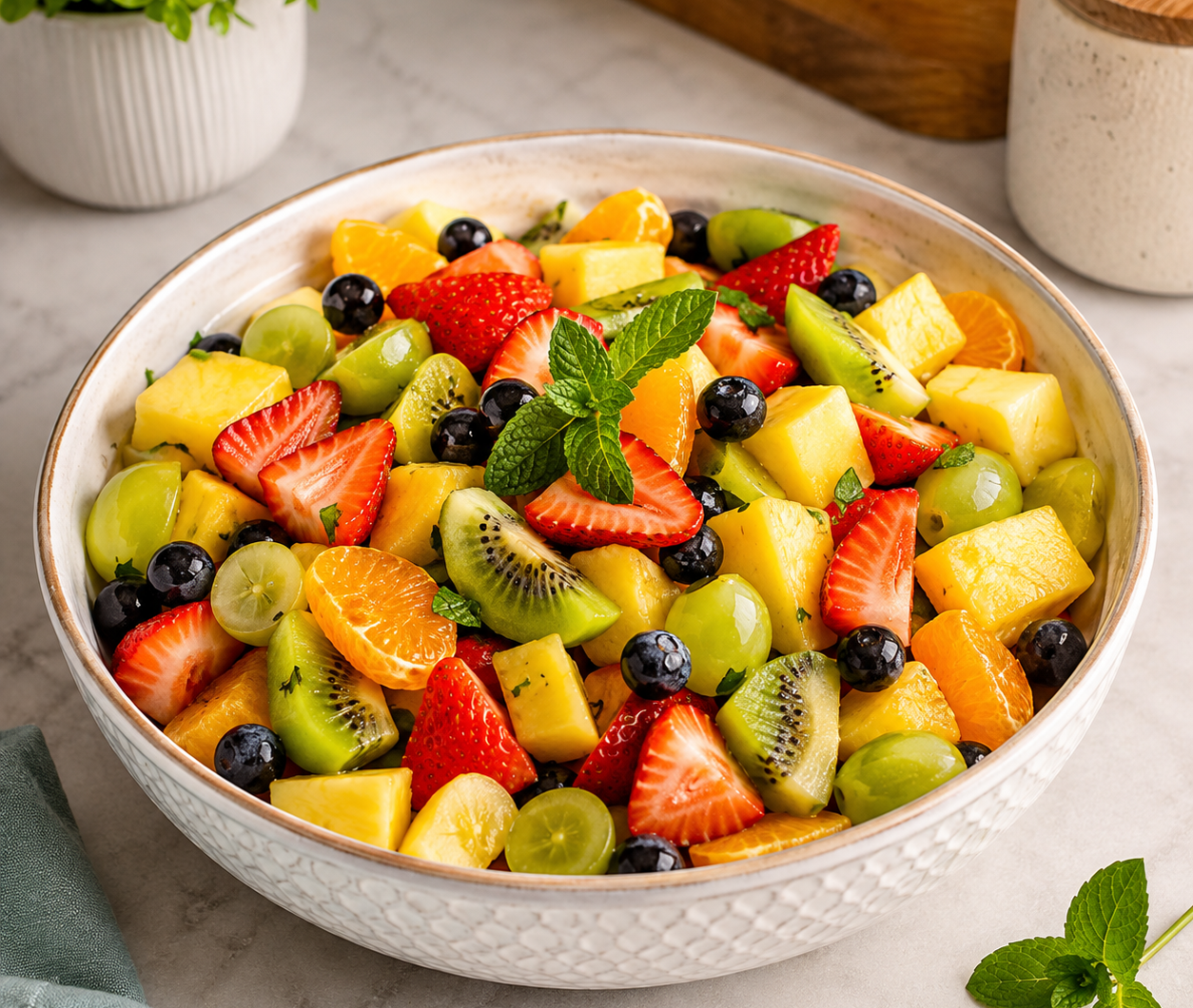
Fruit Salad Recipe
A colorful fresh fruit salad made with strawberries, blueberries, green grapes, mandarin oranges, pineapple, and kiwi, finished with a tangy honey lemon dressing and optional fresh mint.
8
servings15
minutes92
kcalIngredients
- Fruit Salad
2 cups strawberries, quartered
1 1/2 cups blueberries
1 cup green grapes, halved
3 medium mandarin oranges, peeled and separated into wedges
1 1/2 cups fresh pineapple, diced
2 medium kiwi, diced or sliced into wedges
1/4 cup fresh mint, roughly chopped, optional
- Dressing
2 tbsp lemon juice
1 tsp lemon zest
2 tbsp honey
Directions
- Prepare all the fruit by washing, peeling, cutting, and slicing as needed. Place the strawberries, blueberries, green grapes, mandarin oranges, pineapple, and kiwi into a large bowl.
- Add the roughly chopped fresh mint if using it, then gently combine the fruit.
- In a separate small bowl, whisk together the lemon juice, lemon zest, and honey until the dressing is well combined.
- Pour the honey lemon dressing over the prepared fruit.
- Gently toss the fruit with the dressing until the pieces are evenly coated. Take care not to crush the softer fruit.
- Serve immediately or cover and refrigerate until ready to serve.
Notes
- The suggested serving size is approximately 1 cup. The finished fruit salad can be refrigerated for up to 3–4 days, although the best texture and freshness are generally within the first 1–2 days. The fruit will naturally release additional juices as it sits. Freezing is not recommended because it can negatively affect the texture of the fresh fruit.
Nutrition Facts
- Calories: 92kcal
- Fat: 0.5g
- Carbohydrates: 23.8g
- Fiber: 4.9g
- Sugar: 16.3g
- Protein: 1.3g
