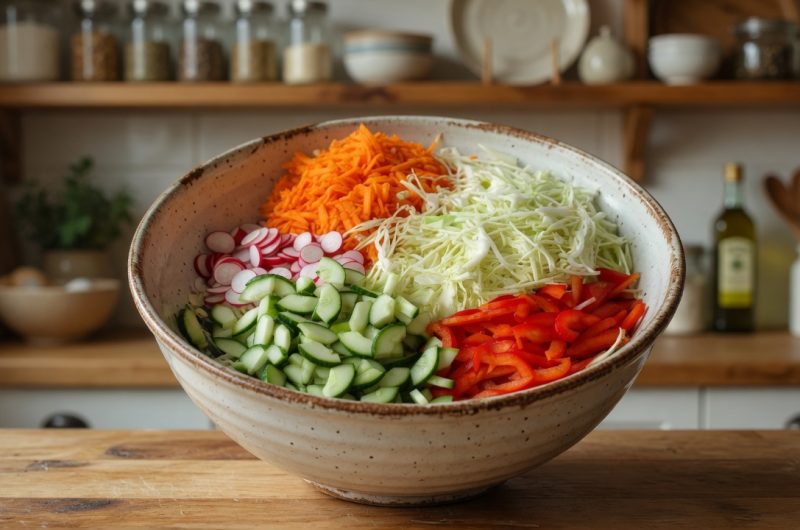

This cabbage salad recipe traces its roots back to a time when resourceful cooking mattered more than fancy ingredients. Originally popular in many households during the Great Depression, this dish became a beloved way to turn a handful of affordable vegetables into something flavorful and satisfying. Even today, this salad remains a comforting classic, offering a crisp, tangy side dish that costs very little to make while still delivering plenty of flavor in every bite.
Why This Salad Has Stood the Test of Time
There is a good reason this salad has remained popular for so many decades. It relies on simple, inexpensive vegetables that are easy to find any time of year, combined with a tangy homemade dressing that transforms plain cabbage into something genuinely craveable. Unlike many modern salad recipes that require specialty ingredients, this dish proves that a handful of pantry staples and fresh produce can create a dish worth making again and again.
A Modern Twist on a Traditional Recipe
While the traditional version of this recipe calls for green bell peppers, this variation uses fresh cucumber slices instead, adding a cool, crisp texture that pairs nicely with the shredded cabbage. This small change enhances the refreshing quality of the salad while still keeping true to the spirit of the original dish. Those who prefer the classic version can still include green bell peppers alongside or instead of the cucumbers, depending on personal taste.
Understanding the Vegetables in This Salad
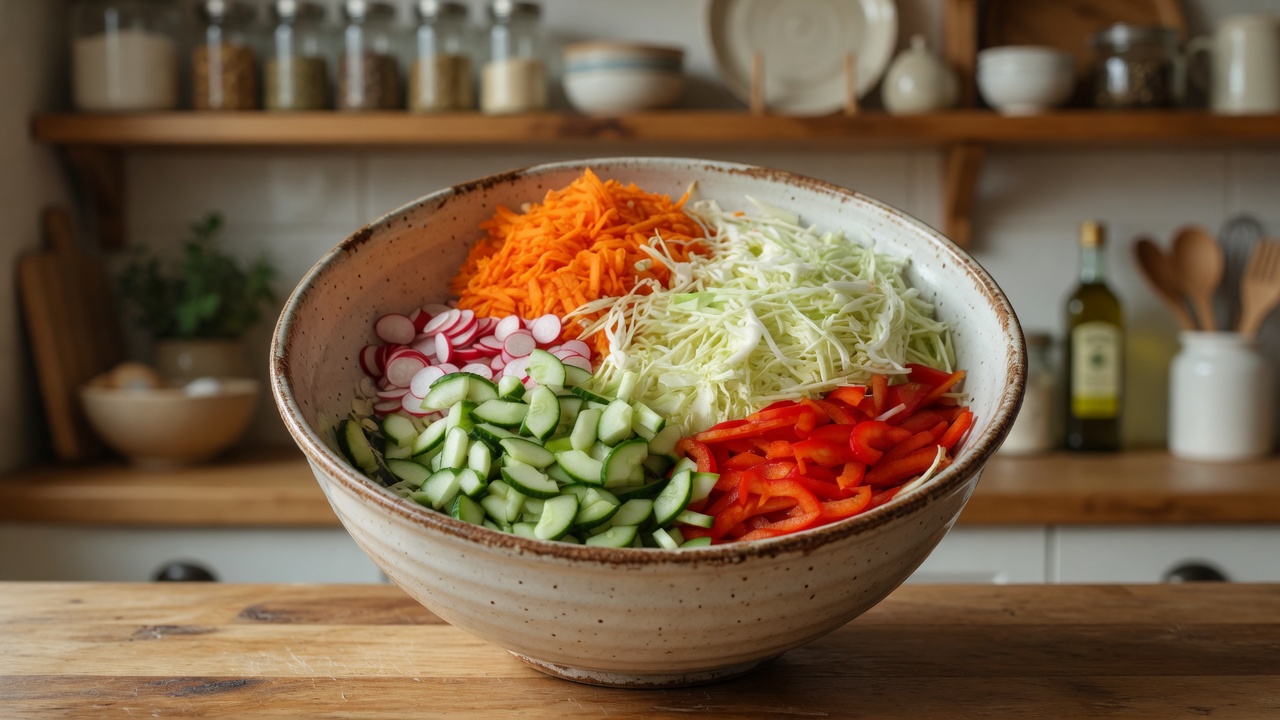
Each vegetable included in this recipe plays a specific role in building both flavor and texture. Shredded cabbage forms the base of the dish, offering a crisp, mildly bitter backdrop that absorbs the tangy dressing extremely well. Carrots add a natural sweetness alongside a satisfying crunch, while cucumbers bring a cool, refreshing bite that balances out the sharper flavors elsewhere in the salad. Together, these vegetables create layers of texture that make every forkful interesting.
The Role of Cabbage as the Base
Shredded cabbage serves as the foundation of this entire salad, providing roughly two pounds of crisp, slightly bitter texture that holds up well once mixed with the dressing. Cabbage has a unique ability to absorb the flavors of a marinade or dressing over time without turning completely soft, which is part of what makes this salad taste even better the longer it sits. This quality has made cabbage a natural choice for salads meant to be prepared ahead of time.
Carrots and Cucumbers for Crunch and Sweetness
Sliced carrots contribute a mild natural sweetness to the salad, along with a firm crunch that holds up well against the acidity of the dressing. Cucumbers, used here in place of the traditional green bell peppers, add a cool, watery crispness that lightens up the overall dish. This combination of sweet carrots and refreshing cucumber creates a nice contrast against the sharper, tangier elements found in the dressing and the onion.
Red Onion, Radishes, and Celery for Extra Flavor
Thinly sliced red onion adds both a pop of color and a mild sweetness that helps balance the acidity of the vinegar-based dressing. Radishes bring a slightly peppery, earthy flavor along with an additional layer of crunch, while sliced celery contributes a fresh, subtle taste that rounds out the overall texture of the salad. Together, these three ingredients add complexity to what might otherwise be a fairly simple cabbage and carrot mixture.
Building the Tangy Homemade Dressing
The dressing is really what defines this salad and sets it apart from a plain vegetable slaw. Made from vegetable oil, warm water, white vinegar, sugar, salt, and garlic powder, this dressing strikes a careful balance between tangy, sweet, and savory flavors. The sharpness of the vinegar cuts through the sweetness of the sugar, while the garlic powder adds a subtle aromatic depth that ties the entire dressing together.
Why Warm Water Matters in the Dressing
Using warm water in this dressing serves a practical purpose beyond simply thinning it out. The warmth helps dissolve the sugar, salt, and garlic powder more completely, allowing these ingredients to blend seamlessly rather than sitting as undissolved granules at the bottom of the dressing. This small step makes a noticeable difference in how evenly the flavors distribute once the dressing is poured over the vegetables.
Balancing Vinegar and Sugar
The relationship between vinegar and sugar in this dressing is what gives the salad its signature tangy-sweet flavor. White vinegar provides the sharp, acidic backbone of the dressing, while a generous amount of sugar softens that sharpness into something more balanced and pleasant. Adjusting the ratio of these two ingredients slightly can help you customize the dressing to be either more tangy or more sweet, depending on your personal preference.
How to Prepare This Salad Step by Step
Making this salad is a fairly simple process, though it does require a bit of patience while the flavors develop over time. The basic steps involve slicing all the vegetables, preparing the dressing separately, combining everything together, and then allowing the salad to rest before serving. While the active preparation time is relatively short, the resting period is what truly makes this dish special.
Slicing the Vegetables Evenly
Preparing this salad begins with shredding the cabbage and slicing the carrots, cucumbers, red onion, radishes, and celery. Placing all the sliced vegetables into a large mixing bowl as you go helps keep the process organized. Slicing the vegetables as evenly as possible is worth taking a little extra time over, since consistent sizing improves both the texture and the overall presentation of the finished salad.
Mixing the Dressing Thoroughly
To prepare the dressing, sugar, salt, and garlic powder are combined in a separate bowl before warm water is added and stirred until everything dissolves completely. Once dissolved, the white vinegar and vegetable oil are added and stirred until the dressing becomes smooth and uniform in texture. Taking the time to fully dissolve the sugar and salt before adding the vinegar and oil helps prevent a grainy texture in the finished dressing.
Combining Vegetables With the Dressing
Once both the vegetables and dressing are ready, the dressing is poured directly over the sliced vegetables in the large mixing bowl. Tossing everything together thoroughly ensures that each piece of vegetable gets evenly coated in the tangy dressing, which is important for making sure the flavor is consistent throughout the entire salad rather than concentrated in just one area of the bowl.
Packing and Storing the Salad Properly
After the vegetables and dressing have been combined, the salad needs to be packed into containers for storage while the flavors develop. Clean glass jars work particularly well for this purpose, though any airtight container will do the job just as effectively if jars are not available. Packing the vegetables tightly into the containers helps preserve their crunch while still allowing the dressing to fully penetrate the mixture over time.
Using Any Remaining Dressing
If there is dressing left over after packing the vegetables into jars, it should be divided evenly among the containers rather than discarded. This extra dressing helps ensure that every jar of salad stays properly coated and flavorful, rather than having some portions end up drier than others once the salad has had time to rest.
Why Resting Time Makes Such a Difference
Allowing this salad to rest before serving is one of the most important steps in the entire recipe. Letting it sit for at least a few hours, or ideally overnight, gives the dressing time to fully penetrate the vegetables, softening the cabbage slightly while deepening the overall flavor of the dish. This resting period is really what transforms a simple mixture of sliced vegetables into a well-marinated, flavorful salad.
Serving This Classic Salad
Once the salad has rested and absorbed the dressing, it is ready to be served either on its own or as a side dish alongside a larger meal. The cabbage will have softened slightly by this point, while the flavors throughout the salad will have deepened considerably compared to when it was first mixed. This makes it a versatile dish that can accompany a wide variety of main courses without requiring any additional preparation once it is ready.
Customizing This Recipe to Your Taste
This salad recipe is flexible enough to accommodate a variety of personal preferences and ingredient substitutions without losing its overall character. Whether you want to experiment with different vegetables or adjust the balance of the dressing, there are several simple ways to make this classic recipe your own while still keeping its essential structure intact.
Experimenting With Different Vegetables
Feel free to experiment with additional vegetables such as bell peppers, tomatoes, or fresh herbs if you want to put your own spin on this recipe. These additions can introduce new flavors and textures to the salad without requiring any changes to the overall preparation method, making it easy to adapt this dish based on what you have available or what you enjoy most.
Adjusting the Dressing to Your Liking
If you prefer a sweeter or more tangy dressing, the amount of sugar or vinegar can be adjusted according to your personal taste. Since this dressing forms the backbone of the entire salad’s flavor, small adjustments here can make a noticeable difference in the final result, so it is worth experimenting until you find the balance that suits you best.
Notes for Making and Storing This Salad
This section covers a few practical details that can help you get the best results when making this classic cabbage salad at home.
How long does this salad keep in the fridge?
This salad keeps well in the refrigerator for several days, and many people find that the flavor actually improves the longer it sits, as the vegetables continue to marinate in the dressing. This makes it a convenient dish to prepare in advance for gatherings or as a make-ahead side dish for the week.
Can I make this salad ahead of time?
Yes, this salad is well suited to being made ahead of time, since the resting period is actually necessary for the flavors to develop properly. Preparing it a day or two before you plan to serve it can actually improve the final result compared to serving it immediately after mixing.
Can I use green bell peppers instead of cucumbers?
Yes, green bell peppers can be used in place of or alongside cucumbers if you prefer to follow the more traditional version of this recipe. This substitution will add a slightly tangy, peppery flavor to the salad instead of the cooler, crisper taste that cucumbers provide.
Peasant Salad/ Healthy Salad
A crisp, tangy cabbage salad made with simple, affordable vegetables and a sweet vinegar-based dressing. This version uses fresh cucumber in place of the traditional green bell pepper for a cool, refreshing twist on a historic recipe.
20
minutes20
minutesIngredients
- Salad:
Shredded cabbage – 1 head (approximately 2 pounds)
Carrots, sliced – 3
Cucumbers, sliced – 2
Green peppers, sliced (optional) – 2
Large red onion, thinly sliced – 1
Radishes, thinly sliced – 1 bunch
Celery, sliced – 1/2 bunch
- Dressing:
Vegetable oil (or oil of choice) – 1 cup
Warm water – 1/2 cup
White vinegar – 1 1/2 cups
Sugar – 10 to 12 tablespoons
Salt – 1 tablespoon
Garlic powder – 1 tablespoon
Directions
- Shred the cabbage and slice the carrots, cucumbers, red onion, radishes, and celery. Place all the vegetables into a large mixing bowl. In a separate bowl, combine the sugar, salt, and garlic powder. Add the warm water and stir until the sugar and salt dissolve completely.
- Add the white vinegar and vegetable oil to the dissolved mixture and stir until smooth and well combined. Pour the dressing over the sliced vegetables and toss thoroughly until everything is evenly coated.
- Pack the salad tightly into clean glass jars or airtight containers. Pour any remaining dressing evenly over the packed jars to keep the vegetables well coated.
- Refrigerate for at least a few hours, or ideally overnight, to allow the flavors to fully develop. Serve chilled, either on its own or as a side dish alongside a main meal.
