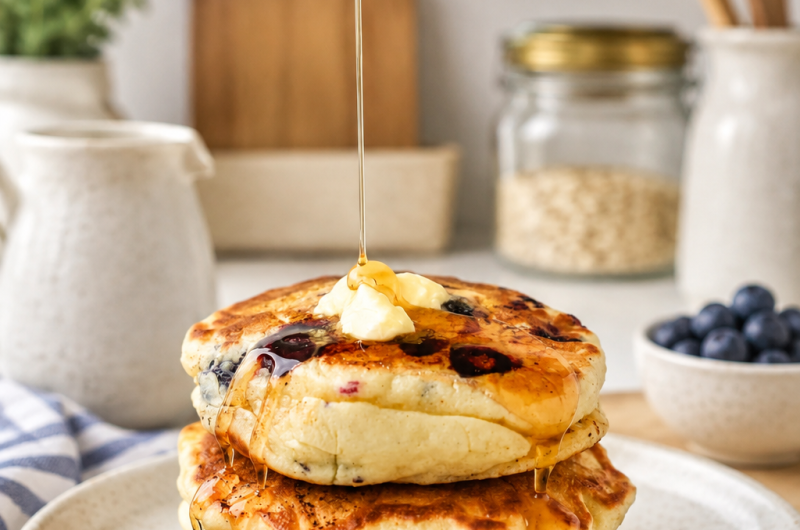

High Protein Fluffy Blueberry Cottage Cheese Pancakes are a simple and satisfying breakfast for anyone who wants the comfort of traditional homemade pancakes with more protein in every serving. The recipe combines smooth cottage cheese, Greek yogurt, eggs, and flour to create thick, tender pancakes, while fresh blueberries bring natural fruit flavor and juicy bursts throughout the stack. With a preparation and cooking time of about 28 minutes, these pancakes are practical enough for a weekday breakfast but special enough for a relaxed weekend brunch. The original recipe provides approximately 16 grams of protein per serving.
Why Make Cottage Cheese Pancakes?
Cottage cheese pancakes are a useful alternative to ordinary pancakes because cottage cheese can increase the protein content without requiring protein powder or unusual ingredients. In this recipe, the cottage cheese is blended until completely smooth, allowing it to become part of the batter without leaving noticeable curds. This technique is important because unblended cottage cheese can create dense or wet pockets. When processed properly, it creates a smooth mixture that blends naturally with eggs, Greek yogurt, butter, and vanilla.
The result is a pancake that still tastes familiar. Instead of having a strong cottage cheese flavor, the dairy ingredients work quietly in the background while blueberries, vanilla, butter, and maple syrup provide the classic breakfast flavors. This makes the recipe a good choice for people who want a high protein breakfast but do not want a pancake that tastes overly different from the traditional version.
The Key to Smooth, Fluffy Pancakes
The first important step is blending the cottage cheese thoroughly. The recipe recommends placing the cottage cheese, eggs, Greek yogurt, melted butter, and vanilla extract into a blender or food processor and processing them for approximately 20–30 seconds. The mixture should become completely smooth, with no visible curds remaining.
This step has a direct effect on texture. A smooth wet mixture distributes evenly throughout the flour, creating a more consistent pancake. If cottage cheese pieces remain, some areas can become heavier or wetter than others. Taking a few extra seconds to blend the ingredients properly is therefore one of the most important techniques in this recipe.
Why Greek Yogurt Is Included
Plain Greek yogurt adds another layer of texture and flavor to the pancake batter. Its thick consistency helps create a substantial batter, while its mild tang balances the sweetness of the blueberries and granulated sugar. Greek yogurt also works naturally with cottage cheese because both ingredients provide a creamy dairy base without requiring complicated preparation.
The source specifically notes that the thickness of Greek yogurt matters for the batter consistency, so regular yogurt is not presented as a direct substitute. Keeping the yogurt thick helps the batter maintain the structure needed for tall, fluffy pancakes.
Why All-Purpose Flour Works Well
All-purpose flour provides the structure needed for these pancakes to rise and hold their shape. It gives the recipe the familiar texture associated with classic pancakes while allowing the cottage cheese and Greek yogurt to contribute additional richness and protein. The source notes that whole wheat flour can make the pancakes heavier and prevent them from rising as tall. If you want to introduce whole wheat flour, replacing only half of the all-purpose flour is the suggested approach.
Using all-purpose flour also keeps the recipe straightforward. There is no need for a specialty flour to achieve the intended result, making these pancakes easy to prepare with common pantry ingredients.
Fresh Blueberries Add Flavor and Color
Blueberries are one of the defining ingredients in this recipe, and they are used in a particularly useful way. Most of the blueberries are folded into the pancake batter, while the remaining berries are saved for placing directly on the pancakes as they cook. This gives every bite blueberry flavor while also making the finished pancakes look attractive.
Adding berries both inside and on top also prevents the pancakes from becoming visually dull. The berries pressed into the surface remain visible after cooking, giving the stack a homemade appearance. The recipe recommends pressing the reserved blueberries into each pancake immediately after the batter is poured onto the griddle.
How to Use Frozen Blueberries
Fresh blueberries are excellent when available, but frozen blueberries can also be used. The most important point is not to thaw them before adding them to the batter. Frozen berries are less likely to release excess liquid immediately, which helps prevent the batter from becoming streaked with purple juice.
The source recommends folding frozen blueberries into the batter while still frozen and allowing additional cooking time when needed. Frozen berries may require approximately one extra minute per side. This is a simple adjustment that makes the recipe practical throughout the year.
Do Not Skip the Batter Rest
After combining the ingredients and folding in the blueberries, allow the batter to rest for five minutes. This short pause gives the flour time to hydrate and allows the baking powder and baking soda to begin doing their job. According to the original recipe, this resting period helps create taller, fluffier pancakes.
While five minutes may not seem significant, it can make a noticeable difference with a thicker pancake batter. Use this time to heat the skillet and prepare your cooking area. By the time the pan is ready, the batter will also be ready to cook.
Avoid Overmixing the Batter
Once the blended wet ingredients are added to the dry mixture, stir only until everything is combined. The recipe specifically allows a few small lumps and warns against overmixing.
Overmixing can make pancakes tougher because it develops the flour more than necessary. For fluffy pancakes, gentle mixing is better than trying to make the batter perfectly smooth. Since the cottage cheese mixture has already been blended separately, there is no need to continue mixing aggressively once the wet and dry ingredients meet.
Cook Over Medium-Low Heat
Temperature is especially important with these pancakes because they are thicker than many standard pancake recipes. Medium-low heat gives the batter enough time to cook through without burning the outside. If the skillet is too hot, the exterior can become dark while the center remains undercooked.
A useful water-drop test is included in the original instructions. When a small drop of water sizzles and evaporates within two to three seconds, the pan is ready. If the water sizzles immediately and violently, the skillet is too hot and should be allowed to cool slightly.
The Best Way to Cook Each Pancake
Once the griddle is ready, add a small amount of butter and pour approximately one-third cup of batter for each pancake. Leave enough space between the pancakes so you can easily slide a wide spatula underneath when it is time to flip.
Immediately press five or six reserved blueberries into the surface of each pancake. Waiting too long can cause the batter to set before the blueberries are properly embedded. Cook the first side for approximately three to four minutes, watching for bubbles across the surface and edges that appear set and slightly dry. The underside should be evenly golden brown before flipping.
Flip Once and Do Not Press
When the first side is ready, use a wide spatula and flip the pancake in one confident motion. Cook the second side for approximately two to three minutes, or until it becomes golden brown and the pancake springs back lightly when pressed.
Avoid pressing the pancake down with the spatula. These pancakes rely on their risen structure for their fluffy texture, and pressing them can squeeze out some of the air. Allowing them to cook undisturbed after flipping helps preserve their height and softness.
Keep the Pancakes Warm
If you are preparing multiple batches, cooked pancakes can be transferred to an oven-safe plate and held in a 200°F oven. This keeps the finished pancakes warm while the remaining batter is cooked. The method is particularly useful when making breakfast for several people because you can cook at a comfortable pace without serving some pancakes cold.
Add a small amount of butter to the griddle before each batch if needed. This helps maintain the buttery flavor and keeps the cooking surface prepared for the next pancakes.
Simple Serving Ideas
These blueberry cottage cheese pancakes can be served with butter and pure maple syrup for a classic breakfast. The butter melts over the warm stack, while the maple syrup adds sweetness that complements the slightly tangy dairy ingredients and blueberries.
Extra fresh blueberries can also be served alongside the pancakes for an even more fruit-forward breakfast. The original recipe is intentionally simple, so there is no need for an elaborate topping arrangement. A warm stack, butter, maple syrup, and fresh fruit are enough to make a satisfying meal.
Lemon Blueberry Variation
For a brighter flavor, the original recipe suggests turning these into lemon blueberry pancakes. Add one teaspoon of lemon zest and one tablespoon of lemon juice to the batter. Lemon and blueberries naturally complement each other, creating a fresher and slightly sharper flavor profile.
This variation keeps the same basic pancake technique. The cottage cheese and Greek yogurt still provide the creamy base, while lemon adds a fresh contrast to the sweetness of the blueberries.
Banana Blueberry Variation
Another option is to replace the Greek yogurt with half of a mashed ripe banana. This creates a sweeter pancake with a noticeable banana flavor that pairs well with blueberries. The variation can be especially appealing when serving pancakes to children or anyone who prefers naturally sweet breakfast recipes.
Because banana changes the moisture and consistency of the mixture, it is best to use the stated substitution rather than simply adding banana to the existing batter. This keeps the recipe closer to the intended balance.
Chocolate Chip Variation
For a completely different flavor, replace the blueberries with half a cup of mini chocolate chips. The source recommends skipping the berries on top when using this variation.
Mini chocolate chips distribute easily through the batter and create small melted pockets as the pancakes cook. The basic method remains the same: mix gently, allow the batter to rest, cook over medium-low heat, and flip carefully.
Gluten-Free Pancake Option
The recipe can also be adapted using a one-to-one gluten-free flour blend. The original instructions note that the gluten-free version may have a slightly denser texture and recommend allowing the batter to rest for ten minutes instead of five.
The longer resting period gives the alternative flour blend additional time to absorb moisture. This is an easy adjustment for anyone who wants to prepare a gluten-free version while keeping the overall recipe method familiar.
Storage and Meal Prep
These pancakes are convenient for meal preparation because they store well in the refrigerator and freezer. Refrigerate cooked pancakes in a single layer or place parchment between them to prevent sticking. They can be kept refrigerated for up to four days.
For the best refrigerated texture, reheat them in a toaster or toaster oven at 350°F for approximately three to four minutes. The microwave is faster and can heat a pancake in roughly 30–45 seconds, but it produces a softer texture.
Freezing Blueberry Cottage Cheese Pancakes
For longer storage, allow the cooked pancakes to cool completely before freezing. Place them on a sheet pan and freeze for about one hour. Once frozen, transfer them to a freezer bag, separating layers with parchment paper.
The pancakes can be frozen for up to two months. When you want breakfast, reheat them directly from frozen in a toaster oven at 350°F for approximately five to six minutes. This method is especially convenient for busy mornings because the pancakes do not need to be thawed beforehand.
Notes for the Best Results
The most important techniques are straightforward. Blend the cottage cheese until completely smooth, use thick Greek yogurt, mix the batter gently, allow it to rest, and cook the pancakes over medium-low heat. These steps help produce the fluffy texture that makes this recipe different from a dense cottage cheese pancake.
Also remember to add the reserved blueberries immediately after pouring the batter and avoid pressing the pancakes after flipping. If using frozen blueberries, keep them frozen and allow extra cooking time when necessary. These small details make the cooking process more reliable and help produce golden, thick, tender pancakes every time.
Why These Pancakes Are Great for Breakfast
High Protein Fluffy Blueberry Cottage Cheese Pancakes are a practical breakfast because they combine familiar ingredients with a more protein-focused recipe structure. Cottage cheese, Greek yogurt, and eggs contribute protein, while flour provides the traditional pancake base and blueberries bring fruit flavor. The original nutritional information lists 16 grams of protein and 417 calories per serving.
They are also flexible enough for different occasions. Prepare the classic blueberry version for a weekend brunch, make a double batch for meal prep, freeze individual portions for busy mornings, or try one of the suggested flavor variations when you want something different. With the right heat and a few simple techniques, you can enjoy pancakes that are fluffy, golden, fruity, and satisfying without making breakfast complicated.
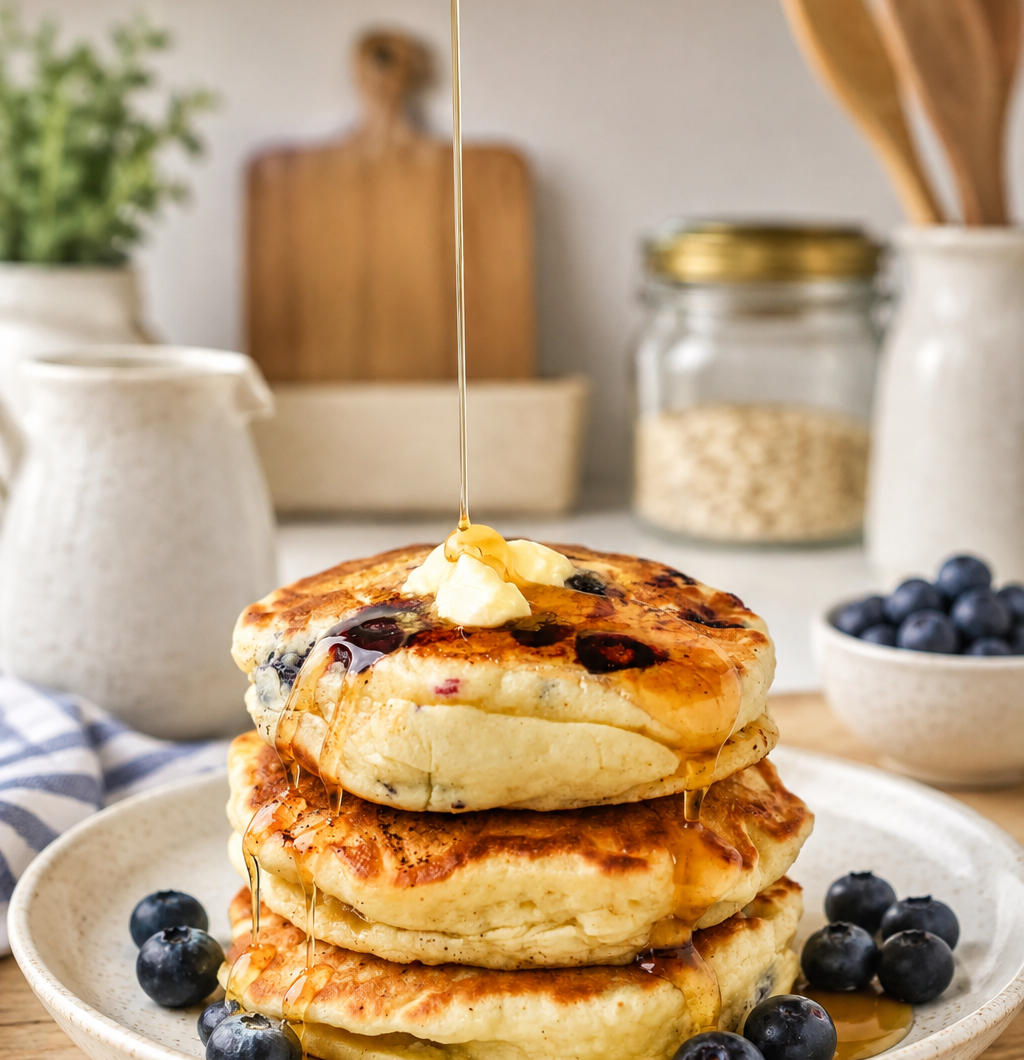
HIGH PROTEIN FLUFFY BLUEBERRY COTTAGE CHEESE PANCAKES
Fluffy blueberry pancakes made with smoothly blended cottage cheese, Greek yogurt, eggs, and all-purpose flour.
4
servings10
minutes18
minutes417
kcal28
minutesIngredients
- For the Pancake Batter
8 oz cottage cheese, approximately 1 cup, blended smooth
2 large eggs
¼ cup plain Greek yogurt
2 tablespoons unsalted butter, melted, plus additional butter for the griddle
1 teaspoon vanilla extract
1½ cups all-purpose flour
2 tablespoons granulated sugar
2 teaspoons baking powder
½ teaspoon baking soda
½ teaspoon kosher salt
- For the Blueberries
1 cup blueberries, divided into approximately ¾ cup for the batter and the remainder for the griddle
- For Serving
4 teaspoons unsalted butter
1 tablespoon pure maple syrup
Directions
- Blend the Wet Ingredients
- Place the cottage cheese, eggs, Greek yogurt, melted butter, and vanilla extract in a blender or food processor. Blend for 20–30 seconds until the mixture is completely smooth and no visible cottage cheese curds remain.
- Prepare the Dry Ingredients
- In a large mixing bowl, whisk together the all-purpose flour, granulated sugar, baking powder, baking soda, and kosher salt until evenly combined.
- Combine the Batter
- Pour the smooth cottage cheese mixture into the bowl containing the dry ingredients. Stir gently with a spatula or wooden spoon just until combined. A few small lumps are fine. Avoid overmixing.
- Add the Blueberries
- Gently fold approximately ¾ cup of the blueberries into the batter. Keep the remaining blueberries aside for placing on top of the pancakes while they cook.
- Rest the Batter
- Allow the batter to rest for 5 minutes while the skillet or griddle heats. This helps the flour hydrate and allows the leavening ingredients to activate.
- Heat the Griddle
- Place a large nonstick skillet or griddle over medium-low heat. Add approximately ½ teaspoon butter and spread it across the surface. The pan is ready when a small drop of water sizzles and evaporates within 2–3 seconds.
- Cook the Pancakes
- Pour approximately ⅓ cup of batter onto the hot griddle for each pancake, leaving enough room between pancakes. Immediately press approximately 5–6 reserved blueberries into the surface of each pancake.
Cook for approximately 3–4 minutes, or until bubbles appear across the surface and the edges look set and slightly dry. The underside should be evenly golden brown. - Flip
- Use a wide spatula to flip each pancake in one confident motion. Cook the second side for approximately 2–3 minutes, until golden brown and cooked through. The pancake should spring back lightly when gently pressed.
- Keep Warm
- Place cooked pancakes on an oven-safe plate and keep them warm in a 200°F oven while preparing the remaining batter. Add a small amount of butter to the cooking surface before each new batch.
- Serve
- Stack the warm pancakes and serve with unsalted butter and pure maple syrup. Add extra fresh blueberries if desired.
Notes
- Blend the cottage cheese until completely smooth to prevent dense curds in the finished pancakes.
- Rest the batter for the full 5 minutes before cooking.
- Use medium-low heat because the pancakes are thicker and need sufficient time to cook through.
- Press reserved blueberries into the pancakes immediately after pouring the batter.
- Do not press down on the pancakes with a spatula after flipping.
- Frozen blueberries can be used without thawing. They may require approximately one additional minute of cooking per side.
- Refrigerate pancakes for up to 4 days, using parchment between layers if needed.
- Freeze cooked pancakes for up to 2 months.
- For best reheating, use a toaster or toaster oven at 350°F for 3–4 minutes.
- For best reheating, use a toaster or toaster oven at 350°F for 3–4 minutes.
- Microwave for 30–45 seconds when necessary, although the texture will be softer.
Nutrition Facts
- Calories: 417kcal
- Fat: 15g
- Carbohydrates: 54g
- Fiber: 2g
- Sugar: 15g
- Protein: 16g
